Prague: The Electric 4ekolka is the Latest in 3D Printed Cars

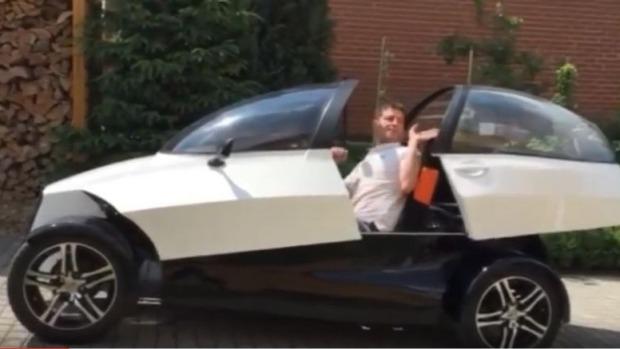 It’s wonderful to be able to write about another 3D printed car. Although none of your friends may have one in their driveways yet, progress is obviously being made, and soon you may see them in many neighborhoods—parked near 3D printed homes—something we’re also seeing today now not just in concept but already in countries like China.
And while we’re hearing more and more about 3D printed cars such as those being manufactured by Local Motors, it looks like there is some interesting competition emerging from Prague with the 4ekolka. Designed by Petr Chládek, the goal was to create a vehicle that will help to improve city transportation. According to the automotive architect, what they have today is simply ‘not good.’
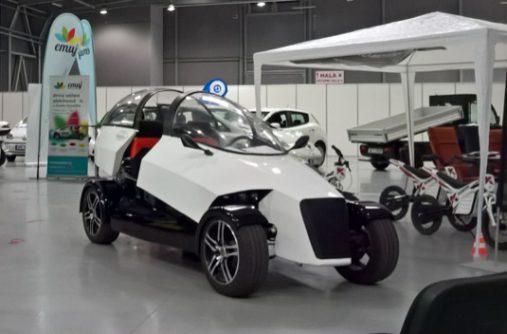 With a design quite reminiscent of the Smart Car, the 4ekolka is the very definition of compact, and in my mind—just one large step up from the scooter when it comes to city driving—although allowing for a bit of a more comfortable commute. According to Chládek (in a translated quote):
“For the city we need something small, inexpensive, safe, usable year-round, for a maximum of two people, with a max. speed of 55 km/h (~34 mph).”
Here, we see all the benefits of 3D printing in action as Chládek was able to deliver with “maximum emphasis on weight reduction and consumption,” as well as great affordability, with the price for the prototype purported to translate into around $12K. The greatest expense—as you can imagine in checking out the tiny 3D printed vehicle—is centered around the battery, with both the batteries themselves and the management system taking up the bulk of the cost. The design is actually very attractive, with the exterior even offering a bit of a futuristic appeal when the doors are being opened and closed, although I did have a claustrophobic moment watching the driver close himself in (see video below.)
We don’t have a lot of details yet in terms of the actual 3D printing technology used, actual materials, or how long just the 3D printing portion took, but some basic specifications are available now such as a top speed of around 34 mph, LiFePO4 batteries with a capacity of 200Ah @ 48V totaling around 9.6 kWh, and around 124 miles per charge.

The 4ekolka even improves on the electric vehicle status, consuming around 100 watt-hours, whereas the average EV uses about 200-300 Wh. If you enjoy cushy leather seats, lots of leg room, and all the bells and whistles this probably would not be the vehicle for you, including if you have a need for driving on road trips or traversing any questionable terrain. This is definitely meant for metropolitan areas, and is currently in testing in Prague. See the video below to get a better look at the 4ekolka. Discuss further in the 3D Printed 4ekolka Electric Car forum over at 3DPB.com.
[Sources: Hybrid / electrek]Subscribe to Our Email Newsletter
Stay up-to-date on all the latest news from the 3D printing industry and receive information and offers from third party vendors.
Print Services
Upload your 3D Models and get them printed quickly and efficiently.













You May Also Like
Kickstarter is Testing the Next Wave of Desktop 3D Printing
3D printers are raising serious money again…on Kickstarter, that is. Over the last few months, a new group of 3D printer campaigns has attracted millions of dollars and thousands of...
Stratasys vs. Bambu Lab: What’s Really Behind the $27.6M Patent Verdict?
Editor’s note: This is Part 1 of a two-part series by Xu Fanglei examining the technology and patent issues behind the Stratasys-Bambu Lab dispute. Part 1 looks at the U.S....
Bambu Lab and SUSAN FANG 3D Print for London Fashion Week
At London Fashion Week, some of the more unusual pieces on the runway came from 3D printers. Chinese fashion designer SUSAN FANG presented her Spring/Summer 2027 Air-Illusion collection at the...
Stratasys Wins $27.6M in Patent Case Against Bambu Lab; Bambu Challenges Verdict
Update, September 21, 2026: This article has been updated with a statement from Bambu Lab responding to the verdict, along with additional information about the company’s ongoing patent challenges against...