3D Printed System Turns Prosthetic Hand into Mouse


While the first image this concept conjured up was of an individual with a rodent on the end of their arm and the ensuing question: how could this be helpful? – the actuality is that Berlin Weissensee School of Art students David Kaltenbach, Lucas Rex and Maximilian Mahal are working to create 3D printed bands that can turn a prosthetic hand into a computer mouse, making it significantly easier for users with prosthetic hands to navigate the clickable world.
If you don’t have a prosthetic hand, or know someone who does, you might not have realized that the ability to easily use a traditional mouse is not one that should be taken for granted. It takes a surprising amount of physical sophistication to naturally work the device, and prosthetic hands, although improving significantly, still aren’t a perfect substitute for the real thing.
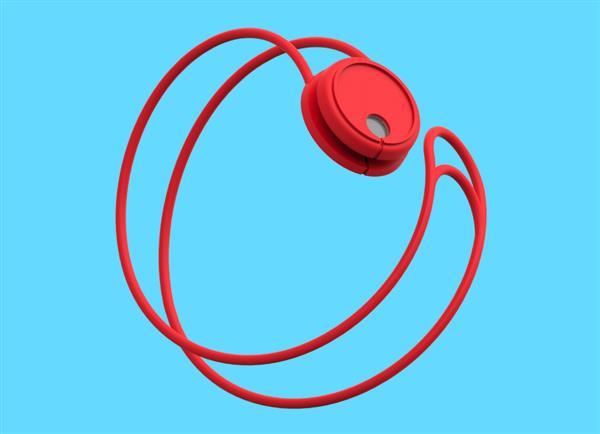 In order to mitigate this difficulty, researchers developed a double band device, affectionately nicknamed the Shortcut, that lets prosthetic users click away. The device consists of two bands, one worn on the wrist and the other on the arm. The band on the wrist assists in navigation through a small optical sensor that is attached. The movement of that sensor is transferred to movement of the mouse.
The second band is what make the click possible. It relies on readings of the muscle movement further up the arm. While a user with a prosthetic doesn’t have the actual hand to click, the muscles can still move as if directing a phantom hand and that movement will be detected and read as a click. As the developers explained:
“If we use the type of sensors that are in the prosthesis already, there are actually a lot of nuances we can read out. We added an optical sensor to integrate cursor movement just like you’re used to. We’ve put a lot of time into figuring out what gestures are still accessible and intuitive to use for direct and seamless access to digital workflows. And we combined that all in a small and convenient package.”
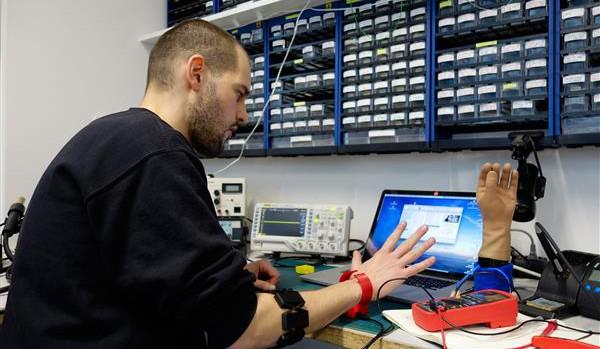 The digital nature of the hand is activated only when the hand is placed on a work surface, at which point the physical sensors become dormant. The different gestures required of the phantom hand range from rotating the wrist to scroll, to snapping the fingers to close or delete something. Whether or not these gestures are something that could be created through the muscles of a person born without a hand, the muscle memory of an amputee is very likely to still have access to those movements to control the phantom hand.
Currently the device is in the development stages and not available for public use. It still relies on wired connections and commercial Myo bands, but it does indicate both the understanding that this need exists and advances being made towards a seamless integration of prosthetic hand and computerized world. Discuss further in the 3D Printed Prosthetic Turns into Mouse forum over at 3DPB.com.
[Source/Images: Designboom]
Subscribe to Our Email Newsletter
Stay up-to-date on all the latest news from the 3D printing industry and receive information and offers from third party vendors.
Print Services
Upload your 3D Models and get them printed quickly and efficiently.













You May Also Like
3D Printing News Briefs, June 18, 2026: Reseller, Relocation, Metal Space Powder, & More
We’ll start with business news in today’s 3D Printing News Briefs, as XJet appointed a value-added reseller in Germany, BIO INX is expanding its presence in the Italian market, and...
Scientists Use BMF to 3D Print Seal Whiskers That Track Prey Long After It’s Gone
Seals use their whiskers to hunt. Not Navy Seals, although they may in some way also, but this article is about lowercase seals. Not Seal the musician either; as far...
Researchers Combine AI and Bioprinting to Create Tiny Blood Vessel Networks
If 2026 has a theme in bioprinting, it may be blood vessels. Researchers can already print incredibly sophisticated tissues. The harder part is keeping those tissues alive. Without a network...
University of Arkansas Researchers Test Metal 3D Printing in a Mars-Like Atmosphere
If humans eventually establish a long-term presence on Mars, they will face a major manufacturing challenge almost immediately. Tools will break. Parts will wear out. Equipment will need repairs. But...