Chinese Researchers Believe They Can Make 3D Printed Skin a Reality in Two to Three Years


Professor Wu Jun
What’s the largest organ in the human body? Not the brain, the lungs, or the liver – it’s the skin. It’s one of the easier ones to repair if damaged, compared to, say, the brain, but severe skin damage caused by burns or other serious injury is, even if not life-threatening, the potential cause of lifelong scarring and emotional distress. Those are a bit more difficult to repair, but there is hope on the horizon.
Scientists have been studying the idea of 3D printing skin for a while, and a group of Chinese researchers think they can make it happen within the next two or three years. According to Professor Wu Jun, director of the Burns Institute at the Southwest Hospital in Chongqing, he and his fellow researchers are hoping to be able to 3D print new custom skin to match the wounds of burn victims. Imagine that – instead of weeks of recovery, severe pain, risk of infection, and eventual scarring, healing burn victims could be as simple as printing a replacement for lost or damaged skin.
It’s not that simple yet, but Jun is working hard to make that scenario a reality. Currently, he’s experimenting with pig skin, but bioprinting something so delicate is a challenge.
“In printing skin, the biggest challenge is the ‘ink.’ We need to find the right material that can be made into a certain form while not damaging its activity,” he said.
He has no doubt that it can be done, though; in fact, his biggest concern at the moment is perfecting the method before someone else does.
Southwest Hospital, Chongqing
“I expect the process to be finalized within two to three years,” he said. “Many other researchers are at the same stage as us, so we are moving fast to be the first to make this breakthrough.”

China has seen some major breakthroughs in the field of medical 3D printing lately. Recently, in the first surgery of its kind in the country, a paralyzed man received a 3D printed spinal implant that allowed him to walk again. The China Food and Drug Administration has been approving more and more procedures related to 3D printing in the medical field, and a factory for the 3D printing of medical products is currently under construction in Chongqing.
The factory is being constructed as a joint venture between Hkable Biological 3D (China) Ltd. and Jintai, a biotechnology company also located in Chongqing. It will be the first medical 3D printing factory in China, and if that’s not a sign that the country is very serious about developing advanced medical 3D printing technologies, I don’t know what is. According to Yang Chen, manager of Hkable Biological 3D, a plan is in place for how the company will proceed as soon as the factory opens.
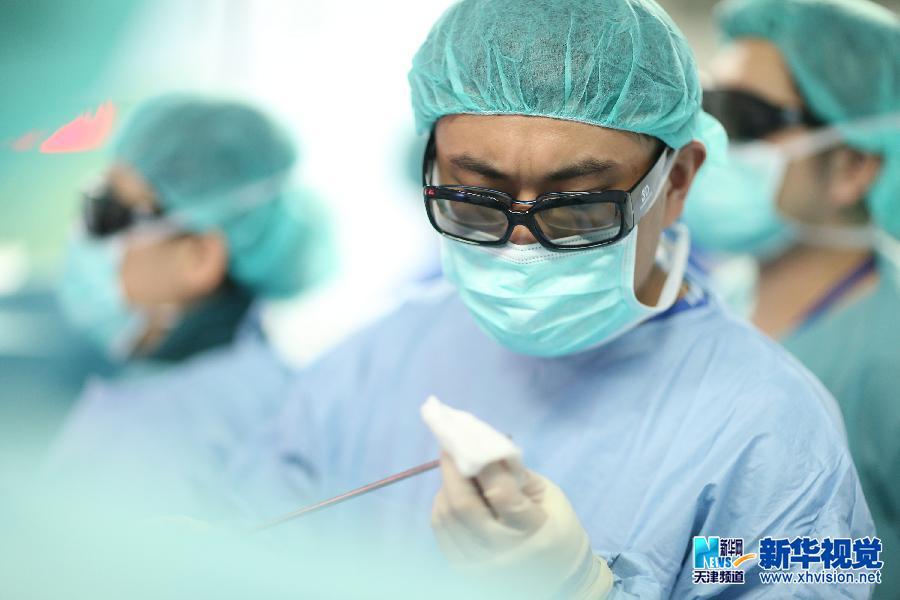
“We will use 3D printers to make splints and artificial limbs in the beginning, then we will develop more advanced stem cell-printed products,” he said.
The field of 3D bioprinting is a competitive one right now, with companies and researchers around the world racing to be the first to perfect technology that will allow for 3D printed organ transplants and other lifesaving procedures that were unheard of until recently. It’s a healthy competition, particularly for the patients who will benefit; as Professor Wu stated, it’s not a matter of if these procedures will become reality, but when. Discuss this idea further in the 3D Printed Skin forum over at 3DPB.com.
Subscribe to Our Email Newsletter
Stay up-to-date on all the latest news from the 3D printing industry and receive information and offers from third party vendors.
Print Services
Upload your 3D Models and get them printed quickly and efficiently.













You May Also Like
Solukon Goes Big with New SFM-AT850 Depowdering System
Solukon has released the SFM-AT850 depowdering system. The German depowdering specialist has updated its product line, and this machine replaces the SFM-AT800-S and SFM-AT1000-S. Rather than many small parts, this...
The Hidden Economics of Powder Bed 3D Printing: Closing the Loop in Powder Management
Automation is a very topical thing in additive manufacturing at the moment. With renewed scale, some clients are fervently looking to automate production. Other business cases only make sense with...
Oerlikon Adds ATLIX’s xBUILD 5000, Plans More for 2027
Oerlikon has installed a new ATLIX xBUILD 5000 metal 3D printer at its facility in Huntersville, North Carolina, marking the first production deployment of the system worldwide. The machine will...
The Science Lab You Can 3D Print
Researchers at Sweden’s Umeå University have shown how desktop 3D printers can be used to make lab equipment, giving scientists a cheaper way to build tools for their research. The...