
Engineering Student Saves His Employer $10K/Year With a 3D Printed Innovation

 Most of us don’t think too much about what goes into the production of the things we use and consume every day. When you rip open the small sugar packet to flavor your coffee in the morning, do you ever pause to think about everything that transpired between the planting of the sugarcane to the sealing of the processed sugar into tiny packets or large paper sacks? No? That’s okay, neither do I, generally. In fact, reading so much about 3D printing on a daily basis has made me aware of what goes into various production processes in a way I never had been before.
Much of that stems from learning about the things that can go wrong with production processes – and the ways 3D printing can fix them. For example, Sunshine Sugar in New South Wales, Australia has been producing sugar and sugar products for years, and although they’re a successful business, they’re not exempt from monetary loss due to worn-out or malfunctioning equipment – no company is. And sometimes it’s the most insignificant-seeming components that end up costing the most, as even sailors and astronauts have realized.
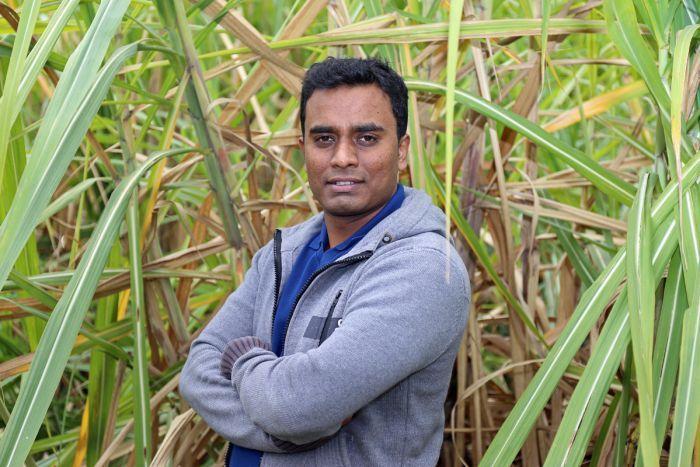 In Sunshine Sugar’s case, the financial drain came from a robotic steel claw responsible for simply removing excess packaging from sealed sugar bags. The part, used approximately 100,000 times per day, needed to be replaced frequently, and each new part cost about $1,400 – until Daniel Marks came along, that is. Marks, a 27-year-old engineering student at North Coast TAFE, was working as an apprentice draftsman at Sunshine Sugar when he began tinkering with a way to replace the steel claw for much less expense.
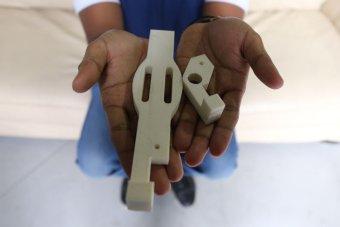
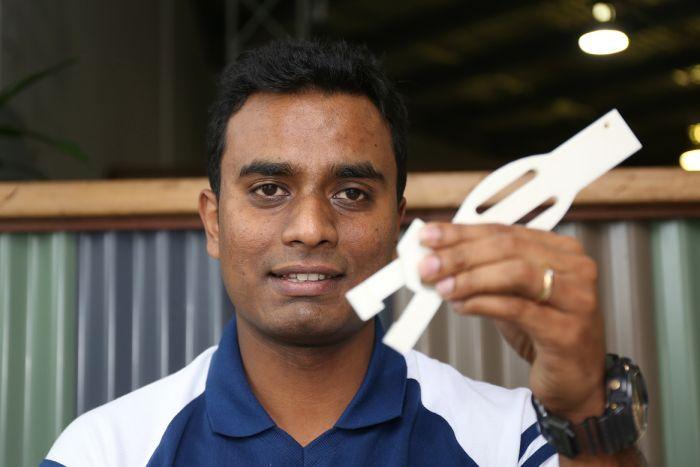
The solution? 3D printing, of course. It took a lot of research, experimentation and prototyping, but finally Marks perfected the design for a 3D printed ABS claw that would function as well, and last as long, as the current part, but cost much, much less. In fact, his 3D printed claw only ended up costing about $40.
“I had to do a lot of research and development in the design so that it would last as long as the steel part was lasting,” he said. “Because it’s a 3D-printed part, the company didn’t have to invest in manufacturing it because we were buying it from a supplier, and I had supplied the design, so that was a big saving as well. I was the first one to start 3D drawings in the company, so when they saw what I was capable of they were very happy.”
His employers weren’t the only ones who were impressed. Marks was named North Coast Apprentice of the Year at the North Coast Training Awards, as well as Student of the Year at the North Coast TAFE Awards. Originally from India, he moved to Australia in 2008 and plans to stay for the foreseeable future. He also intends to keep working with 3D printing and teaching others about the technology that helped him make such a money-saving impact on his company.
Marks’ story is one more example of how 3D printing technology is popping up in industries we wouldn’t necessarily expect. Next time you use a product of any kind, you may find yourself wondering if a 3D printer had a direct or indirect role in its manufacture – and the answer is increasingly likely to be yes. Discuss further over in the Sunshine Sugar 3D Printed Claw forum at 3DPB.com.
Subscribe to Our Email Newsletter
Stay up-to-date on all the latest news from the 3D printing industry and receive information and offers from third party vendors.
Print Services
Upload your 3D Models and get them printed quickly and efficiently.













You May Also Like
Kickstarter is Testing the Next Wave of Desktop 3D Printing
3D printers are raising serious money again…on Kickstarter, that is. Over the last few months, a new group of 3D printer campaigns has attracted millions of dollars and thousands of...
Stratasys vs. Bambu Lab: What’s Really Behind the $27.6M Patent Verdict?
Editor’s note: This is Part 1 of a two-part series by Xu Fanglei examining the technology and patent issues behind the Stratasys-Bambu Lab dispute. Part 1 looks at the U.S....
Bambu Lab and SUSAN FANG 3D Print for London Fashion Week
At London Fashion Week, some of the more unusual pieces on the runway came from 3D printers. Chinese fashion designer SUSAN FANG presented her Spring/Summer 2027 Air-Illusion collection at the...
Stratasys Wins $27.6M in Patent Case Against Bambu Lab; Bambu Challenges Verdict
Update, September 21, 2026: This article has been updated with a statement from Bambu Lab responding to the verdict, along with additional information about the company’s ongoing patent challenges against...























































