Uncharted Play Shows M.O.R.E. Low-Cost Micro-Generators at CE Week

 Uncharted Play is an award-winning harder tech company best known for their signature product, the SOCCKET, a soccer ball (known as a football outside the US) with a small generator inside. Playing with a SOCCKET for 30 minutes harnesses enough kinetic energy to power a simple LED lamp for up to 3 hours. SOCCKET had a successful Kickstarter campaign, but the Kickstarter units had some quality control issues and many didn’t work for very long. Some backers didn’t receive their SOCCKETs at all. Despite these missteps, Uncharted Play continued to develop the product and released a more robust version SOCCKET II, which was sent to all their Kickstarter supporters, whether they received the original units or not. This is a company deeply committed to providing energy in a fun way to people in developing countries, who have no or limited access to electricity or anyone who just like to idea of capturing ‘free’ energy.
Along with the SOCCKET II, Uncharted Play recently released the PULSE, a portable, emergency battery charging jump rope designed to promote physical activity and promote awareness about the global energy problem. Uncharted Play is committed to STEM programs and sells both products as education packs. But CEO Jessica O. Matthews and her team at Uncharted Play wanted to go further, much further into democratizing energy access worldwide. On display at the Unchartered Play booth at CE Week was their latest concept in all its 3D printed glory. And it’s a game changer. The new technology is called M.O.R.E. (Motion-based, Off-Grid, Renewable Energy) and it’s a customizable, low-cost micro generator that can be seamlessly integrated into almost any product. It works by harnessing the products ambient kinetic energy to power small electronics, mobile devices, and sensors for IoT (Internet of Things) applications. Uncharted Play believes that this will create new avenues for clean, cost-efficient, renewable energy that will complement, if not replace, other energy systems currently in use.
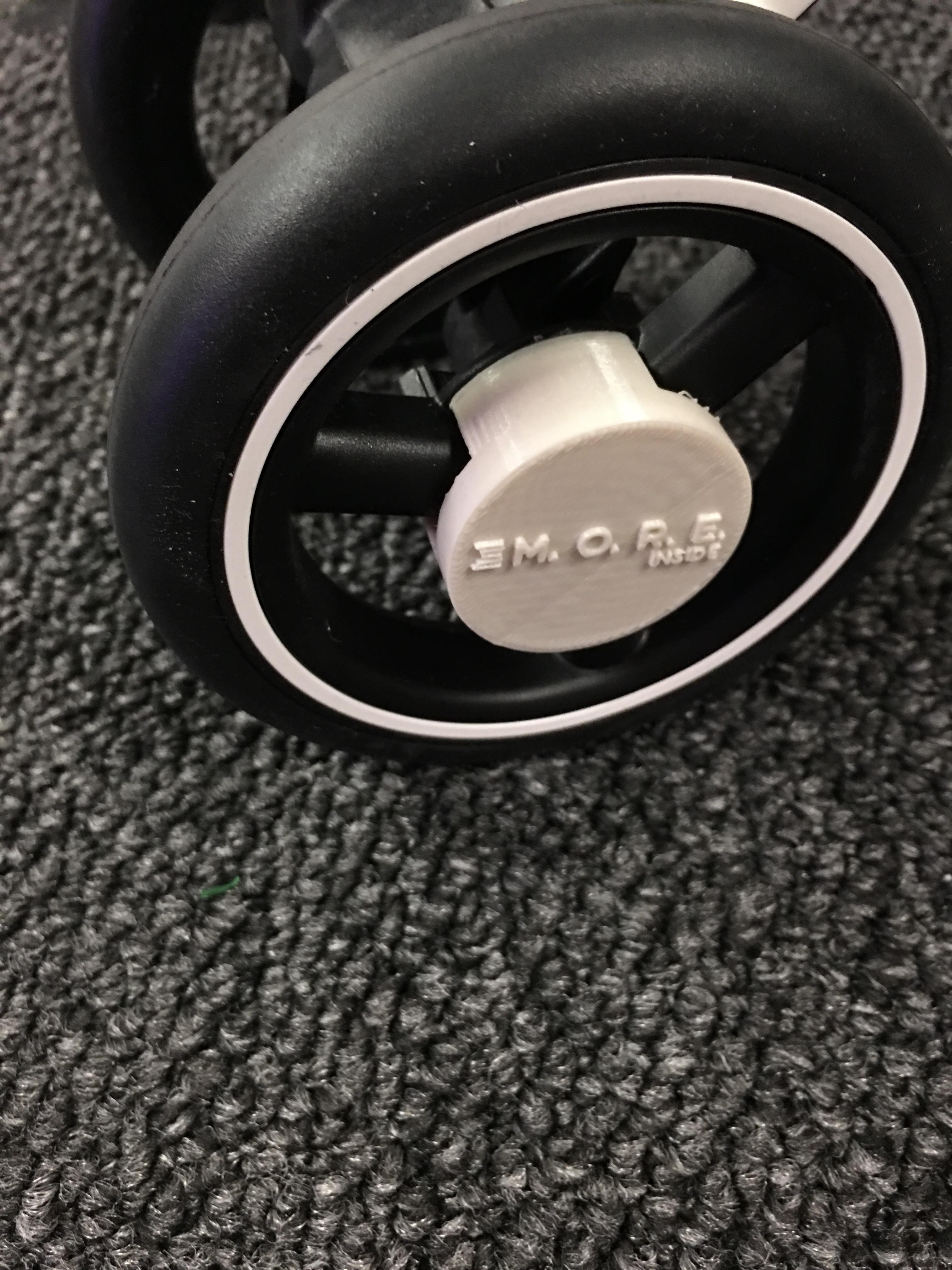
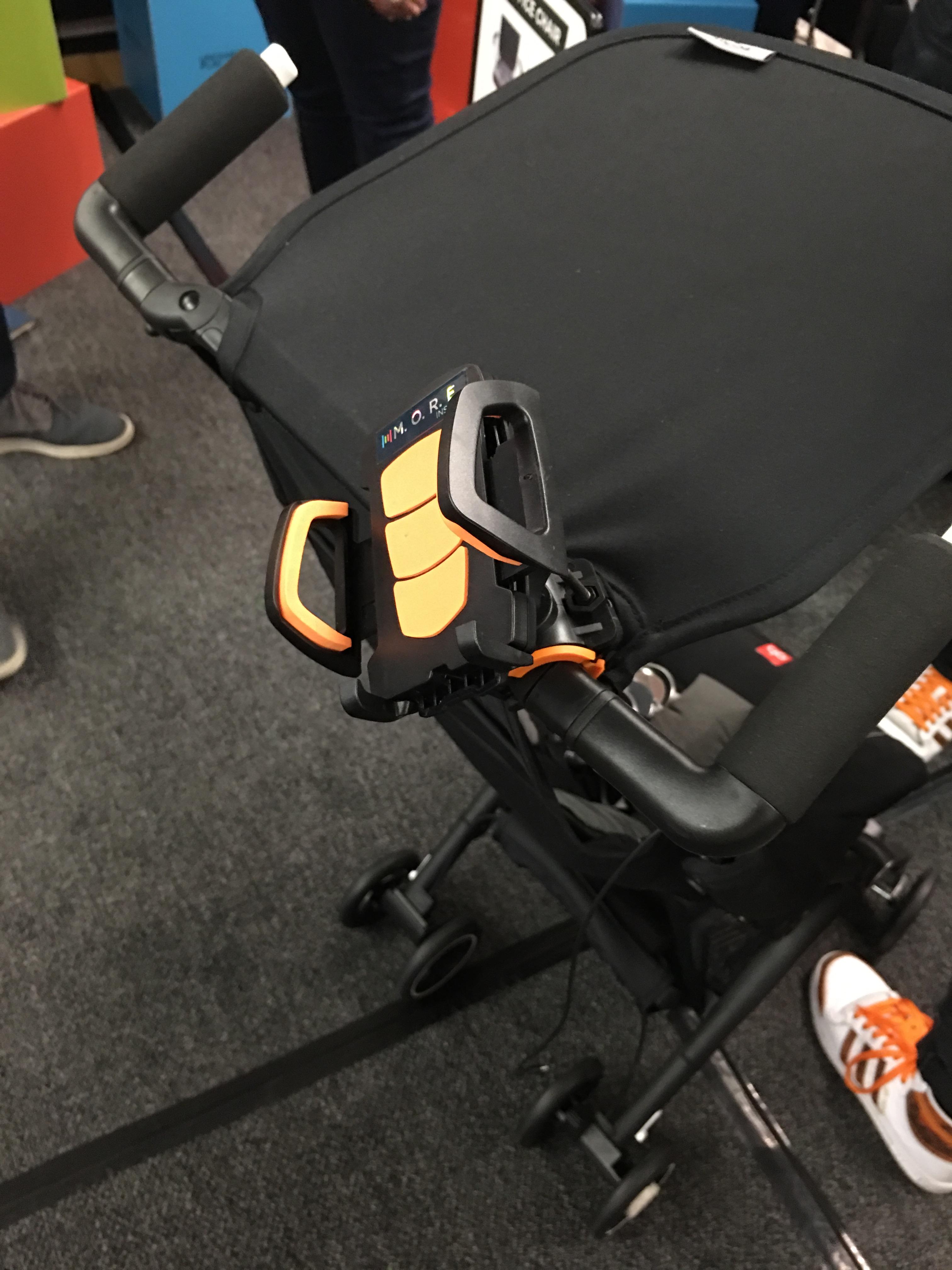
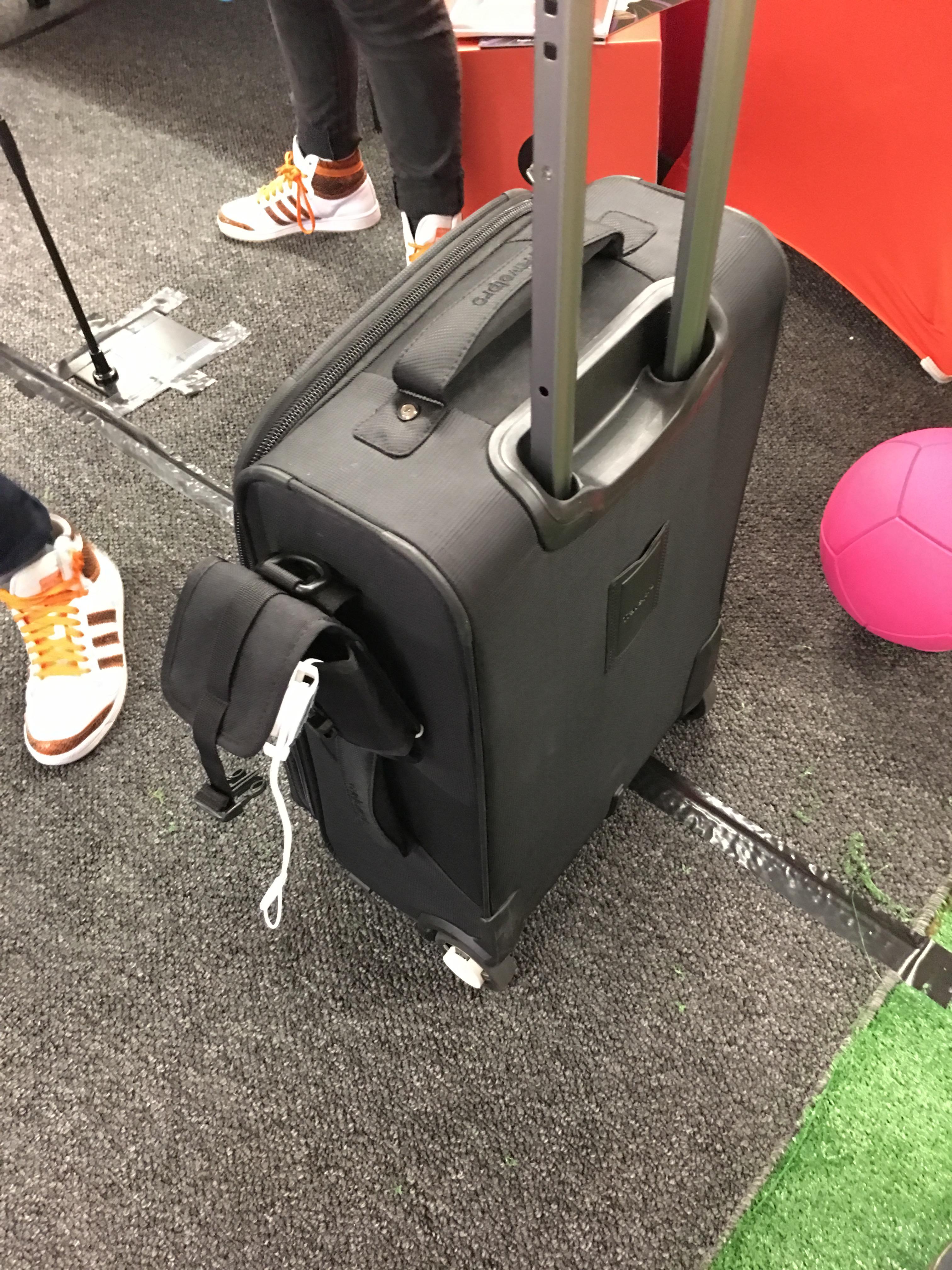
The M.O.R.E. units I saw on display were hub mounted units on a baby stroller and a suitcase. Just going about daily tasks, like taking the bay for a stroll in the park or catching a flight will generate electricity. This is essentially ‘free’ energy. Uncharted Play plans to partner with manufacturers in consumer electronics, agriculture and many other industries to put M.O.R.E. inside many everyday products.
-
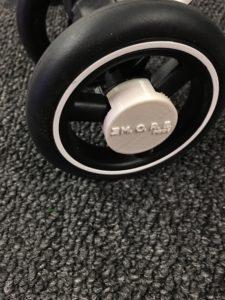
- M.O.R.E. prototype on a baby stroller
-
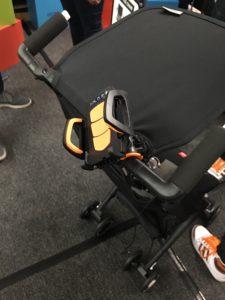
- A cellphone charger powered by M.O.R.E.
-
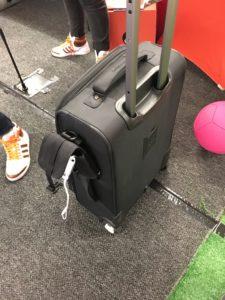
- Carry-on with M.O.R.E. generator
-
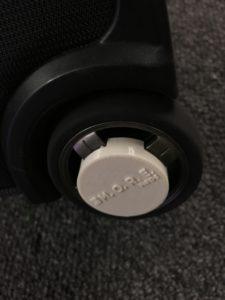
- Closeup of the M.O.R.E. generator

“We not only aim to disrupt how energy is generated, but how it is consumed, ” says Matthews, “We envision a world where people shift from a ‘hoard and save’ energy mentality to a ‘continuous and on-demand’ energy experience.”
Matthews believes that M.O.R.E. technology can make a huge impact on the African continent, which historically has had trouble scaling the current power grid system to meet the continent’s growing power needs. M.O.R.E. systems will rapidly advance African infrastructure as it enters the smart tech age, with products ranging from energy generating infrastructure that can offset energy costs for manufacturing, to self-sufficient farming tools that can extend the life of produce for farmers across the regions, while providing consistent power for their cellphones, which are often critical to their businesses and lives.
Uncharted Play believes in utilizing technology to empower the people. With the expansion of M.O.R.E., the company is reaffirming its commitment to creating products and systems that encourage playful human behavior to create a world where everyone can play in the light – powering a world in motion, with motion. This is a revolutionary, disruptive technology and it’s heartening to see it paired with another disruptive technology, 3D printing, to empower people by giving them accessible electric power.
Below is a video of Uncharted Play CEO Jessica O. Matthews explaining M.O.R.E at CE Week:
Subscribe to Our Email Newsletter
Stay up-to-date on all the latest news from the 3D printing industry and receive information and offers from third party vendors.
You May Also Like
Profiling a Construction 3D Printing Pioneer: US Army Corps of Engineers’ Megan Kreiger
The world of construction 3D printing is still so new that the true experts can probably be counted on two hands. Among them is Megan Kreiger, Portfolio Manager of Additive...
US Army Corps of Engineers Taps Lincoln Electric & Eaton for Largest 3D Printed US Civil Works Part
The Soo Locks sit on the US-Canadian border, enabling maritime travel between Lake Superior and Lake Huron, from which ships can reach the rest of the Great Lakes. Crafts carrying...
Construction 3D Printing CEO Reflects on Being Female in Construction
Natalie Wadley, CEO of ChangeMaker3D, could hear the words of her daughter sitting next to her resounding in her head. “Mum, MUM, you’ve won!” Wadley had just won the prestigious...
1Print to Commercialize 3D Printed Coastal Resilience Solutions
1Print, a company that specializes in deploying additive construction (AC) for infrastructure projects, has entered an agreement with the University of Miami (UM) to accelerate commercialization of the SEAHIVE shoreline...