Gigi the Macaw is the Proud Recipient of the World’s First 3D Printed Titanium Beak


Image: Cicero Moraes
Over the weekend, I was hanging out with a family member when she told me about her friend’s dog, who recently had to have her leg amputated because of cancer. I almost jumped out of my chair, squealing, “Now she can get a 3D printed leg!” I’ve written a lot of stories about disabled animals getting 3D printed prosthetics that allow them to function again, and I never get tired of them. Watching a video of a puppy or kitten trundling around with a 3D printed wheelchair or a brand new leg always uplifts me (and, full disclosure, sometimes makes me cry).
The best animal prosthetic stories are the ones that show how 3D printing really does save the lives of creatures whose injuries or deformities make it difficult or impossible for them to survive on their own. Some of the best examples of this are the stories about birds. Obviously, a bird needs a beak to be able to eat, defend itself, and otherwise survive, so beak injuries can often mean a rather dismal future. We’ve covered several birds who have been the lucky recipients of 3D printed beaks, including a couple of toucans, a pelican, and others. These birds, after devastating injuries, were restored to full functionality by 3D printed beaks designed by some very caring people.
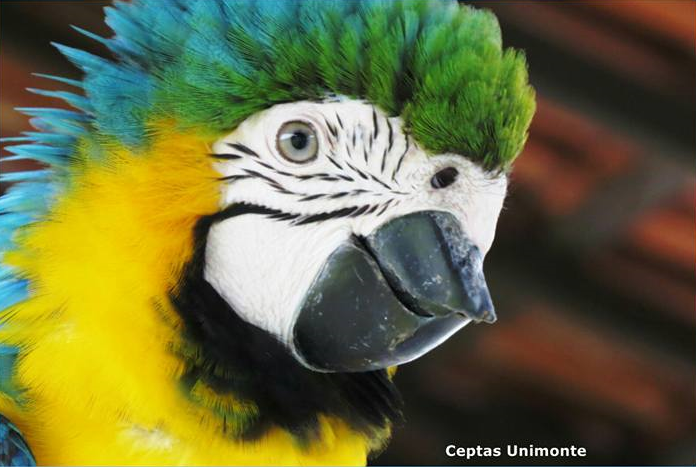
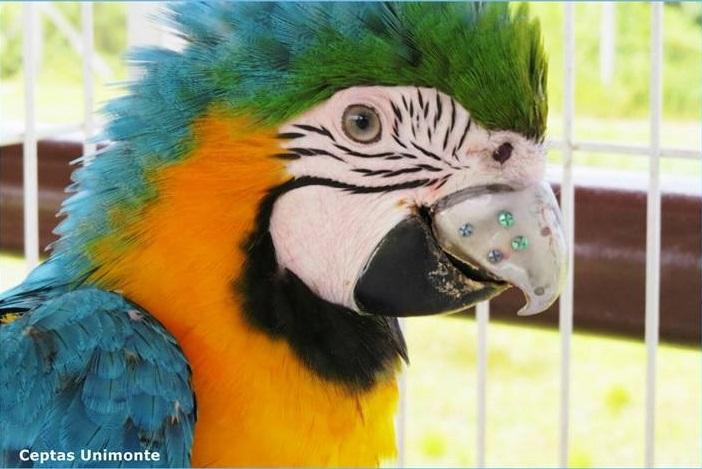
These birds have been fitted with beak prosthetics made from durable resin materials, but recently a macaw became the recipient of the world’s first 3D printed titanium beak. Gigi the macaw, who was rescued from captivity in Brazil, had a seriously deformed beak that prevented her from eating on her own. Her plight was brought to the attention of a group of veterinary experts from the Animal Care Center Ipiranga in São Paulo. No strangers to 3D printing, the team, consisting of veterinary surgeon Roberto Fecchio, 3D designer and facial reconstruction specialist Cicero Moraes, and veterinary dentist Paul Miamoto, was responsible for 3D printing a new shell for Fred the tortoise last year, as well as a beak for one of the aforementioned toucans.
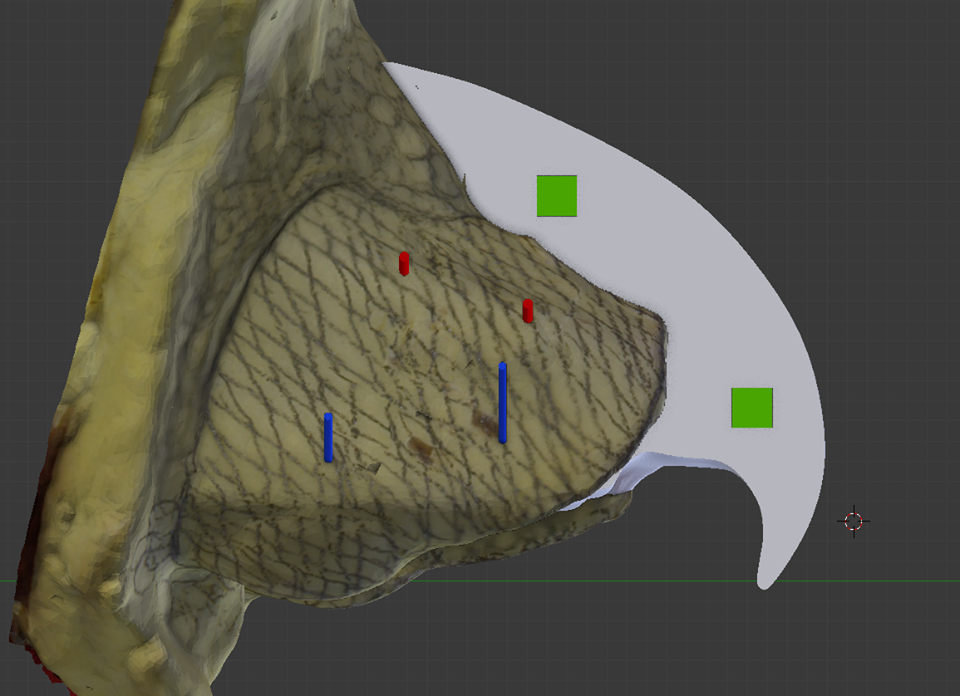
Image: Cicero Moraes
Gigi, they realized, wouldn’t benefit very much from a plastic beak. Macaw beaks are tough, hard and hooked, as the birds need to be able to crack and smash their food. Many human prosthetics are made from titanium, so why not try the material on a bird? Titanium is lightweight, strong, and rust-resistant, which makes it an ideal material for medical devices and implants – and, as it turns out, for prosthetic beaks. The veterinary team took a series of photographs of Gigi and used them to create a 3D model of a beak, which was then 3D printed in titanium by specialists at the Renato Archer Technology and Information Center (CTI).
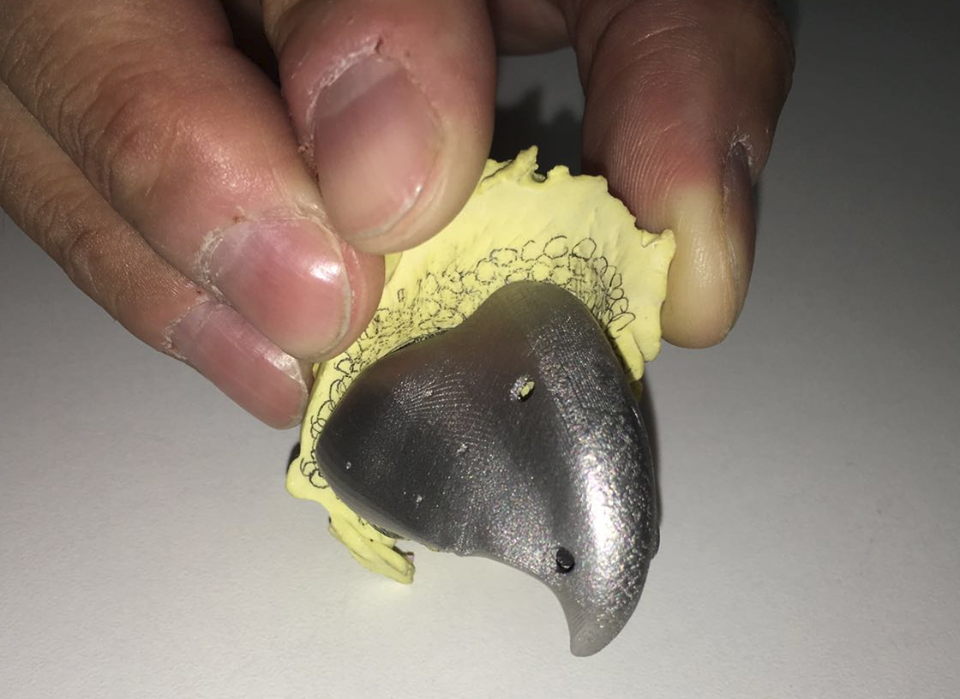
Image: Cicero Moraes
The beak was then surgically attached to Gigi’s naturally stunted beak on February 18, and she is now recovering wonderfully, according to the Center for Research and Screening of Wild Animals (CEPTAS) at Unimonte University. Only days after her surgery, she can eat solid food on her own. She also looks fabulous. Her new beak was attached with brightly colored screws, so it appears at first glance to be studded with rhinestones. A bejeweled silver beak – all the other birds are going to be seriously jealous.
Since Gigi spent most of her life in captivity, she will not be able to survive on her own, so her caretakers are hoping she can be adopted by a zoo. CEPTAS is also using Gigi’s story to bring attention to birds who are victims of illegal exotic animal trafficking. Are you surprised that they could make a beak like this for Gigi? Discuss in the 3D Printed Titanium Beak forum over at 3DPB.com.
Subscribe to Our Email Newsletter
Stay up-to-date on all the latest news from the 3D printing industry and receive information and offers from third party vendors.
Print Services
Upload your 3D Models and get them printed quickly and efficiently.











You May Also Like
AM Drilldown: the Beginning of 3D Printing’s Next Phase in the Energy Sector
For much of the last decade, many have pushed an unjustifiably optimistic view of global energy consumption, along the lines of, fossil fuels are “on their way out.” Sadly, this...
Mikhail Gladkikh on Digital Inventory: “Think of It as Netflix for Manufacturing”
As manufacturers continue looking for ways to reduce supply chain risk, additive manufacturing (AM) is increasingly being discussed as more than just a production tool. Across aerospace, energy, defense, and...
ROBOZE Buys Dimanex Assets to Build “Physical AI” Platform
Dutch firm Dimanex got its start as an MRO platform for the railways. The company had a contract with the Dutch Army in 2018, and later that year signed one...
3D Printing Financials: Xometry Surges After Record Quarter and Siemens Deal
Shares of Xometry (Nasdaq: XMTR) surged on Thursday, May 7, after the company reported record first-quarter 2026 results and announced a major partnership with Siemens. The stock climbed as much...