Fairphone and 3D Hubs Present a Collection of 3D Printed Wooden Accessories for the Fairphone 2

 When you think of cell phones and cell phone accessories, you probably think of plastic, and, for the most part, that would be accurate. 3D printing has become a popular method of manufacturing for cell phone cases and other accessories; they’re simple, easy to print, and the customization possibilities are endless. Plastic resins are understandably the most common materials used to print cell phone accessories – they’re cheap, flexible, durable, and, well, plastic is just what cell phone accessories are made of, right? Not necessarily.
We’ve written quite a bit about cell phone manufacturer Fairphone, whose environmentally and socially responsible manufacturing methods set them apart from the majority of phone manufacturers. The Amsterdam-based company focuses on fair wages, conflict-free minerals, recycling and other sustainable practices, and their alternative manufacturing methods include 3D printing. Last year, the company partnered with 3D Hubs to encourage consumers to print their own smartphone covers, and they’ve held several challenges involving 3D printing phone cases and other accessories.
This week, Fairphone released their new Fairphone 2 model, and to mark the occasion, the company once again teamed up with 3D Hubs to offer a collection of 3D printed phone accessories for the new phone. In keeping with Fairphone’s mission to produce sustainable, unconventionally manufactured products, the new accessories aren’t made of plastic, they’re made of wood.
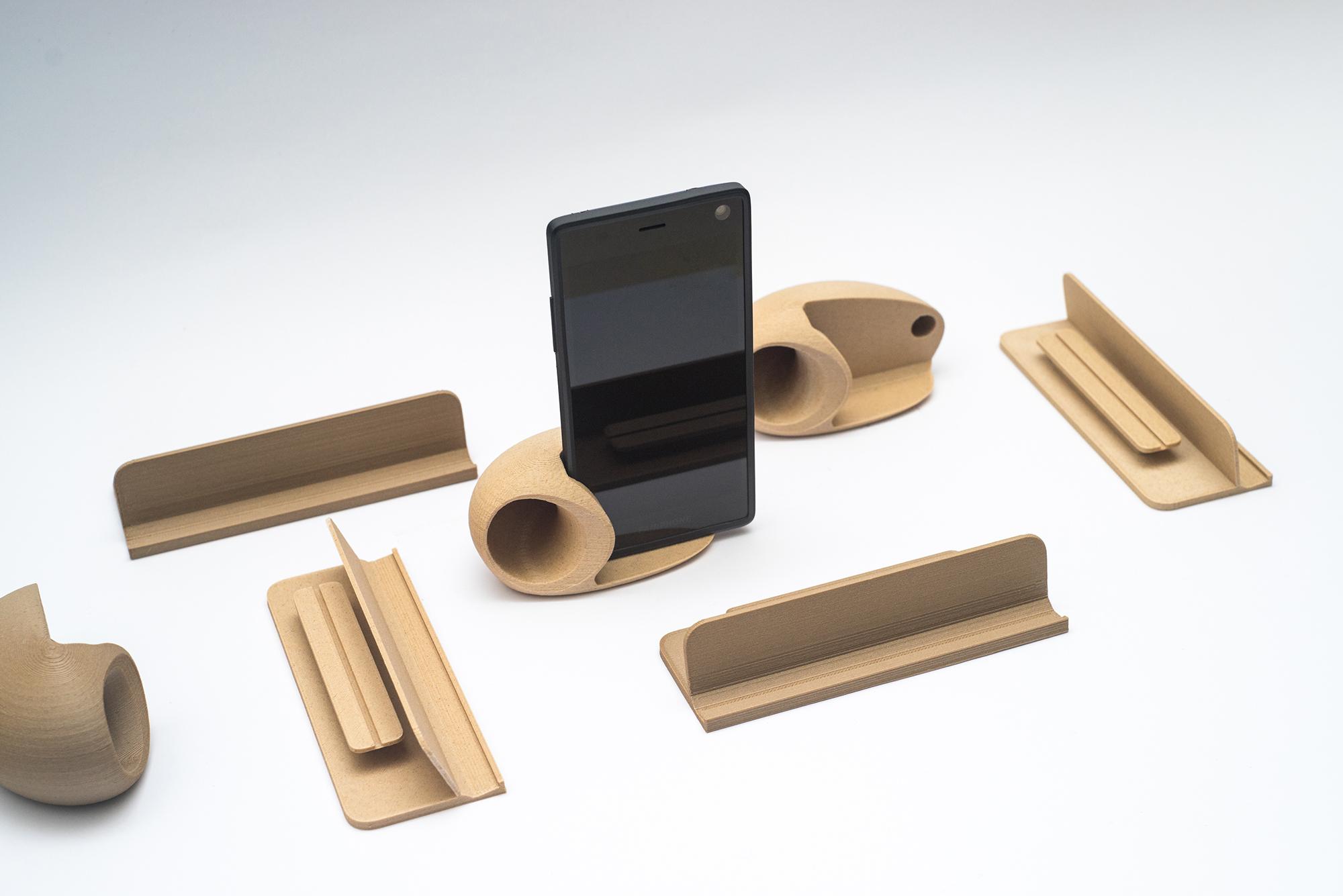
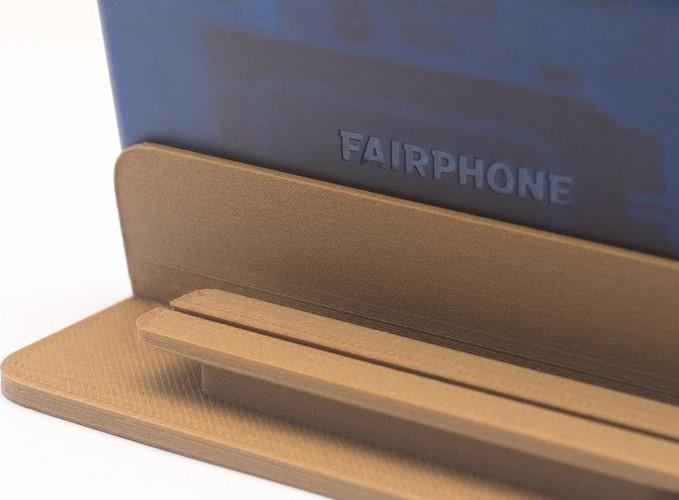
The accessories, which were designed by industrial designer Alan Nguyen, include an amplifier and a “nightstand,” both printed on an Ultimaker printer using colorFabb’s woodFill filament, a material made from bioplastic PLA and recycled wood fibers. Like the other products on offer from Fairphone and 3D Hubs, the new accessories are only manufactured on demand at 3D Hubs locations, eliminating overstock and reducing waste.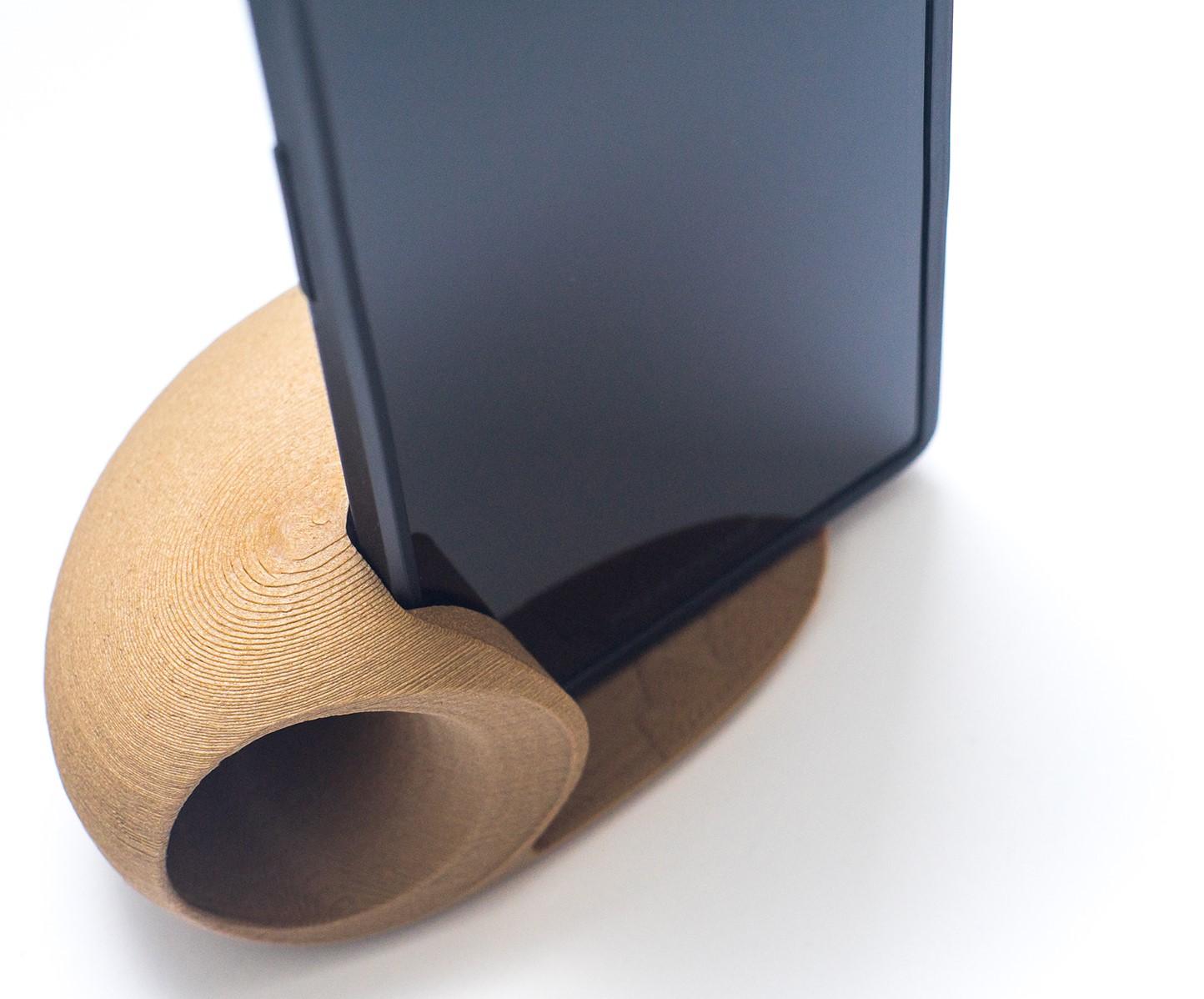
The nightstand, which costs €19.50, was designed as an easy holder in which to rest your phone overnight or while charging. The amplifier, retailing for €26.50, is a simple wooden stand that allows you to amplify music played from your phone without any additional electronic devices. How it works is really cool. Have you ever held a seashell up to your ear to “listen to the ocean?” When I was younger, I believed that the shells I listened to actually held small, invisible oceans, learning later in life that the sound of the crashing waves is actually produced by ambient noise bouncing around inside the shells. The amplifier’s design was based on a conch shell, and its acoustics naturally amplify the sound produced by your phone when it rests on the stand.
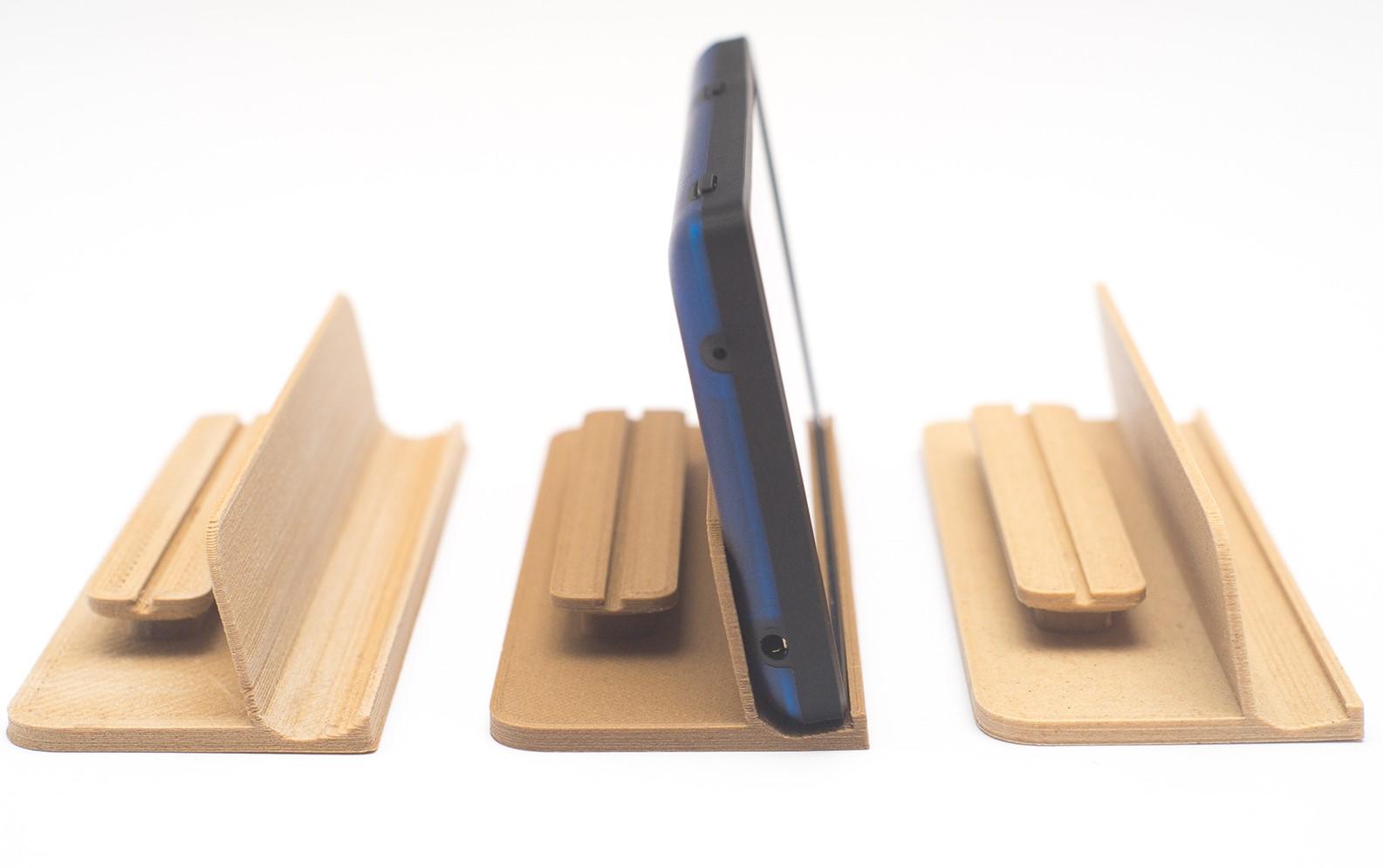 Right now, the new products are only available in a handful of European countries. According to 3D Hubs, the nightstand and amplifier are the world’s first 3D printed phone accessories made from wood. Whether that’s true or not is debatable – with so many designers and makers experimenting with 3D printing, it’s hard to say with certainty that any 3D printed goods are the first of their kind in the world. Regardless, the new Fairphone designs, particularly the amplifier, are still pretty different than anything I’ve seen so far. Discuss this story in the Fairphone 2 forum thread on 3DPB.com.
Subscribe to Our Email Newsletter
Stay up-to-date on all the latest news from the 3D printing industry and receive information and offers from third party vendors.
Print Services
Upload your 3D Models and get them printed quickly and efficiently.













You May Also Like
3D Printing News Briefs, October 10, 2026: Drones, WAAM, Ceramics, & More
We have a packed 3D Printing News Briefs for you this weekend! First, America Makes celebrated the recent National Manufacturing Day with 3D printed drones, and then it’s on to...
10 Years of Multi Jet Fusion: Onsite at HP’s Vancouver, Washington Facility
At this year’s RAPID event in Boston, HP Additive Manufacturing Solutions celebrated ten years in the additive manufacturing (AM) market. The company ushered in the milestone with several innovations, including...
PharmaTher Plans U.S. Network to 3D Print Medicines on Demand
3D printing medicines has often been tied to the idea of personalization, basically making a pill in the right dose, shape, or drug combination for a patient. PharmaTher is now...
3D Printing News Briefs, September 17, 2026: 3D Printed Boat, UAS Development, & More
We’ll start with maritime manufacturing in this week’s 3D Printing News Briefs, and continue on to defense 3D printing. We’ll end with funding for Tripo AI. Read on for all...