It’s Easy to Make a 3D Printed Stamp, or Even a Whole Stamp Collection

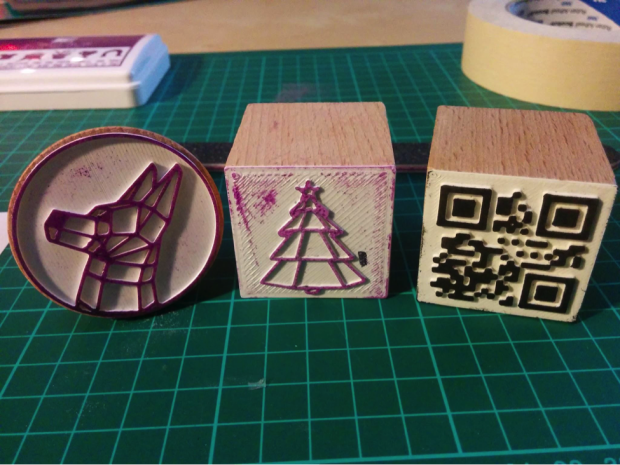
As a nostalgic craving for the simpler life has been enticing many people to return to earlier technologies like the typewriter, another trend is on the increase for those who want to work with traditional publication technologies, like letterpress and relief printing. 3D printing accommodates this trend nicely, as it has become easier to create movable type, customized printing plates, and–the subject of this article–cool stamps! These stamps can be made directly from vector images (which are made of simple lines, shapes, and curves) using two free software programs, Inkscape and Open SCAD. Chris Slyka has provided an easy tutorial on how to do this, via Make: magazine. The chosen stamp you make here could even be used on the seal of all your holiday cards, too. If you follow these easy instructions toward your own 3D printed customized stamp, you may decide you need more than one. Why not a collection?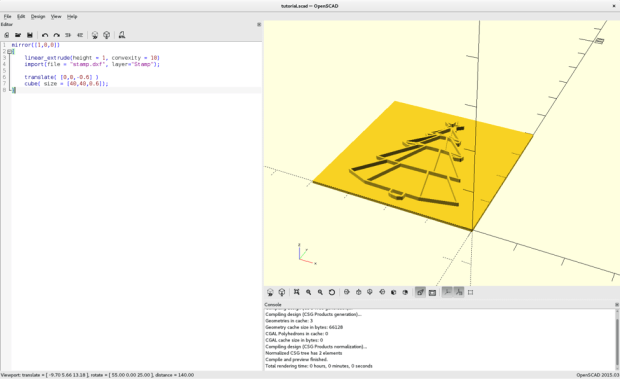
We begin by downloading Inkscape, OpenSCAD, and OpenSCAD DXF Exporter. Next you want to choose an image to export. Choose a pure black and white image with little detail and the thinnest lines greater than your extruder’s nozzle. This guarantees a clean print that won’t get lost during slicing. After you’ve chosen the image, gather your other materials: glue, inkpad, and sandpaper or file. You’ll have fun choosing your stamp handle, as you have many choices–or you can also go the route of 3D printing one. The one used here is a wooden cube from a craft store that measures 4 x 4 x 4.
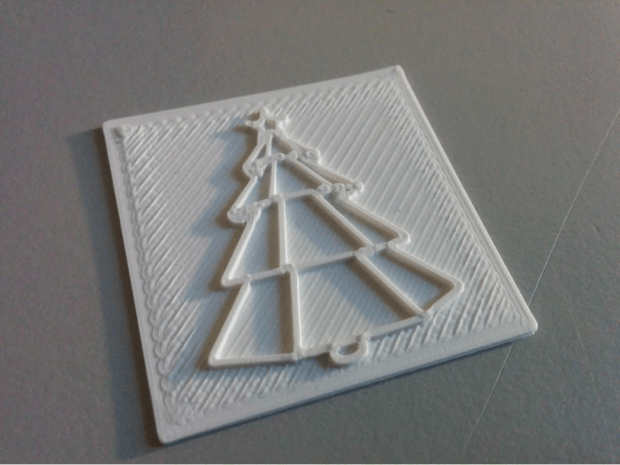 Now we have to export your vector image. You first set up your document size, then prepare it for DXF export, turn the image into a single path, and then export it. (You can follow all of the details to accomplish this straightforward set of software-based steps by going here.) Once you export your image, you generate an .stl file by setting up your OpenSCAD, importing and extruding the DXF file, adding the base plate, flipping the image, and exporting the model.
Now you are ready to 3D print your stamp! For slicing and printing, Chris used Slic3r and Pronterface, and for printing with a Printrbot Play, 195°C white PLA was used at a 0.2 mm layer height. The stamp’s profile needs to be as smooth and flat as it can be so it comes into even contact with the paper. For this reason, you should tape the stamp to the handle, and use your file or sandpaper to remove an excess. Then use a black marker to go over the stamp’s lines and run it in a slow circular style with 600 grit sandpaper. This tells you when you have even lines on your stamp because all of the marker will disappears when everything is smooth and even.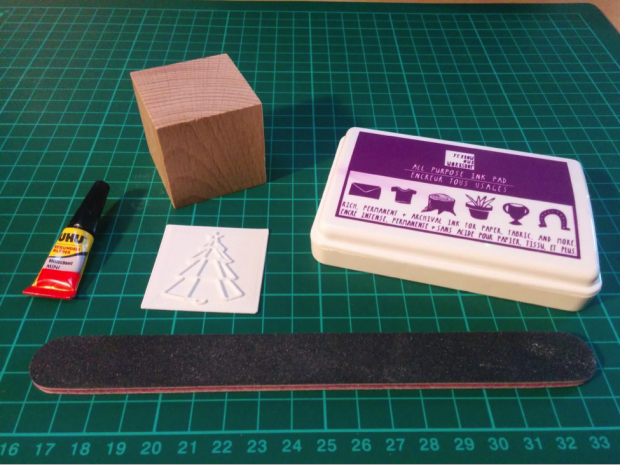
Finally, there’s an easy assembly process. Just peel off your tape and remove all dust. Before you permanently glue your stamp onto the handle, you can use the plate to apply the image to the back of the handle so you know which stamp is which if you make more than one. Then, you guessed it: it’s gluing time. Superglue the plate onto the handle, again, making sure it’s even, and let the glue cure before using it.
That was easy enough, right? So start on your second stamp–and make a whole 3D printed stamp collection! Discuss these designs in the 3D Printed Stamp forum thread on 3DPB.com.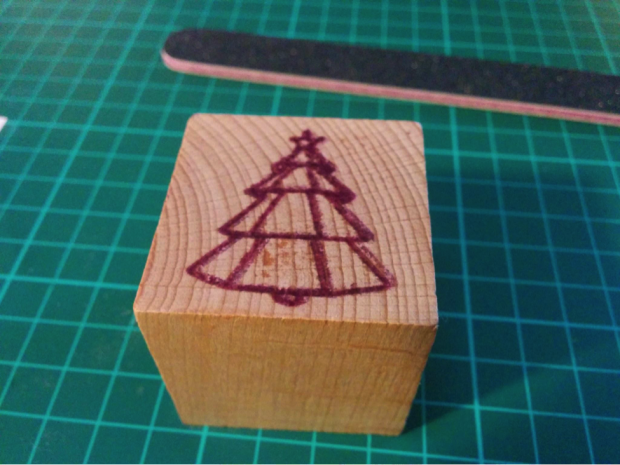
Subscribe to Our Email Newsletter
Stay up-to-date on all the latest news from the 3D printing industry and receive information and offers from third party vendors.
Print Services
Upload your 3D Models and get them printed quickly and efficiently.











You May Also Like
3D Printing News Briefs, January 17, 2026: Titanium Scrap, Autopsy Analysis, & More
In this weekend’s 3D Printing News Briefs, we’ll start with government funding news from IperionX. Then, a German contract manufacturer has acquired its 6th and 7th Lithoz ceramic 3D printers....
3D Printing News Briefs, January 15, 2026: Project Call, Sports Medicine, Aluminum Alloy, & More
In today’s 3D Printing News Briefs, America Makes announced the winners of a $1.1 million Project Call, Austal USA named a new Vice President for Business Development and External Affairs,...
U.S. Navy Funds Senvol’s Machine Learning Software to Boost In-Situ Monitoring for 3D Printing
The additive manufacturing (AM) industry is well-positioned to benefit from increased incorporation of AI and machine learning (ML) into its core processes, and 2026 should provide plenty of opportunities for...
US Army Awards Contract to Phillips Federal for Containerized WAAM Factories
Everything that the U.S. Army has been doing with additive manufacturing (AM) over the last year or so suggests that the branch is getting serious about deployable production systems. One...