Ultimaker’s Olsson Block Enables Architectural Firm to 3D Print a City in No Time


 One of the really neat things about 3D printing, in my opinion, is how its development has been such a collaborative effort. The technology has advanced so rapidly largely because we live in the era of hacking and crowdsourcing. The RepRap project is an obvious example, and we frequently cover stories of individuals coming up with their own ingenious ways to build and operate 3D printers. Kickstarter is full of projects offering creative new twists on extruders, plates, filament, and other 3D printing components. Sometimes these inventions, conceived by individuals or small groups, catch on with startling speed within the larger industry.
One of these inventions is the Olsson Block, which we reported on last week. The block was created by Ultimaker customer Anders Olsson to make changing 3D printer hot end nozzles quick and easy, without having to replace the entire heating block. Ultimaker was so impressed with the invention that they bought it from Olsson. Wanting to get it into the hands of as many customers as possible, they have been giving away a free block with the purchase of an Ultimaker 2 or Ultimaker 2 Extended printer during the month of November, and it already seems to be making an impact on the architectural industry.
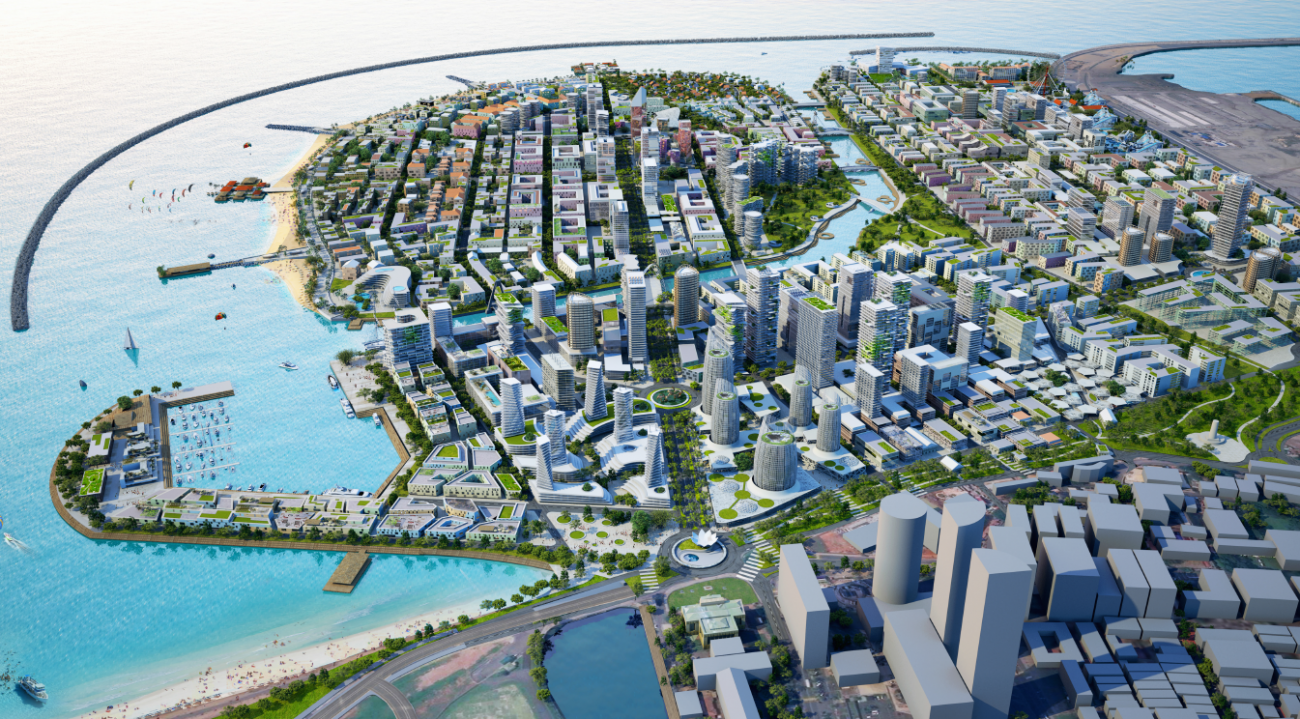
Sweco’s digital rendering of the Colombo expansion
Henrik Bejmar, an architect at Swedish architectural firm Sweco, is part of a team tasked with the daunting assignment of expanding an entire city. Colombo, Sri Lanka will be getting a 280 hectare addition which will include up to 90,000 new apartment units and 200,000 office spaces.
To begin conceptualizing such a massive undertaking, the team obviously needed lots of architectural models, and they needed them fast. The company had been using 3D printing for a while, so it was the obvious choice for their latest project. Using an Ultimaker 2 Extended printer, the team quickly produced a scale model of the entire expansion.
“It’s much easier to use 3D printing for this project because it’s so detailed,” says Bejmar. “Because of the size of the project, you need to print at a slightly smaller scale to actually be able to get a huge scale model.”

When the team found out about the Olsson Block from Ultimaker, they knew immediately that it would be perfect for their project. The varying sizes of the models were easily printed to scale with the interchangeable nozzles, which may not have been feasible with a printer using a standard heating block. The larger parts of the model, which were printed using the 0.8mm nozzle included with the block, were completed twice as fast as they normally would have been. The smaller models were printed using the 0.25mm nozzle, which enabled precise detail.
Naturally, such an accurately scaled and detailed model was impressive to clients, and the team itself saved a great deal of time and money, which is critical in such a large project with tight deadlines.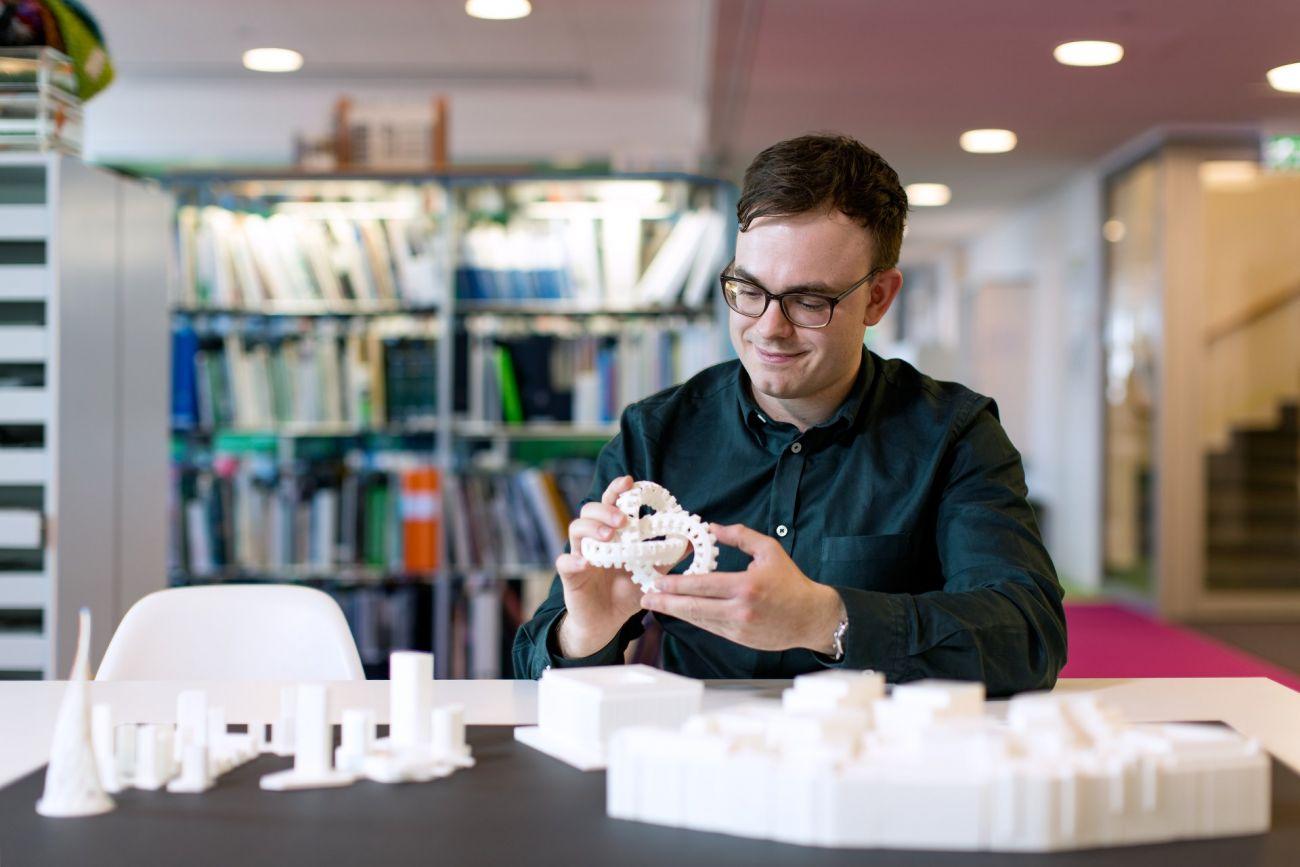
“The future of 3D printing is very interesting,” Bejmar concludes. “I think it’s going to be used in conjunction with actual cardboard models, but for projects that we have it’s a very easy to use tool to visualize the models that we have for the clients, and also as a tool for building the models ourselves.”
The future of 3D printing is going to be interesting indeed, if its growth continues to be driven by individuals as much as corporations. I look forward to seeing what customer-invented product will the next thing to catch on within the larger industry.
Discuss this story in the Olsson Block 3D Printing forum thread on 3DPB.com.
Subscribe to Our Email Newsletter
Stay up-to-date on all the latest news from the 3D printing industry and receive information and offers from third party vendors.
Print Services
Upload your 3D Models and get them printed quickly and efficiently.













You May Also Like
IFA 2026 Shows Where Multicolor 3D Printing Is Headed
Innovation For All (IFA) is best known for televisions, appliances, and consumer electronics. But this year’s show in Berlin also gave 3D printing companies plenty of room to show where...
The Final Countdown: More Value for G1X Series Backers
HeyGears G1X Series, the world’s first desktop full-color 3D & UV printer, has now surpassed $15 million on Kickstarter, backed by a growing global community of creators, makers, artists, and...
AM Pulse Asia: Consumer Metal AM, Nuclear Parts and Rockets Push New Ground
The second half of August produced financing milestones, facility openings, and qualification results across Asia-Pacific additive manufacturing. Rongsu Technology closed a CNY 100 million Series A+ and launched a consumer...
HeyGears G1 Passes $14M on Kickstarter with Full-Color 3D Printing
HeyGears was started in 2015 and has been making value-driven Vat Polymerization systems for dental and home use. The company is marketing savvy and very driven. Now the firm has...