Stratasys Helps 3D Print 2,000 pound, 14 Foot Tall Giant Creature, ‘Bodock’ For Comic-Con


For over 40 years, San Diego California has been the place to be in mid-summer, as 130,000+ people converge on the city to take part in what is known as Comic-Con. The largest convention to take place in San Diego  every year, usually fills the San Diego Convention Center to capacity. Why? Perhaps it’s the atmosphere created by comic book and technology fans, and the exhibits on display by various companies, oftentimes resembling a high tech Disney Land.
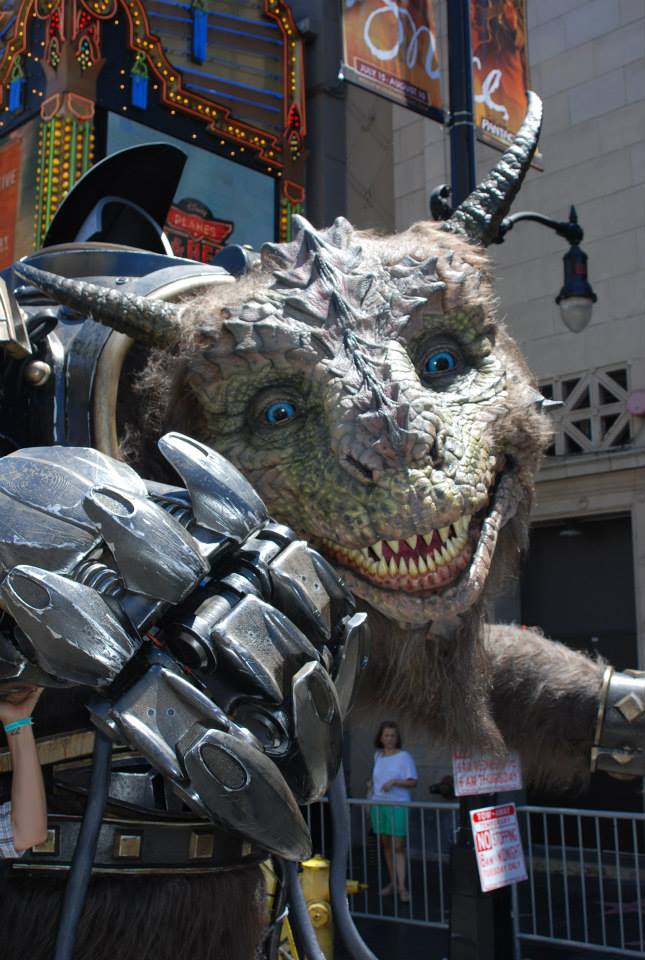
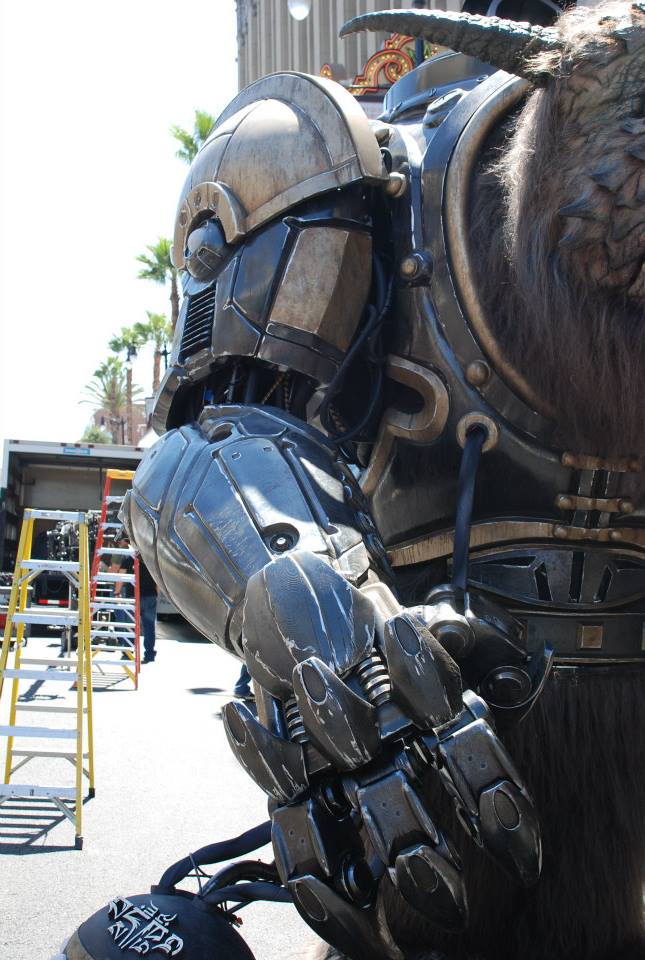
In addition to the many fascinating interactive exhibits, there will be one exhibit outside the convention which may just blow you away. Stratasys has collaborated on a project which may be the most elaborate piece of work ever scene at Comic-Con. Together with Stan Winston School of Character Arts, Legacy Effects, Condé Nast Entertainment and WIRED, they have created a “giant”, quite literally.
From July 24-27, a giant mechanical creature will roam outside the Convention Center. Weighing in at over 2,000 pounds, standing almost 14 feet tall, with a width of 9 feet, 9 inches, the creature, named ‘Bodock’, will be a feast for the eyes. Bodock has already been revealed to the world on the ‘Jimmy Kimmel Live Show’ last night, and has received quite the reaction thus far. Check out the Clip from last night’s show at the bottom of this story.
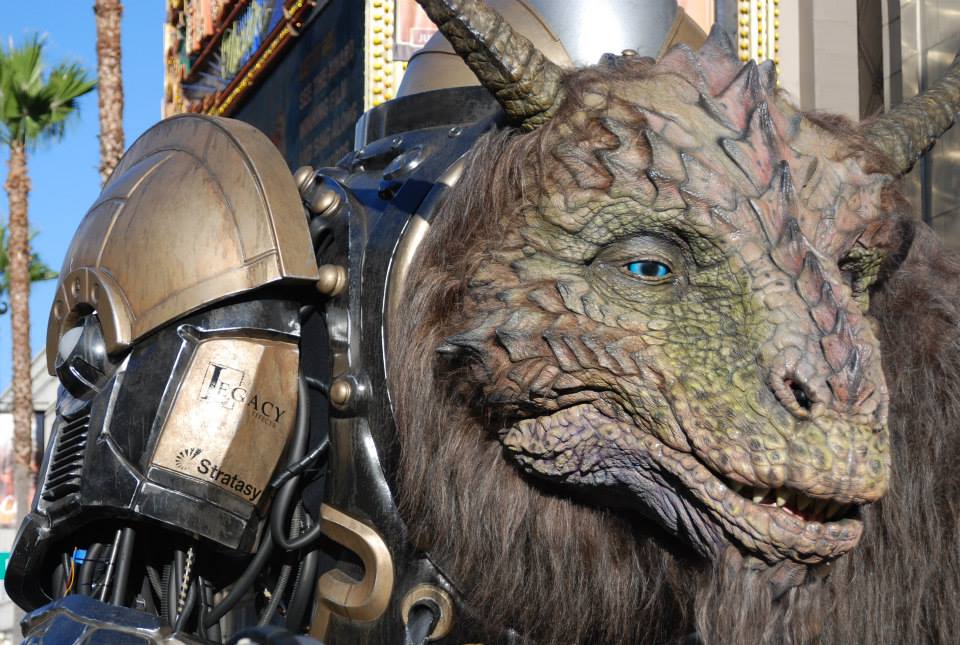
Approximately 33% of the creature was 3D printed. Stratasys of course, was in charge of the 3D printing efforts, utilizing a variety of different printers including their Fortus 900mc, which was able to build pieces of the creature, as large as 36 x 24 x 36 inches.
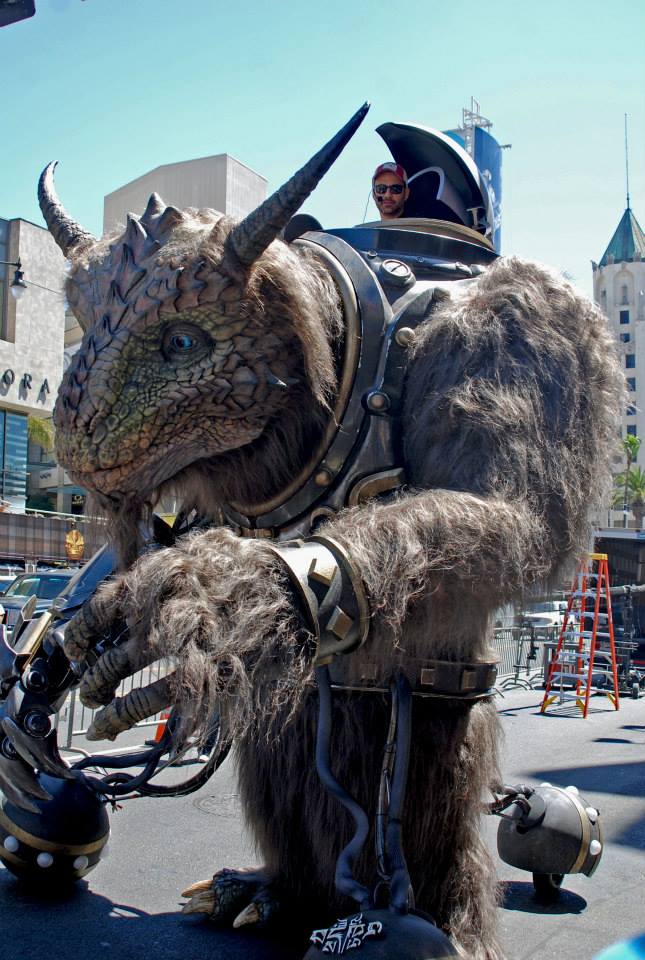
“The true value of using Stratasys 3D printing on the Bodock project was the time savings – being able to go directly from design to the end use part without having to add additional steps in the process. This is a huge step forward for Legacy Effects in incorporating 3D printing for end use materials in their designs,” said Jason Lopes, lead systems engineer at Legacy Effects. “Never have we used such a large scale of directly 3D printed parts on a project of this scope and magnitude. This truly showcases the strength of this material and the ease of post-processing and finishing.”
As for the material they printed with. They primarily used an ABS-M30 thermoplastic, which allowed for end use parts to be printed, as well as jigs, functional prototypes, and fixtures. In total, the production of ‘Bodock took an amazingly short six weeks and approximately 7,500 collaborative hours of work to create.
“Everything about the giant creature project is ambitious, including size, weight, delivery schedule and performance requirements,” said Matt Winston, co-founder of Stan Winston School. “Without the close involvement of our partners at Stratasys, whose 3D printing technologies are revolutionizing not only the manufacturing industry but the entertainment industry as well, none of it would have been possible.”
Wired has also created a mini-series called ‘How to make a Giant Creature’, in which they document the production process behind the creation of Bodock.
Let us know if you make it this weekend to Comic-Con. If you do, be sure to post plenty of pictures of Bodock, in the 3D printed giant creature forum thread on 3DPB.com. Check out some of the incredible images of Bodock below.
Subscribe to Our Email Newsletter
Stay up-to-date on all the latest news from the 3D printing industry and receive information and offers from third party vendors.
Print Services
Upload your 3D Models and get them printed quickly and efficiently.












You May Also Like
AM Asia Watch: Chinese Company Claims Advances in Titanium Powder Beyond 700C
They’re a familiar sight at trade shows: Chinese powder companies with barren stands lacking parts. There’s maybe some glass vessel with powder in it and a semi-complete data sheet, but...
Aires Tide Designed with AI, Supercomputers, and 3D Printing
The Department of Energy‘s National Nuclear Security Administration (DOE/NNSA) is part of the US government that manages the US nuclear stockpile, helping to upgrade, improve, and maintain nuclear weapons, and...
Largest Publicly Announced, Single Order in EOS History: Beehive Industries Spends $50M on M4 ONYX 3D Printers
Earlier this year, Beehive Industries received a $29.7 million contract to produce its Frenzy 6 and Frenzy 8 engines for the US Air Force. The metal additive manufacturing (AM) user...
Blue Origin’s New Glenn Explosion Comes During Major Manufacturing Push
Blue Origin‘s orbital New Glenn rocket exploded during a hot-fire test at Launch Complex 36 in Cape Canaveral on May 29, setting back the company’s launch ambitions at a time...