MakerBot Announces Assistive Technology Challenge on Thingiverse — Ending November 1

It makes sense to see that 3D printing is beginning to have a bigger impact on the assistive technology arena. One example of this was seen earlier this month, when we covered the prototypes developed at TechShop San Francisco’s 72-hour-long event organized by Tikuun Olam Makers (TOM), United Cerebral Partners of the North Bay, and sponsored by Google.org that took place from September 11-13. This event had people with disabilities collaborating with makers, designers, technologists and educators to develop innovative assistive technology prototypes.
Now MakerBot wants to take these inventions and develop them further so people across the world can have access to them, and MakerBot’s Assistive Technology Challenge on Thingiverse is doing just this!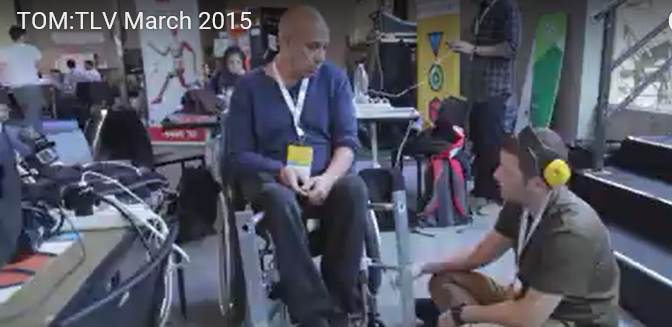
Jonathan Jaglom, CEO of MakerBot, is very excited about the potential 3D printing application for assistive technologies. Here he explains the idea behind the Challenge:
“We are blown away by the solutions that were developed during the Bay Area Makeathon for assistive technology. There are thousands of people with disabilities around the world who can’t find off-the-shelf products that address their needs, simply because there is no business case. The Bay Area Makeathon exemplifies how 3D printing can democratize medical innovation, and we’re excited to upload the prototypes to MakerBot Thingiverse to make them available to people around the world for free and allow the global community of 3D designers to improve upon the great work done at the Bay Area Makeathon.”
The competition ends November 1, 2015 at 11:59 PM EST, and you have until then to go check out the prototypes posted from the By Area Makeathon, and improve on them. Some of the inventions include: a grabber that can move objects with the mouth; a cup holder that can attach to a crutch; a “Smart Ass” wheelchair seat device equipped with sensors that tell when to shift weight so blood flows to the affected area — thus avoiding development of sores. (See below video for example of that.) Other designs include: “iEat,” a device for people with limited had control to use to feed themselves, and a pill crusher that doesn’t waste medication.
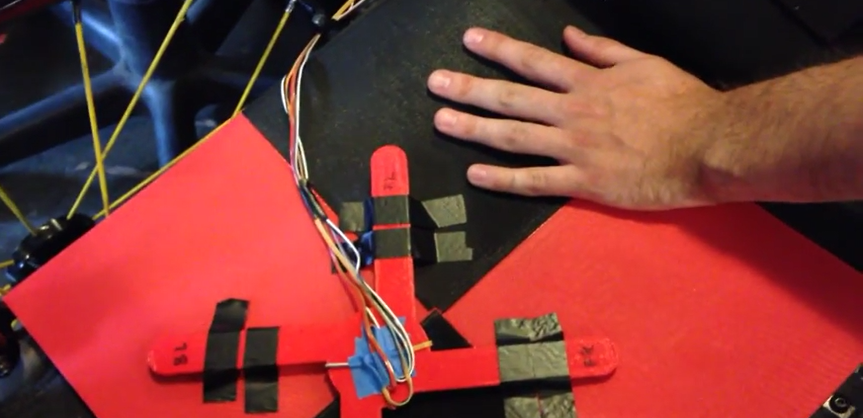
Wheelchair seat with sensors
Competition participation rules are pretty straightforward and the grand prize is a MakerBot Replictor (5th Generation)  with MakerCare. Up to four runners-up will receive one roll of MakerBot PLA or ABS filament. MakerBot encourages you to check out the uploaded prototypes, remix, and then post your new creation using the hashtag #AssistiveTech. You can read more about the competition and design tips here.
It is difficult to emphasize enough how essential this kind of work is for those who need innovative solutions to their physical challenges. If 3D design is your thing, then take the Assistive Technology Challenge, and make people’s lives a little easier by offering more independence and ease of living through assistive technologies just waiting to be discovered.
Let us know if you plan on participating in this challenge. Discuss in the Assistive Technology Challenge forum thread on 3DPB.com.
Subscribe to Our Email Newsletter
Stay up-to-date on all the latest news from the 3D printing industry and receive information and offers from third party vendors.
Print Services
Upload your 3D Models and get them printed quickly and efficiently.













You May Also Like
The Money Behind AM: What to Watch at AM Investment Strategies 2026
For years, simply being a 3D printing company could attract attention from investors. New machines, new materials, faster speeds, and the promise of mass production were often enough to get...
3D Printed Football Helmets Are Amazing Business. They’re Also So Much More
NFL football is by far the most popular sport in the US, followed by college football (a state-of-affairs oddly similar to the fact that the world’s largest air force is...
Continuous Composites Wins Navy SBIR for 3D Printed UAVs
In a diversification effort, Continuous Composites has decided to seek work outside of the courtroom. The company that has been successful in defending its patent portfolio in composite 3D printing...
When Data Becomes the Differentiator: Qualified Material Data is Changing the Future of Structural Additive Manufacturing
For years, additive manufacturing has promised engineers greater design freedom. The challenge wasn’t printing the part—it was proving the part belonged on an aircraft. Designing a lightweight bracket or consolidating...