Open Design and 3D Printing Yield Improved Device for Cystic Fibrosis Care

 Sometimes, the realities of the marketplace mean that companies simply cannot justify making a product for a niche application, and this can be particularly true for high-tech items such as medical devices that may have a tiny user base. Thankfully, the power of open-source collaboration – combined with the versatility of additive manufacturing techniques – means that products can now be made that bypass the traditional commercialization route.
A perfect example can be found in a collaborative design effort to create a dispensing device for medicines used to treat the genetic disease cystic fibrosis (CF), spearheaded by researchers in the UK.
The team – from Sheffield Hallam University, the University of Sheffield and the CF unit at Northern General Hospital – enlisted the aid of patients in the design of the new dispenser, which aim to overcome some of the barriers to treatment with Creon, an enzyme preparation that is used to help CF patients digest food.
When one thinks about people with CF, the take home image tends to be of someone living with serious respiratory symptoms. What may not be widely understood however is that the underlying genetic defect in the disease affects many organ systems, including the gastrointestinal tract. Creon (pancrelipase) – sold in the US by pharmaceutical company AbbVie – is taken in capsule form alongside meals and mixes with food in the stomach, helping individuals with CF to extract the vital nutrients and energy they need.
At the moment, Creon capsules are supplied in a large pot somewhat reminiscent of a hockey puck. The container is big, bulky and rattles, which may not be a problem when eating at home but is not desirable when dining out, particularly as several capsules may need to be taken each meal. Patients sometimes transfer the capsules to other more discreet containers such as Altoids tins, but these do not help them keep track of the many pills that need to be taken every day, which can be more than a dozen in some cases.
“Creon use outside the home was identified as a vital issue, with novel Creon dispensers suggested as a potential solution,” according to the researchers, led by designer Matt Dexter, who presented their work as a poster at the 37th European Cystic Fibrosis Conference in Gothenburg, Sweden, in June.
In fact, the overarching aim of the project was to discuss a variety of different CF-oriented ‘products’ that might be made in this way, but an improved dispenser for Creon was the most popular choice to take forward by those participating in the effort. Others under consideration included a treatment cabinet designed to hold all the treatment paraphernalia required for managing CF.
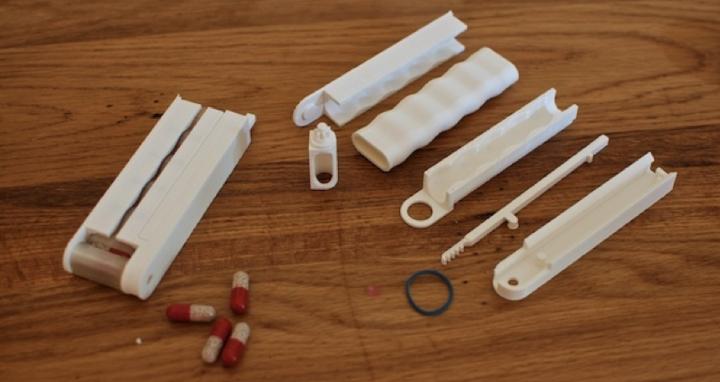
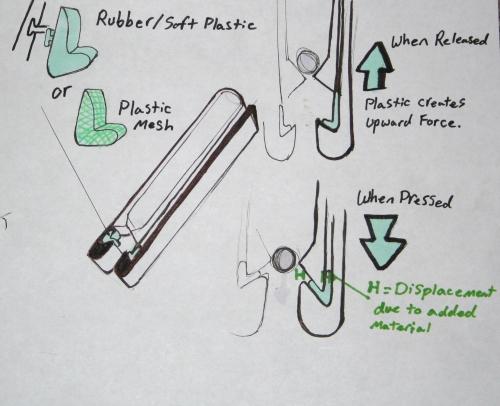 Various design ideas for the device were tossed about on an online forum, and one – inspired by Pez candy dispensers – was taken through to multiple prototype stages and constructed using a MakerBot 3D printer. The prototypes were road-tested by the CF community, who shared their experience via the forum, allowing various refinements to the design to be made.
All told, more than 500 people from across the world participated in the project, which eventually yielded a discreet, rattle-free dispenser that fits easily into a pocket or handbag, and delivers one capsule per push. In time, the design will also incorporate an electronic dose counter to help patients and healthcare professionals monitor adherence to treatment. And of course the dispenser is open-source, so the files are freely available on Thingiverse to download.
“The online collaborative design approach worked well and harnessed the creativity of CF community,” said Dexter et al.
This is just another example of the disruptive power of 3D printing, which will force medical device and technology companies to think carefully about the impact this type of open design project can have on their products and businesses. This research suggests forward-thinking companies may well benefit from the creation of their own product-oriented user communities and getting users involved during the earliest stages of the design process.

Subscribe to Our Email Newsletter
Stay up-to-date on all the latest news from the 3D printing industry and receive information and offers from third party vendors.
Print Services
Upload your 3D Models and get them printed quickly and efficiently.











You May Also Like
Sintokogio Buys Bosch’s Ceramics Unit, Plans Global AM Expansion
Japan’s Sintokogio Group is buying Bosch Advanced Ceramics to expand its work in 3D printed technical ceramics. The agreement was signed on November 18 and formally announced at the Formnext...
Boston’s Additive Edge at Autodesk: Rooftop Wind Gets a 3D Printed Spin
Walking through Autodesk’s Technology Center in Boston, I’ve come to expect surprises. One second, it’s MIT engineers pushing concrete printers to their limits, the next it’s Harvard architects stitching stone...
XJet Continues Its Push to Lower Barrier-to-Entry with Carmel Pro 3D Printer
Over the summer, Israeli metal and ceramic additive manufacturing (AM) original equipment manufacturer (OEM) XJet announced the sale of a Carmel 1400M metal 3D printer to Youngstown Business Incubator (YBI),...
Incus Releases Hammer Pro25, Proving Innovation Doesn’t Need to Be Flashy
Viennese firm Incus is showcasing the new Hammer Pro25. That system is meant to be a scalable Slurry SLA unit created for continuous manufacturing (Incus uses DLP but we refer...