OpenBionics Affordable Bionic Hand is Selected as a Hackaday Prize Semifinalist

 For this year’s Hackaday Prize prospective entrants were challenged to develop a project or idea that would help solve the problems that matter to everyone. While that may be a vague precept, Hackaday says that their imprecise language was intentional. The idea was to avoid stifling creativity and innovation by laying out a strict set of categories or criteria that should be followed. Basically, Hackaday didn’t know what they wanted, they just knew that they wanted submitted projects to “Build the Future,” and this year, over nine hundred Hackaday users gave it a try.
Now that the entry deadline has passed and the semifinalists for the 2015 Hackaday Prize have been announced, one of the semifinalists was clearly a no brainer. If the bionic hand from OpenBionics doesn’t fit the criteria of building the future then I don’t know what would. This year we’ve seen plenty of wonderful stories about 3D printed hand prosthetics being made available to thousands of people who desperately need them. While these prosthetic hands have limited grip and movement options, unfortunately true bionics are still virtually unaffordable. Traditional, motorized prosthetic limbs can cost tens of thousands of dollars and often are not covered by insurance, placing them far beyond the financial capabilities of most people. But what if there was a bionic prosthetic hand that would only cost about $200 to make, how many people all over the world could a product like that help?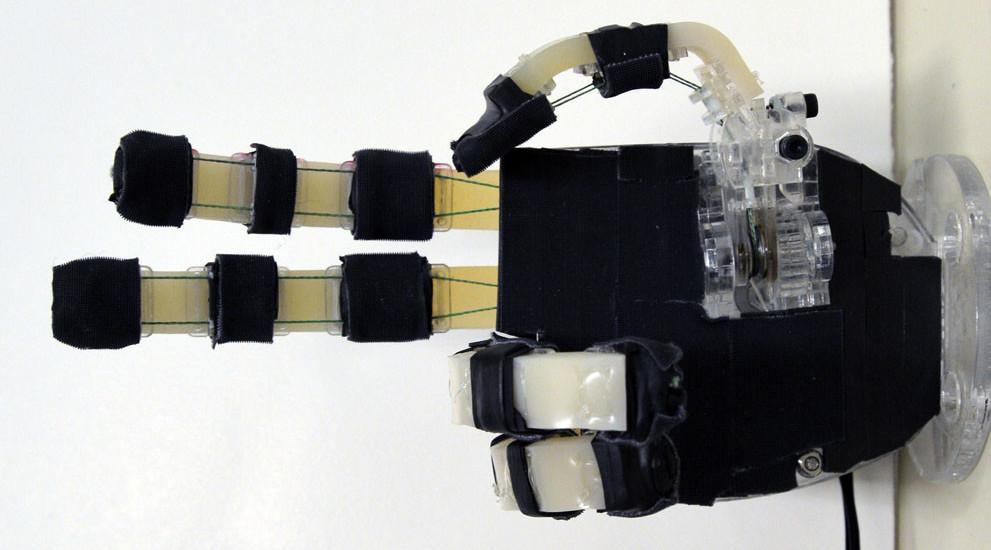
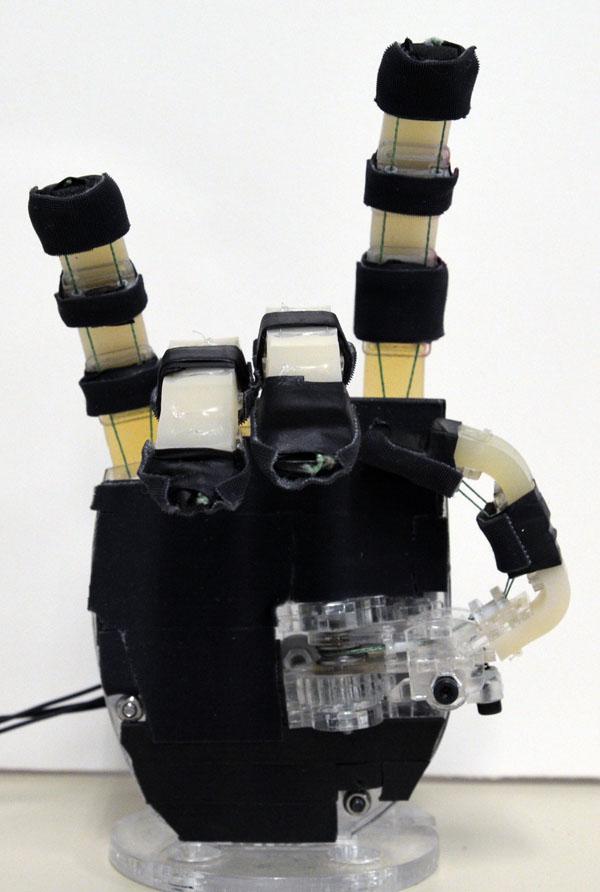
The OpenBionics prosthetic hand is the result of an open-source initiative to create an affordable, lightweight robotic hand that is easy to put together and reproduce using 3D printing and other rapid prototyping technologies. The project has produced an impressive fully anthropomorphic prosthetic hand weighing less than 300 grams and costs less than $200 to build. It uses a selection of 3D printed parts and components that can easily be sourced from a local hardware store. And as an open source project, anyone can download the 3D files and assembly plans from OpenBionics’ GitHub repository and customize them to suit their own needs and personal aesthetics.
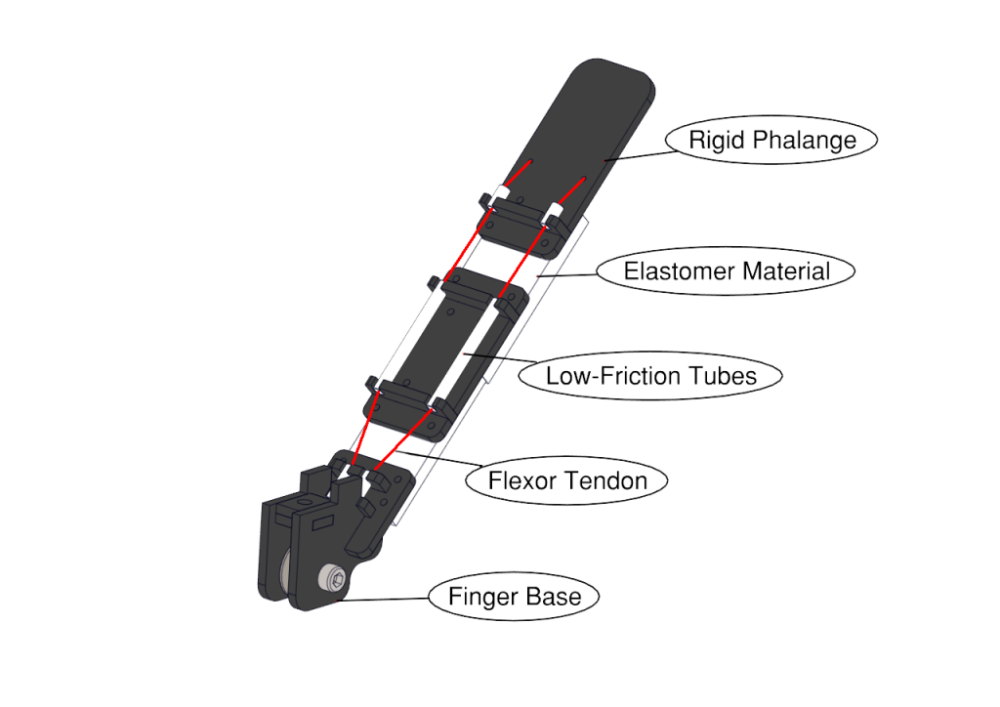 For a robotic hand that only costs $200 the OpenBionics hand is a surprisingly sophisticated device that was designed to intentionally duplicate the natural movements and functionality of a human hand. It uses basic mechanics like the whiffletree mechanism in combination with some rather clever design innovations to offer the wearer a robust range of movement. The plexiglass fingers are attached to silicone knuckles, while flexure joints made from elastomer cables run the length of the hand, holding everything together. The full anthropomorphic hand is capable of an incredible 144 unique grasping motions using 16 combinations of finger positions, all run with a single motor.
Here is a video with more information about the OpenBionics prosthetic hand:
 Now that the first round of semifinalists have been announced the next step is for the Hackaday Prize panel of judges to review the remaining projects and narrow them down to a group of ten semifinalists to be announced on October 5th. At this point Hackaday will also announce the “Best Product” winner for the entry that is not just a prototype but also a viable product. They will be awarded $100,000 and a free six-month residency at the Hackaday Design Lab. Then on November 19th the 2nd through 5th prizes will be announced as well as the Grand Prize winner who will take home a free trip into space.
While the odds of placing in the list of top winners is pretty high for OpenBionics, they have a lot of first class competition. Some of the standouts are Project Icarus, a solar powered UAV that can help prevent poaching, a Smart Dew-Point Water Harvester, a soft orthotic exoskeleton called the Neucuff and even a fellow low-cost prosthetic hand called the Biohand. Check out all of the entries for the 2015 Hackaday Prize here and the list of selected semifinalists here. And you can find out more about the OpenBionics initiative or download the 3D files and assembly instructions over on their website.
Let’s hear your thoughts on OpenBioics in the Hackaday Prize forum thread on 3DPB.com.
Subscribe to Our Email Newsletter
Stay up-to-date on all the latest news from the 3D printing industry and receive information and offers from third party vendors.
Print Services
Upload your 3D Models and get them printed quickly and efficiently.











You May Also Like
3D Printing Moves Deeper Into Production as Parts Near $110B by 2034
A new report takes a closer look at how much 3D printing is actually being used in real production. The numbers point to a market that is already growing at...
The AM Applications Game: Where Additive Manufacturing Is Actually Winning
When Additive Manufacturing Research (AM Research) announced its upcoming webinar, “3DP/AM Market Insights: 2025 Review and 2026 Preview,” it pointed to a key issue for the industry: which sectors are...
XTPL Sells First ODRA System to Silicon Valley Semiconductor Packaging Client
One prerequisite for success in additive manufacturing (AM) is the establishment of a proven system for converting initial sales used as tech validation into future sales of higher-value hardware that’s...
Cobra’s 3D Printed Golf Clubs Reveal What the Technology Can Do for Sports
When 3DPrint.com attended the PGA Show in Orlando this January, one booth stood out for a reason that had nothing to do with marketing hype or big-name tour pros —...