Chinese Space Program Builds 3D Printed Suit Connectors for Space Station Mission


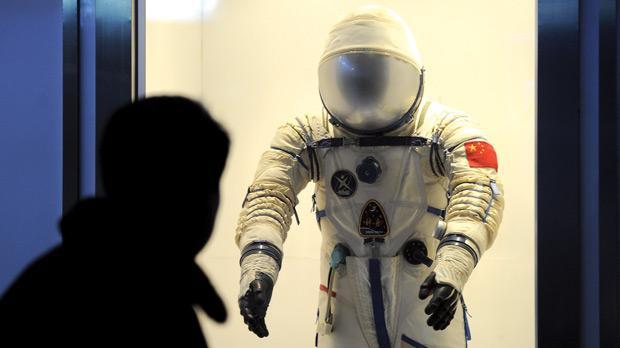
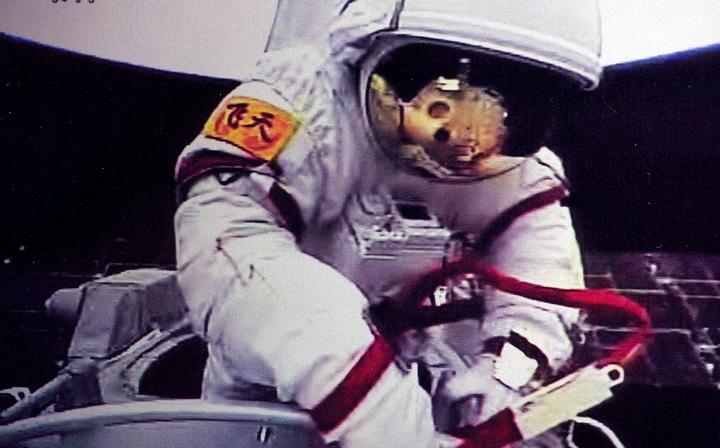 The Feitian is a Chinese spacesuit developed for the Shenzhou 7 mission, and astronaut Zhai Zhigang wore it during China’s first-ever extravehicular activity (EVA) on September 27, 2008.
The suit was modeled after the Orlan-M spacesuit developed by the Russian space program, designed to meet the requirements of spacewalks of up to seven hours by providing sufficient oxygen stores and allowing for the excretion of bodily waste.
Chinese officials say the suit cost $4.4 million to build, weighed around 260 lbs, and was named using the Mandarin words for “flying” and “sky.”
Now a research center operating as part of the China Aerospace Science and Technology Corporation has used a 3D printer to build vent pipes and flanges to connect the next generation extravehicular space suit to an orbital vehicle.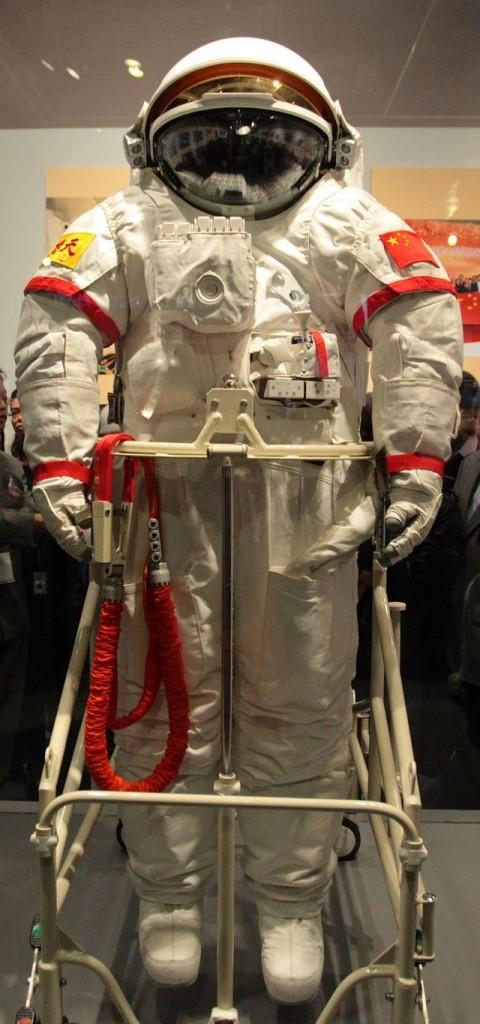
The designers say the vent pipe and the flange will improve the reliability and safety of the space suit while making the manufacturing process more efficient.
Using the 3D printing technology was approved by the Scientific Research Training Center for Chinese Astronauts, and they say the plan is to use the suits for the country’s second orbiting space lab, Tiangong-2. The suits are expected to be approved for use in 2016 and are likely to become part of the Chinese effort to put a permanently-manned space station into service by 2022.
The Chinese space program uses three different kinds of space suit: an inside-capsule version, an inside-capsule jacket, and a suit dedicated to extravehicular use. The inside-capsule version is used to counteract pressure changes within the spaceship during launch and landing. It’s used during normal flight to provide a convenient uniform for work with the spaceship — or, in the future, inside the planned space station.
But the EVA space suit is considerably more complicated and includes all necessary life support systems.
 The 3D printing activities scheduled for the upcoming space station project also include developing a multi-laser, metal 3D printer to allow astronauts to print items with a 3D printer in space being built by the Shanghai Academy of Spaceflight Technology.
According to Wang Lianfeng, a senior engineer at the SAST, 3D printing technology is ideally suited for making parts with complex structures.
“It’s very difficult to process the complicated parts by traditional methods,” Wang says.
According to Wang, the space station’s 3D printer must be small and light, and undergo zero gravity tests before it can be considered for use on the project.
What do you think of the plan by the Chinese space program to include a metal-capable printer on their space station? Let us know in the Chinese Space Program Builds forum thread on 3DPB.com.
Subscribe to Our Email Newsletter
Stay up-to-date on all the latest news from the 3D printing industry and receive information and offers from third party vendors.
Print Services
Upload your 3D Models and get them printed quickly and efficiently.












You May Also Like
Creality Marks 12 Years with KliTek and AI-Powered Ecosystem Expansion
For 12 years, Creality has advanced accessible 3D printing technologies, enabling global users to turn ideas into tangible creations. What began as a desktop 3D printer manufacturer has evolved into...
Asia AM Watch: Creality Launches $177M Hong Kong IPO as HKEX Trading Debut Nears
Creality has formally launched its Hong Kong initial public offering (IPO), marking one of the biggest public market moves by a 3D printing company in 2026 and offering a new...
How AtomForm’s 12-Nozzle System Cuts Multi-Color FDM Transition Waste by Up to 90%
Pull up the print stats on multi-color FDM jobs. The number that stings isn’t time; it’s material efficiency. On six-color models, single-nozzle systems consume significant filament during transition flushing, expelling...
3D Printed Weapons Keep Showing Up in Crime
In the past few weeks, activity around 3D printed weapons in the U.S. has increased across several fronts. States including California, Colorado, New York, and Washington are moving forward with...