Aerojet Rocketdyne Successfully Completes Hot-Fire Tests of 3D Printed Rocket Engine Injectors

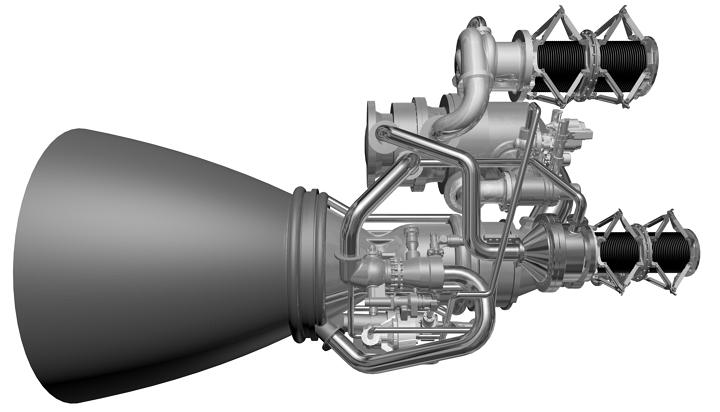 The AR1 is a 500,000 foot-pound, thrust-class liquid oxygen and kerosene fueled booster rocket engine currently in development. The team responsible for the rocket’s development has recently completed a successful range of hot-fire tests of key additively manufactured components in a Sacramento test facility, and the testing of these main injector elements represents a critical milestone in the development of the AR1 engine’s certification process to allow for full production in 2019.
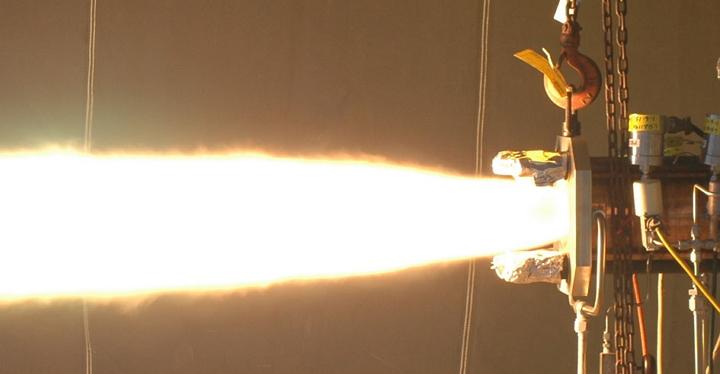 NASA and Aerojet Rocketdyne teamed up to create and test the 3D printed rocket engine injectors at the heart of the system, and they say selective laser melting, a process where laser beams melt fine metallic powders and fuse them together into three dimensional shapes, was used to build the American-made alternative to foreign-built engines.
“We believe the AR1 is the best, most affordable option to eliminate U.S. dependence on foreign sources of propulsion while maintaining assured access to space for our nation’s critical national security and civil space assets,” says Linda Cova, the executive director of Hydrocarbon Engine Programs at Aerojet Rocketdyne.
Cova says the AR1 is designed to integrate with the Atlas V launch vehicle and it could also serve as a versatile propulsion system for a variety of current and future launch vehicle applications.
“When you consider the minimal changes to the Atlas V launch vehicle, launch pad and related infrastructure that are required with an AR1 solution, this approach is clearly the best path toward finding a replacement for the RD-180 and meeting the launch needs of our nation,” Cova says. “We look forward to working with the U.S. government in a competitive procurement environment to bring this engine to market.”
According to the 2015 National Defense Authorization Act, alternatives like the Russian-built RD-180 must be replaced by an American-made alternative by 2019. The project began in 2014, and it’s an extension of a decade’s work on projects like the recent AFRL Hydrocarbon Boost Technology Demonstration and the NASA Advanced Booster Engineering Demonstration and Risk Reduction program.
The engine technology which drives the AR-1 has so far meant Aerojet has invested some $300 million in research and development, and the motors are expected to cost about $25 million a pair.
“Rocket engine components are complex machined pieces that require significant labor and time to produce,” says Tyler Hickman, the team lead at the NASA Glenn Research Center in Cleveland. “The injector is one of the most expensive components of an engine.”
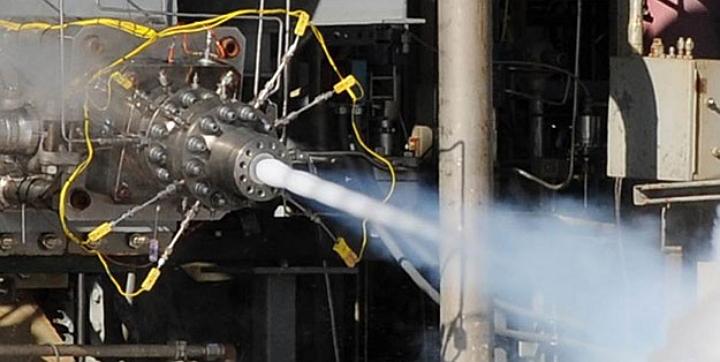 If built with traditional manufacturing methods, the complex injectors Aerojet created would require more than a year to complete, but thanks to additive manufacturing methods, the same injector took just four months – and cost 70% less – to produce.
Michael Gazarik, NASA’s associate administrator for space technology in Washington, says the agency understands that AM is “game-changing for new mission opportunities, significantly reducing production time and cost by ‘printing’ tools, engine parts or even entire spacecraft.”
The development of AR1 is currently being funded by Rocketdyne with assistance from United Launch Alliance (ULA). The single-element, main injector hot-fire tests were meant to evaluate element designs and fabrication methods for the parts, and several injectors were fabricated. The injectors were tested to pressures in excess of 2,000 psi. Aerojet Rocketdyne says these tests represent the highest pressure hot-fires of an additively-manufactured part to date.
Have you heard of any other sophisticated uses of 3D printing technology for aerospace-related applications? Let us know in the 3D Printed Rocket Engine Injectors forum thread on 3DPB.com.
Subscribe to Our Email Newsletter
Stay up-to-date on all the latest news from the 3D printing industry and receive information and offers from third party vendors.
Print Services
Upload your 3D Models and get them printed quickly and efficiently.













You May Also Like
Oerlikon Adds ATLIX’s xBUILD 5000, Plans More for 2027
Oerlikon has installed a new ATLIX xBUILD 5000 metal 3D printer at its facility in Huntersville, North Carolina, marking the first production deployment of the system worldwide. The machine will...
The Manufacturing Race Behind the Drone Revolution
We are in the middle of a major manufacturing shift focused on the production speed and payload capacity of uncrewed aerial systems (UAS), or drones. A recent Manufacturing Dive article...
Stratasys vs. Bambu Lab: Why Europe and the U.S. Reached Different Results, Part II
Editor’s note: This is Part 2 of a two-part series by Xu Fanglei examining the technology and patent issues behind the Stratasys-Bambu Lab dispute. Part 1 looked at the $27.6...
3D Printing News Briefs, October 1, 2026: Defense, Enclosures, & More
In today’s 3D Printing News Briefs, we’re starting with defense news, first from Massivit and then from AML3D. Then we’ll move on to U.S. manufacturing of a new large-format LPBF...