Safe, Simple & Affordable: Cold Casting Turns 3D Prints into Metal

 If you enjoy taking your basic 3D prints one step further with a variety of techniques and finishes, you’ll probably find cold casting a cool endeavor indeed.
The cold casting process looks like one that would appeal to any 3D printing enthusiast, with the opportunity to use a variety of powders and clear resins, getting creative with the final aesthetics of the 3D print and ending with up a 3D printed object that really is metal in the end — without all the danger, hassle, or expense.
Paul Braddock of Mold3D gives a great demonstration on the cold casting method in a video that shows users the process from beginning to end, using a FSL3D Pegasus Touch, a resin-based 3D printer. His intention is to cold cast with iron metal powder, but you can also use other metal powders, as well as stone or wood powder. With the use of metal powder, makers have a simple, affordable way to create metal works that are shiny and magnetic to boot.
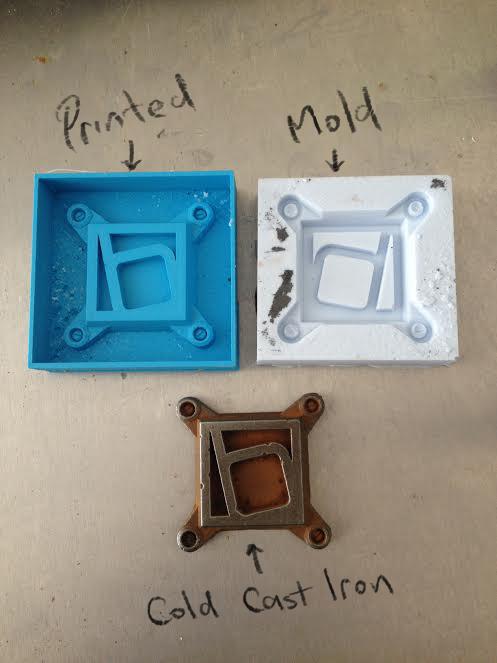 Because the cold cast technique is also a way to give a more medieval or ancient look to a piece, it is popular with gamers making reproductions and figures with 3D prints or those who are making props such as swords or any smaller items. The metals most commonly used are bronze, copper, and tin. Braddock, in the video example included below, chose to use an iron powder for his medieval looking piece that he knew he wanted to finish with a rust look. His example is available for free download as well.
Cold casting is also a great way to experiment with customized knobs and different pieces for furniture, accessories, and household items. Specialty powders such as porcelain, limestone, and marble can even be used for those interested in more specialized finishes in the areas of construction or working with antique pieces.
The key in the beginning with cold casting is to have the 3D printed model planted somewhere firmly with a glue or fixative so you can start bathing it in a fast-setting silicone, which is usually very thin and pours easily. After setting for about 20 minutes, it’s time to start mixing the polyester resin with the metal powder (per Braddock’s example) for the next step but always with the caveat that you must have suitable ventilation (even a respirator is good) and suitable gloves.
One part powder to one part clear resin are mixed together. Braddock’s iron metal powder gave his 3D print a nice dark pewter look which he then finished further. A fairly short list of ingredients is needed, and won’t set you back much, to include:
- Fast-setting silicone
- Desired powder (usually available in any hardware store)
- Mold release
- Cups
- Clear resin
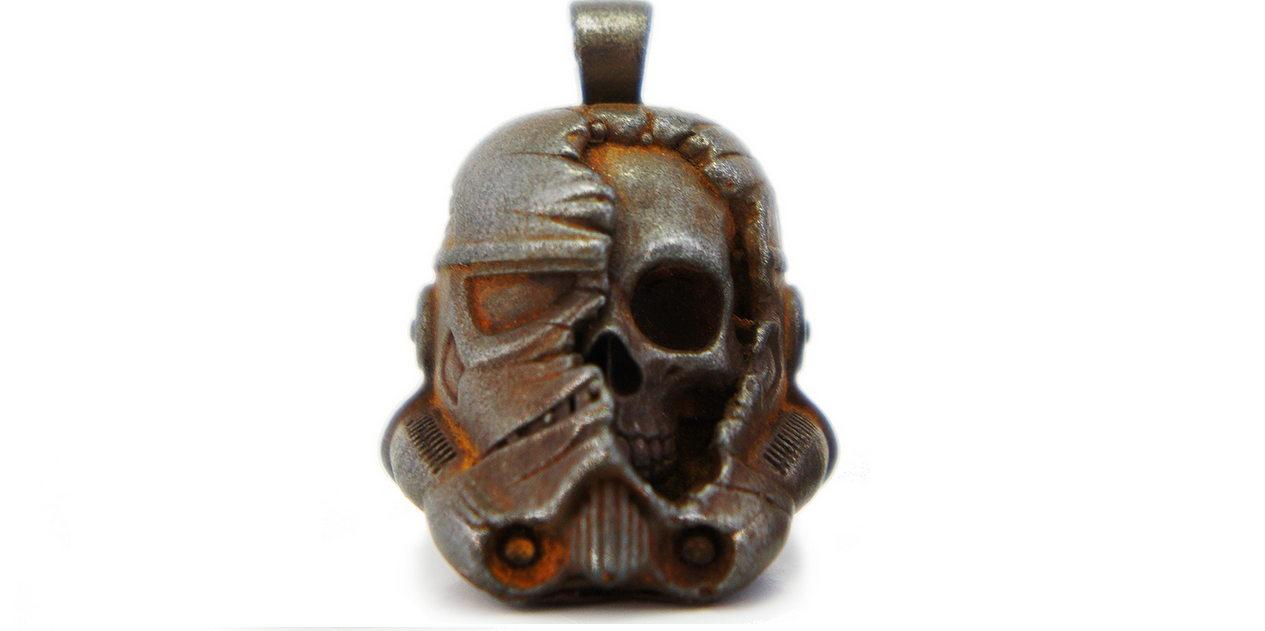
In your workshop area, after mixing the powder and resin, you just pour it into the mold and allow it to set for about six hours. Once you release the mold and have your metal covered 3D model, you can use the technique of burnishing which is very simple and will allow you to give your metal part a rusty patina. This is done by brushing and scrubbing the piece fairly lightly, and then rubbing it with a rust finish, or whatever finish you might choose. It’s a simple way to give your 3D object an authentically ‘old’ look. The 3D printed object, at that point, has a true metal finish, and there is no risk or expense associated with dealing with molten metals or other materials.
The cold casting process offers both versatility — and a great way to have fun while being creative and experimenting. Are you interested in trying the cold casting method? Have you already tried it? Share with us in the Cold Casting forum thread over at 3DPB.com.
Subscribe to Our Email Newsletter
Stay up-to-date on all the latest news from the 3D printing industry and receive information and offers from third party vendors.
Print Services
Upload your 3D Models and get them printed quickly and efficiently.











You May Also Like
Stratasys Partners With Defense Prime Heavyweights to Qualify SAF PA12 for Industrial 3D Printing
Perhaps the most valuable lesson that the additive manufacturing (AM) industry has learned in its technical maturation era over the last five years or so is that you can’t really...
Via EOS Partnership, Texas’s ACMI Is the First Customer for the AMCM M 8K 3D Printer
EOS’s two major announcements in the last few months have been the launch of the EOS M4 ONYX at Formnext 2025 and the news from a couple of weeks ago...
Reuniting ExOne and voxeljet: An Investor’s View on Building a Global Industrial Sand Printing Leader
Authored by Whitney Haring-Smith, Chair of the Board, ExOne Global Holdings & Managing Partner, Anzu Partners At Anzu Partners, we invest with conviction in industrial technologies that create categories—and then...
VulcanForms Raises $220M as Investors Back Scaled U.S. Metal 3D Printing
VulcanForms has closed a $220 million Series D funding round, a large vote of confidence at a time when investment in 3D printing has become more selective. Investors are backing...