Researches Find Way to 3D Print Blood Vessels – Could lead to transplatable tissue

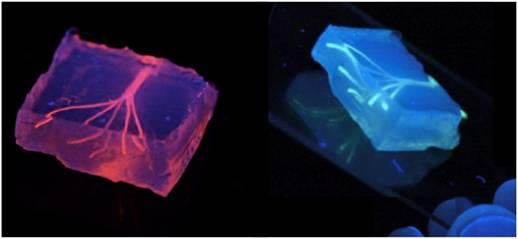
credit: Khademhosseini Lab.
The field of medical science has been advancing at an extraordinary rate over the past decade or so, thanks in part to the advancement in technology. One of these ‘up-and-coming’ technologies is the 3D printing of biomaterial, referred to as 3D bioprinting. Only recently has 3D bioprinting become a popular tool in trying to solve issues that have posed problems for medical scientists since the beginning of time.
One of these issues, that medical science has been working towards finding a solution to, is the fact that up until now there has been no way to create man-made blood vessels from scratch. Doing so could solve many problems within medicine. Blood vessels are extremely important to the human body, as they transfer nutrients to and from vital organs, as well as remove waste material. The ability to create man-made channels for blood to flow throughout the human body, is something that scientists have been trying to do for years.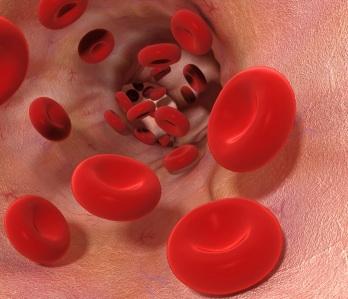
It appears that a team of researchers at Brigham and Women’s Hospital (BWH) in Boston, MA may have come up with a solution. Using 3D printing technology – more particularly 3D bioprinting, they have come up with an effective way to create an agarose fiber template to be used as a mold for real blood vessels. An agarose is a naturally derived sugar-based molecule, for those of you who were wondering.
“Engineers have made incredible strides in making complex artificial tissues such as those of the heart, liver and lungs,” said senior study author, Ali Khademhosseini, PhD, biomedical engineer, and director of the BWH Biomaterials Innovation Research Center. “However, creating artificial blood vessels remains a critical challenge in tissue engineering. We’ve attempted to address this challenge by offering a unique strategy for vascularization of hydrogel constructs that combine advances in 3D bioprinting technology and biomaterials.”
This mold that was created was then covered with a hydrogel substance, which formed a cast over it, prior to being reinforced by photocrosslinks, a process that usually involves ultraviolet light.
“Overall, our proposed strategy represents an effective technique for vascularization of hydrogel constructs with useful applications in tissue engineering and organs on a chip,” explained the team at BWH.
While all this is great news for the medical community, we are still probably years away from being able 3D print real living blood vessels that can be transplanted into a human beings organs and tissue.
“In the future, 3D printing technology may be used to develop transplantable tissues customized to each patient’s needs or be used outside the body to develop drugs that are safe and effective,” said Khademhosseini.
This is certainly a step in the right direction, and another way that 3D printing is showing one of its multiple uses. 3D bioprinting will certainly be one of those technologies that continues to grow within the medical community. It’s just a matter of time before we start seeing entire organs begin to be printed. One of the problems researchers are having when trying to 3D print organs, is the lack of a reliable method of printing blood vessels and arteries within those organs. This research may bring us a step closer to realizing that goal.
What do you think about this new technology? Discuss in the ‘3D bioprinting of blood vessels‘ thread on 3DPB.com
Subscribe to Our Email Newsletter
Stay up-to-date on all the latest news from the 3D printing industry and receive information and offers from third party vendors.
Print Services
Upload your 3D Models and get them printed quickly and efficiently.











You May Also Like
Stratasys Partners With Defense Prime Heavyweights to Qualify SAF PA12 for Industrial 3D Printing
Perhaps the most valuable lesson that the additive manufacturing (AM) industry has learned in its technical maturation era over the last five years or so is that you can’t really...
Via EOS Partnership, Texas’s ACMI Is the First Customer for the AMCM M 8K 3D Printer
EOS’s two major announcements in the last few months have been the launch of the EOS M4 ONYX at Formnext 2025 and the news from a couple of weeks ago...
Reuniting ExOne and voxeljet: An Investor’s View on Building a Global Industrial Sand Printing Leader
Authored by Whitney Haring-Smith, Chair of the Board, ExOne Global Holdings & Managing Partner, Anzu Partners At Anzu Partners, we invest with conviction in industrial technologies that create categories—and then...
VulcanForms Raises $220M as Investors Back Scaled U.S. Metal 3D Printing
VulcanForms has closed a $220 million Series D funding round, a large vote of confidence at a time when investment in 3D printing has become more selective. Investors are backing...