voxeljet Introduces New Phenolic-Direct-Binding 3D Printing Method

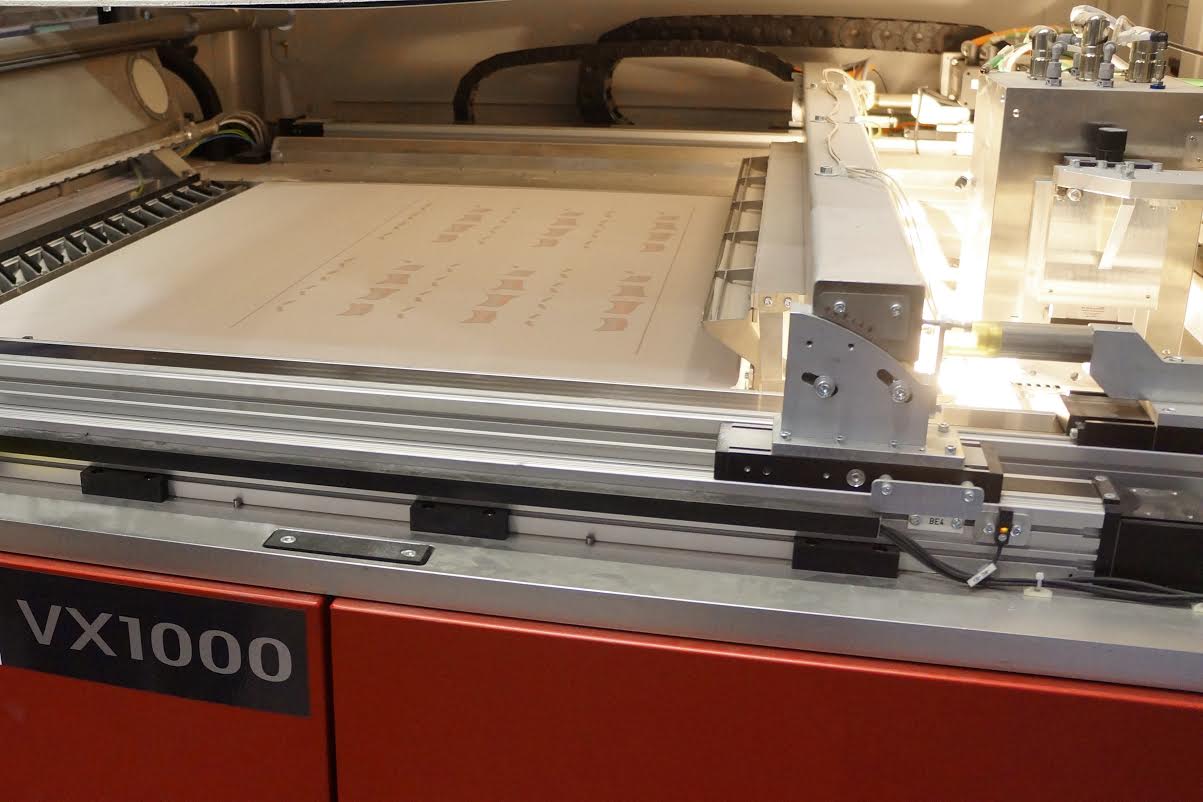
Printing process with temperature management
voxeljet is one of the larger companies within the 3D printing space. They manufacture several industrial level, high-speed, large-format 3D printers, as well as offer on-demand printing of parts. Their 3D printers differ quite a bit from other technologies on the market today, as they utilize a powder binding method, relying on particulate materials (i.e. sand) and various chemical binding agents.
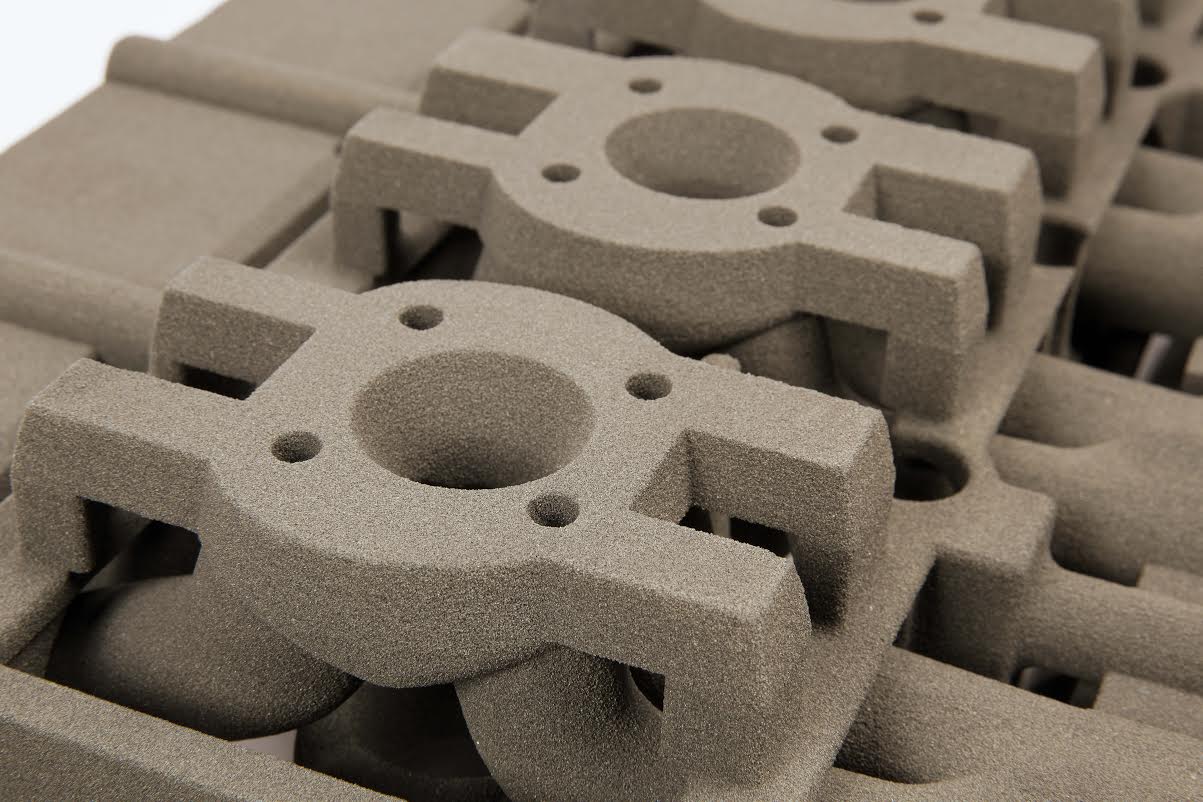
Close-up of the phenolic-bounded sand mold
Today, the company announced a new method of 3D printing which uses phenolic resin binders. This new binder provides many advantages over other 3D printing methods currently available. The method, which voxeljet calls “Phenolic-Direct-Binding” (PDB), seems to have a lot of potential, particularly in the 3D printing of ceramic molds.
“With this binder, we are able to achieve an incredible level of resolution and precision in 3D printing,” explains Dr. Florian Mögele, process engineer for voxeljet. “At the same time, we have also made significant improvements in terms of stability and sand recycling. And: phenolic resin binders are ideally suited for processing ceramic and other materials.”
The PDB method provides much more accuracy and strength, when compared to other currently available methods of 3D printing highly elaborate detail on sand molds. One of the main advantages of the PDB process, other than the increased quality of prints, is the fact that it will help in the conservation of materials. Because phenolic resin does not require silica sand (printing material used) to be pre-treated prior to the printing process, this means that the material that is not used in the print process can be recycled and used in the printing of future products. PDB also allows for the unlimited use of silica sands with different pH values and ceramic materials.

Unpacking process
While voxeljet has announced this new technology today at EuroMold, the process won’t be made available on printer platforms until sometime in the middle of 2015. They will continue their development of this technology in the mean time.
“In PDB, temperature management plays a key role in the quality of the components,” explained Dr. Daniel Günther, Head of Research and Development. “In the coming months, we will empirically calculate the optimum parameters for all voxeljet printers. This ensures that the printers reach the best possible quality using a very reliable process.”
It is always nice to see innovation both within the hardware and material areas of 3D printing. voxeljet is one of those companies that continues to innovate at a rapid rate. It should be interesting to see what new applications businesses discover for this new PDB 3D printing process, and how popular it becomes.
What do you think about this new process? Discuss in the voxeljet Phenolic-Direct-Binding forum thread on 3DPB.com.
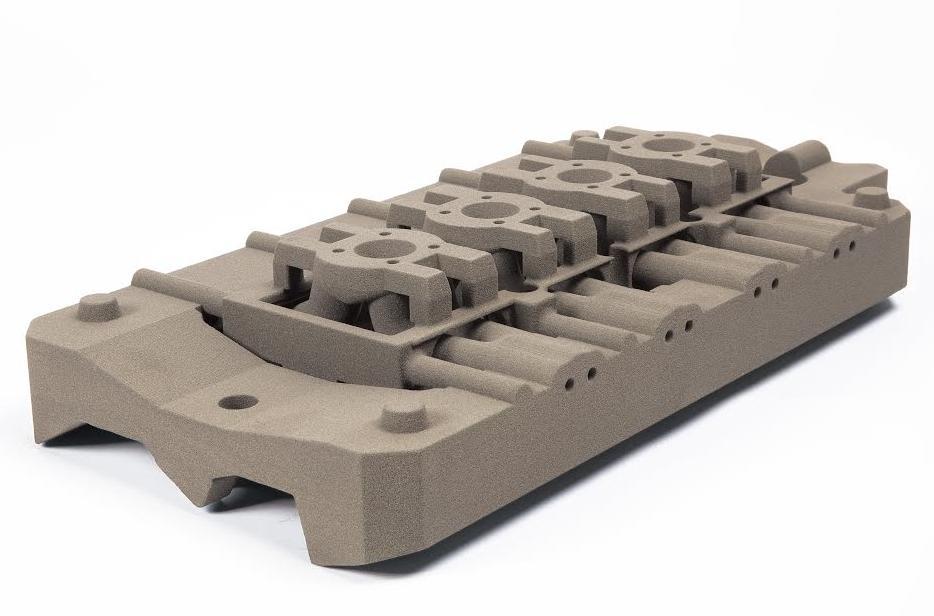
Phenolic-bounded sand mold
Subscribe to Our Email Newsletter
Stay up-to-date on all the latest news from the 3D printing industry and receive information and offers from third party vendors.
Print Services
Upload your 3D Models and get them printed quickly and efficiently.











You May Also Like
Stratasys Partners With Defense Prime Heavyweights to Qualify SAF PA12 for Industrial 3D Printing
Perhaps the most valuable lesson that the additive manufacturing (AM) industry has learned in its technical maturation era over the last five years or so is that you can’t really...
Via EOS Partnership, Texas’s ACMI Is the First Customer for the AMCM M 8K 3D Printer
EOS’s two major announcements in the last few months have been the launch of the EOS M4 ONYX at Formnext 2025 and the news from a couple of weeks ago...
Reuniting ExOne and voxeljet: An Investor’s View on Building a Global Industrial Sand Printing Leader
Authored by Whitney Haring-Smith, Chair of the Board, ExOne Global Holdings & Managing Partner, Anzu Partners At Anzu Partners, we invest with conviction in industrial technologies that create categories—and then...
VulcanForms Raises $220M as Investors Back Scaled U.S. Metal 3D Printing
VulcanForms has closed a $220 million Series D funding round, a large vote of confidence at a time when investment in 3D printing has become more selective. Investors are backing...