Australian Company Flying Machine 3D Prints Titanium Bike Lugs for Custom, Luxury Bicycles

“I want to ride my bicycle,” Freddie Mercury once sang; it’s a chorus repeated through the years, as the cycling community across the world is massive. 3D printing in the bicycling world isn’t unheard of by any stretch, with additive manufacturing showing up across the board, from parts to helmets. Now, Australia-based Flying Machine has introduced a new model for a luxury, fully customized bike.
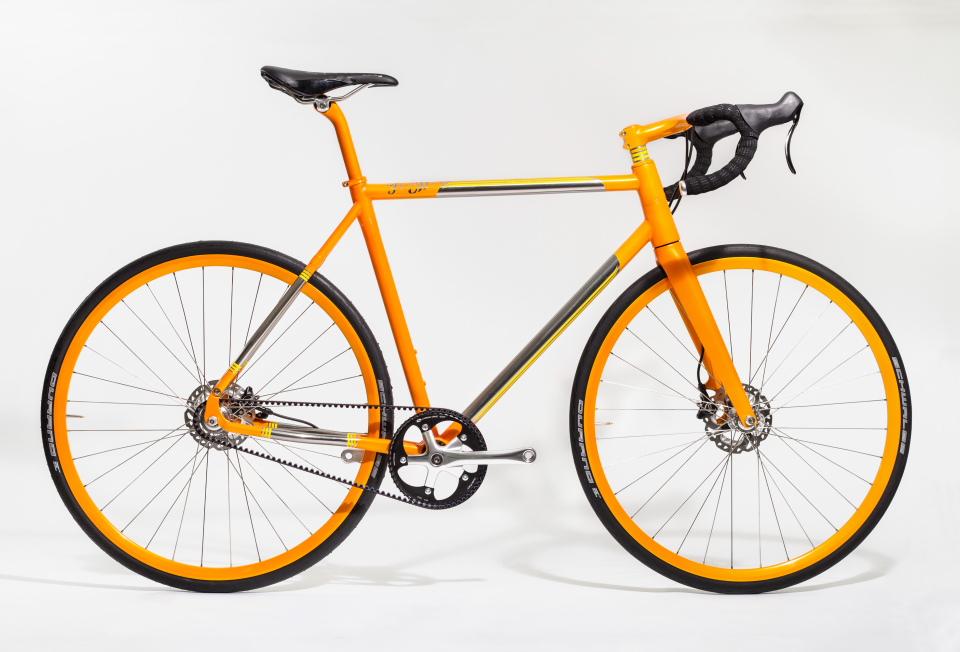
Initially teased this past February, Flying Machine has now unveiled its new “3D printed titanium bikes”: the UCX-TI, F-ONE-S, and F-ONE-C5. Of course the entire frame isn’t 3D printed, but the fact that the lugs are is a huge boon to Flying Machine’s customization standards. The company offers its lines of bikes in a bid for luxury, which is meant to be a highly personalized experience.
“Luxury,” say the product details for the F-One-HD, “is a perfect fit through fully tailored geometry for every machine.” These bikes are made to order for an individual, catered to their personal measurements. “Luxury,” it continues, “is exclusively high end materials and components.”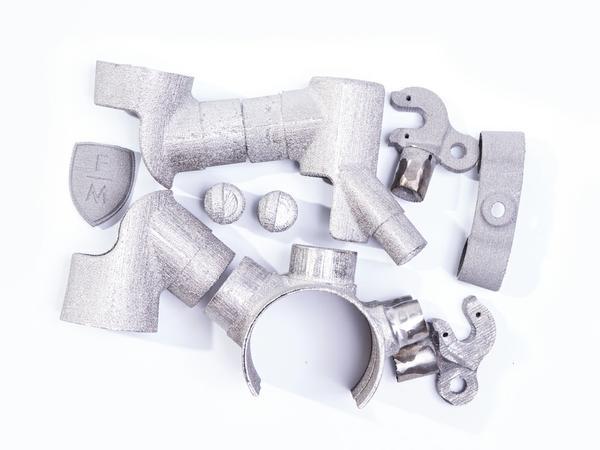
“3D Printed invisible titanium lugs connect titanium tubing, this version has carbon fiber handle bars/ stem, rims, seat post and forks. Plus TRP Hylex hydraulic disc brakes, Shimano Ice Tech rotors, White Industries CLD hubs, Fizik saddle and bar tape and Carbon Drive Centretrack belt drive.”
The bikes in this line are also certainly priced at luxury standards: they range from base prices of $4,080 AUD (F-One-S) to $6,000 AUD (UCX-Ti). That’s about $3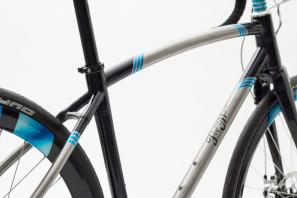 ,560-$5,240 US dollars, which is certainly more than I’ve ever spent for a bike. Those who are seeking personalized bicycles at this level, though, tend to be willing to pay for the quality they seek.
The customized nature of Flying Machine’s bikes is where the true benefit of 3D printing comes into play. Because parts can be manufactured just once, small-batch orders are ideally created using additive manufacturing techniques.
While Flying Machine announced in August on their Facebook page that they’d just gotten their own 3D printer, it doesn’t do titanium unfortunately, which would have cost an extra 1.5 million AUD, leaving them reliant on an outside printing source. The company has partnered up with the Commonwealth Science and Industrial Research Organization (CSIRO) for 3D printing the titanium parts.
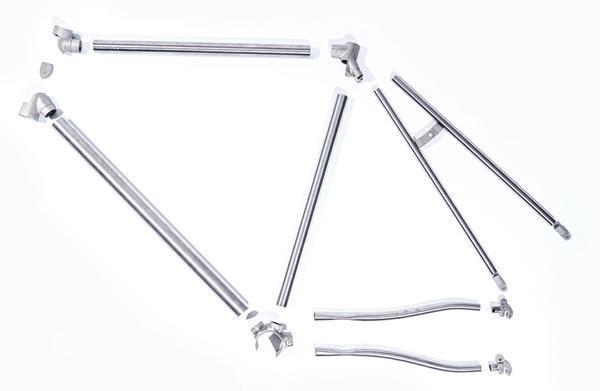 In the F-One-HD bicycle’s description, Flying Machine makes sure to extend their gratitude for the help they get in creating their impressive bicycles:
“Thanks very much to the CSIRO Lab 22 for their continued support with this project, to Sam Froud of Studio 17 for the 3D modelling and to Sean Lee for the photography.”
The 3D printed lugs are the secret to Flying Machine’s quick turnaround for custom bikes; the lugged frame allows for a production process of only about three 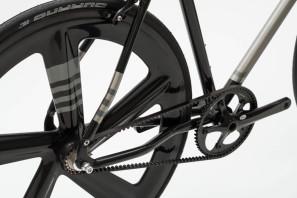 weeks in total, including around 10 days to create the custom geometry frame. The lugs are printed in Melbourne (thanks to CSIRO) and the frame is finished into a complete bike in Flying Machine’s studio in Perth. Every bit of the bike is made in Australia.
Bicycles Network Australia had the opportunity to speak with Flying Machine’s Matthew Andrew about the perks of using 3D printing in their production process, giving further insight into the benefits of customization via additive manufacturing. Let us know what you think — would you be interested in a custom-made bike produced with the help of 3D printing? Will this technique globetrot outside Australia? Tell us your thoughts in the 3D Printed Titanium Bike Lug forum thread at 3DPB.com!
Subscribe to Our Email Newsletter
Stay up-to-date on all the latest news from the 3D printing industry and receive information and offers from third party vendors.
Print Services
Upload your 3D Models and get them printed quickly and efficiently.











You May Also Like
From Material Maturity to Fleet Execution: What Comes Next for Additive Manufacturing in the U.S. Navy
Additive manufacturing is steadily moving from experimental use toward routine application in U.S. Navy shipbuilding, sustainment, and much more. In recent years, the Navy, working through its Maritime Industrial Base...
Industrial Additive Manufacturing Reaches Its Most Important Inflection Point
Additive manufacturing is entering the most consequential period in its evolution. After years of experimentation and uneven adoption, the industry is showing renewed momentum, shaped by supply-chain pressures, and a...
Scaling Beyond 10 Printers: When Support Becomes a Bottleneck
The leap to industrial-scale 3D printing is a support problem, not a hardware problem. A 3D print farm is a centralized facility that uses a large number of 3D printers...
Reshoring Requires Rules of Engagement
Reshoring manufacturing in the U.S. is a stated national priority. Policymakers, industry leaders, and defense planners agree that domestic production capacity is essential for economic resilience, national security, and long-term...