Field Ready 3D Printing Much-Needed Medical Supplies for a Nepal Health Clinic

 It may seem like there’s a 3D printer around every corner these days – many libraries and schools now use 3D printers, and you can even find them in bars and coffee shops. But this is not the case in the more remote parts of the world, like Australia, the Philippines, and for soldiers who may normally live in busy cities, but often are called out to the field in the far-flung parts of the world. In April of 2015, a 7.8 magnitude struck the tiny nation of Nepal. Thousands of people died and thousands more injured and almost two years on, the rebuilding is still not done. 3D printing has helped with this specific disaster relief before, like with a 3D printable model of Boudhanath Stupa you could purchase for a donation, but the work is not yet done. A health clinic in Nepal’s Bhotechaur village, which is located in the foothills of the Himalayan mountains, was severely damaged in the earthquake. While it has been rebuilt, the clinic still lacks many basic supplies, like instruments to examine patients’ ears for infection. Enter humanitarian nonprofit organization Field Ready.

[Image: Field Ready]
-
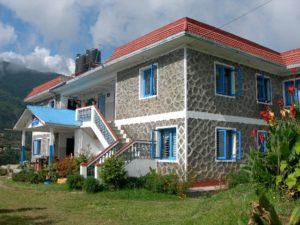
- Clinic before 2015 earthquake
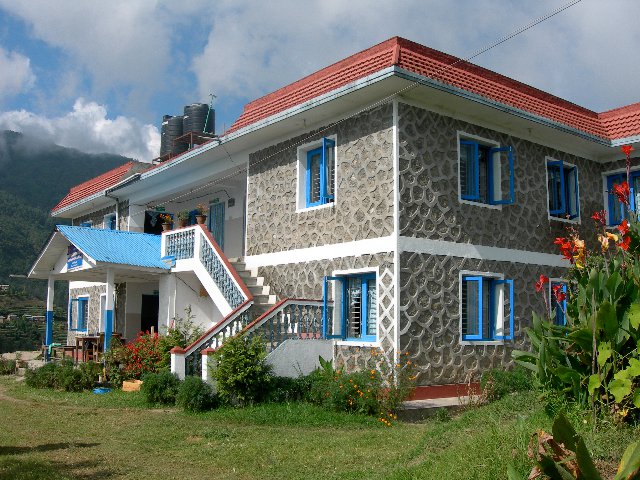
-
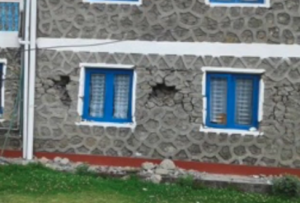
- Clinic after 2015 earthquake
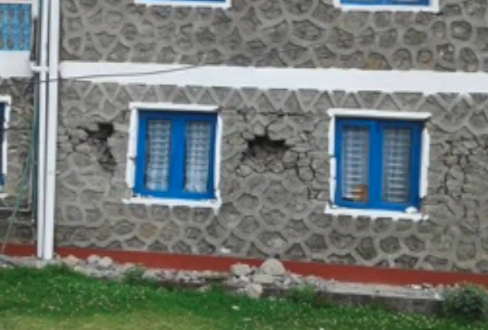
The clinic in Bhotechaur was originally built in the early 2000s, using donations from the nonprofit Bright Futures Foundation, which was founded in 2002 on the belief that people can work together to bring about ‘meaningful change’ to those living in less than abundant circumstances. Thanks to collaborations with Rotary Clubs around the world and the village council, the Bhotechaur Health Clinic opened its doors in December of 2003, and served the population of 50,000 people, until the devastating earthquake. After the earthquake hit, the clinic was still standing, but the damage was so severe that it needed to rebuilt anyway. The entire village of Bhotechaur, in the Sindhupalchowk region of Nepal, was hit hard by the earthquake and several subsequent aftershocks, and a total of 35 villagers were killed.
While the clinic has successfully been rebuilt, the supply chain isn’t quite up to 100% just yet. Due to circumstances like a lack of money, slow bureaucracy, and damaged mountain roads, the clinic staff was having trouble getting necessary supplies – it took nearly three months to get a fetascope. The clinic lacks some other basic medical supplies, like otoscopes, a medical device used to look into patients’ ears. It can give physicians a view of the ear canal, and is used to screen for ear infections during check-ups, and also to investigate ear symptoms.
 This is a fairly common tool for most modern medical facilities, but sourcing equipment like this is extremely difficult for hospitals in remote mountain regions, like Bhotechaur. 3D printing engineer Ram Chandra Thapa, who works with Field Ready, heard about the clinic’s lack of otoscopes, and decided to fix the problem, designing and 3D printing a plastic one for the clinic.
 Thapa’s 3D printer is reportedly one of only six in the entire country of Nepal, and he’s glad to be able to use it, along with other digital manufacturing techniques, to help those in need. The Bhotechaur clinic was just the first step, and now Field Ready is 3D printing medical equipment, like otoscopes, right on site. The organization is supplying about six health clinics, affected by the 2015 earthquake, with simple but important items like tweezers and plastic wrist braces.
Field Ready’s ultimate goal is to install 3D printers in the six clinics it has been supplying with 3D printed medical equipment, to help bring about a long-term sustainable solution. To learn more about Thapa’s 3D printed otoscope and the Bhotechaur Health Clinic, check out this ABC video. Discuss in the Field Ready forum at 3DPB.com.
Subscribe to Our Email Newsletter
Stay up-to-date on all the latest news from the 3D printing industry and receive information and offers from third party vendors.
Print Services
Upload your 3D Models and get them printed quickly and efficiently.











You May Also Like
Velo3D Becomes First Qualified AM Vendor for US Army’s Ground Vehicles Program
One indicator that I’ve used to help me track the additive manufacturing (AM) industry’s progress in terms of its technical maturity is the relative progress that each U.S. military branch...
Nikon Records $591M Metal AM Write-Down, Maintains Long-Term Focus
Nikon (OTCMKTS: NINOY) has announced a large impairment loss tied to its Digital Manufacturing business, the part of the company that includes metal 3D printing and advanced manufacturing operations. This...
When a Factory Stops Being a Building and Starts Being a Machine
Metal manufacturing still carries the layout and logic of an older industrial age. Most factories run as a collection of isolated disciplines, each with its own equipment, staff, and data....
Takeaways From MILAM 2026: Defense’s Growing Role in Driving 3D Printing – Part I
The annual Military Additive Manufacturing Summit & Technology Showcase (MILAM 2026) once again brought together the defense sector’s top technologists, military leaders, and additive manufacturing (AM) innovators for three days...