3&Dbot Mobile 3D Printer Has No Print Volume Limitations


 What is one of the most important aspects of a 3D printer, according to consumers? Usually the build volume comes in at, or near the top of the list. Ranked up there with speed and resolution, the ability to print large objects without being confined to a small space is what many 3D printing enthusiasts lust over. The problem is, that currently, technology makes it very expensive if you wish to acquire the capabilities to print giant objects, not to mention the space one needs to house a giant delta-style, or Cartesian based 3D printer.
We have seen dozens of large-volume printers, both for the consumer segment of the market as well as for the manufacturing segment. The facts are that, using current technologies, one will always be limited by the size of the printer’s frame which acts as a housing for all the components that the extruder is attached to. Unless an entirely new system of 3D printing is established, we will always be limited in build volume, based on the price we are willing to spend to enlarge the printer itself.
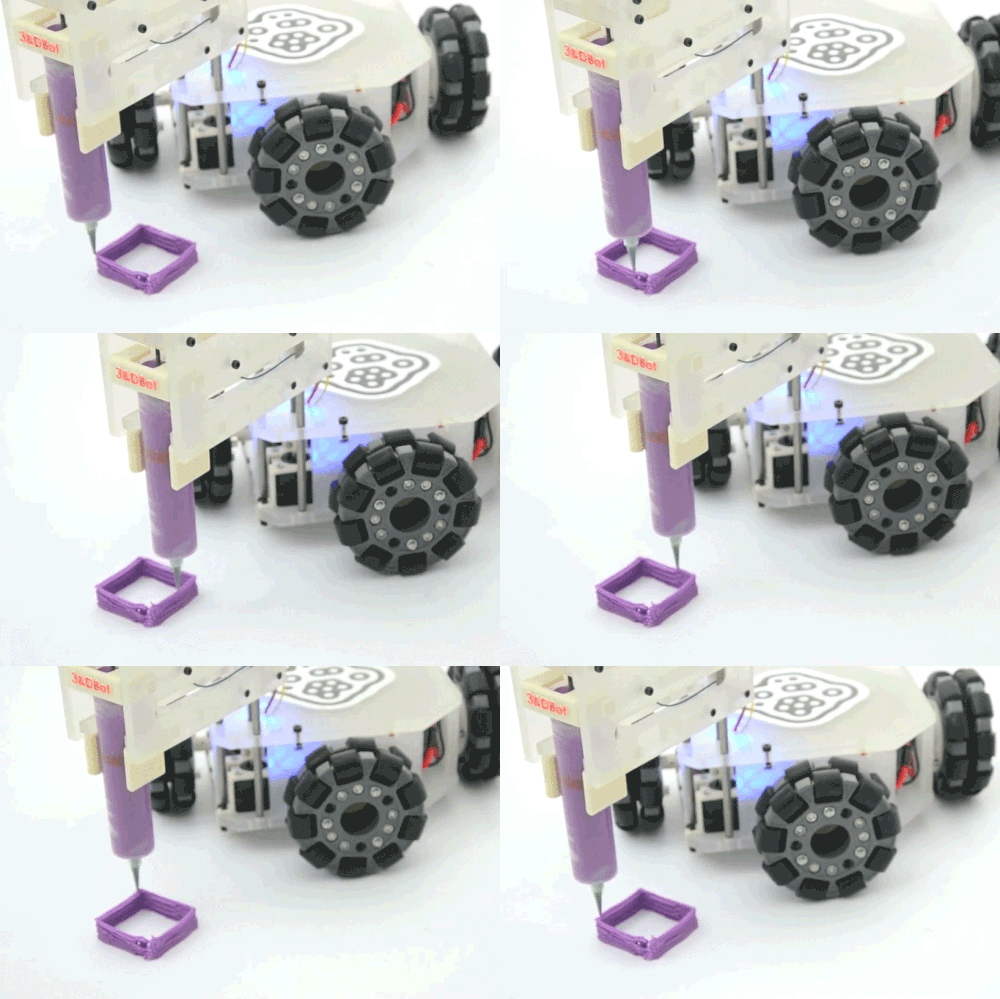
One design lab, located in Rio de Janeiro, Brasil, called PUC-Rio, has decided that such limitations should not exist within this rapidly growing industry. They have come up with a solution which could very well be the future path towards the elimination of size constraints during the 3D printing process.
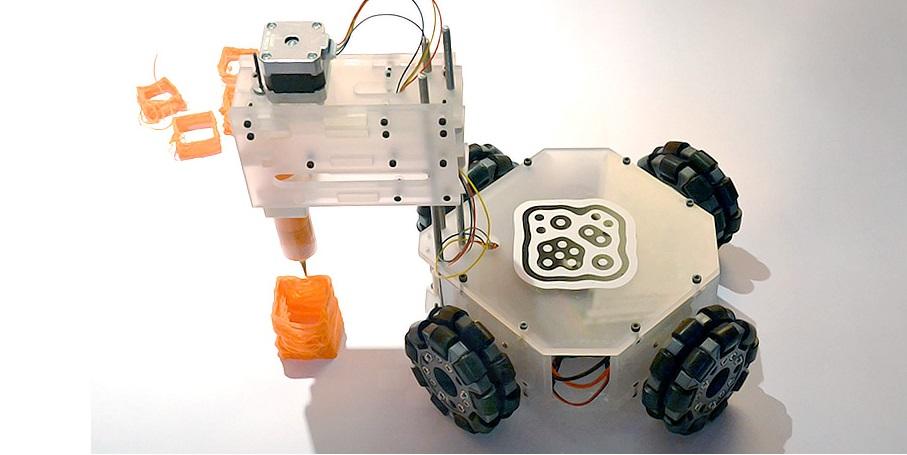
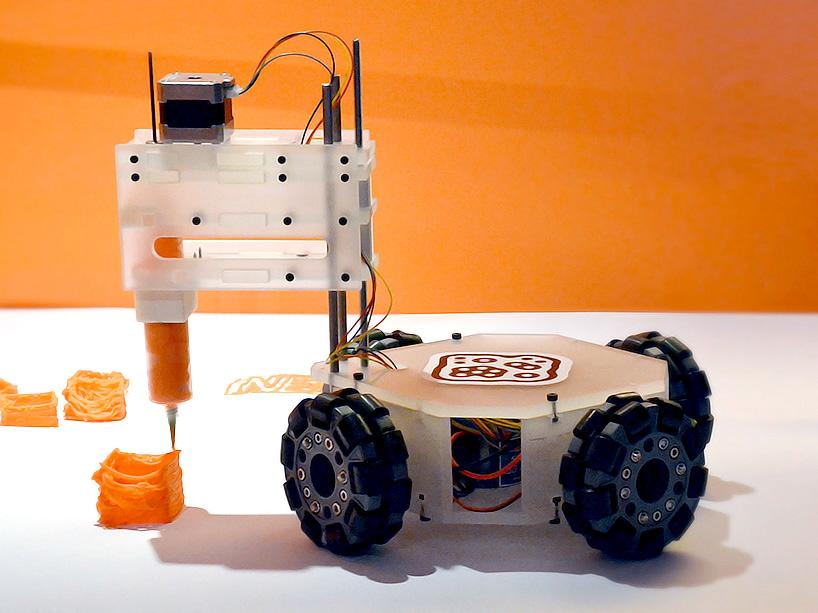
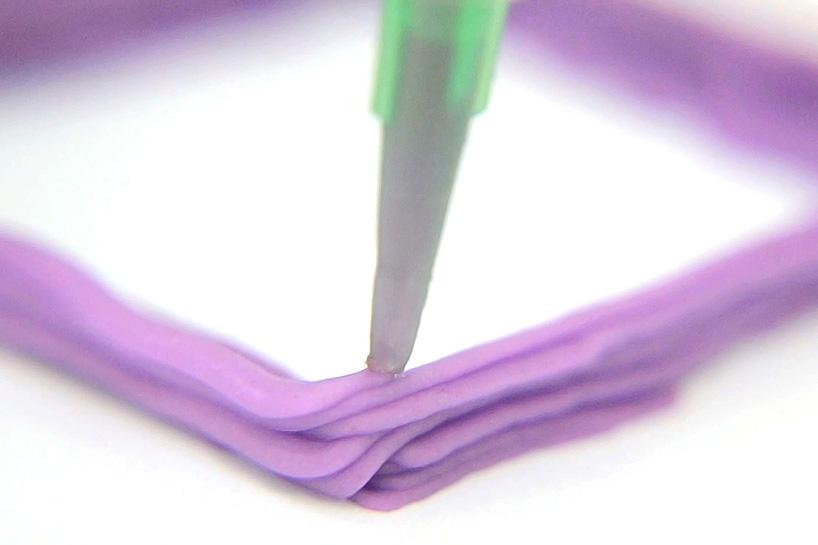 What they have created is a mobile 3D printing technology, which simply put, is ingenious. The printer, called the 3&Dbot, is tethered to a base with four wheels. The entire printer itself moves dependent on the print data fed to it by a computer. Described as an autonomous 3D printing robot, the machine is capable of printing without any constraints. Wherever the computer tells it to print, as long as it’s a flat surface, it has the capability to do so. The only constraint to the entire system is the height in which it can print, which could easily be modified to include a Z-axis extension for higher objects.
The 3&Dbot features an Arduino micro-controller with wireless communication, four industrial omni wheels, and TUIO fiducial markers. The extruder on this machine is not heated, but easily could be modified as well, to include a heating element. It is capable of printing in a variety of materials including ceramics, modeling clay, and any paste-like substances currently available.
Just imagine if this technology were to be scaled up a bit. We could see printers tethered to tractor-like machines, capable of printing in cement for the fabrication of structures such as homes. This is certainly a very exciting new direction in which 3D printing could eventually be headed. It will be interesting to see if this technology is expanded upon and improved, as I imagine that accuracy is not quite where it would need to be for precise fabrication.
Let’s hear your thoughts on this exciting new 3D printing technology, in the 3&Dbot mobile printer forum thread on 3DPB.com. Check out the video below of this incredible machine in action.
Imaged: Designboom.com
Subscribe to Our Email Newsletter
Stay up-to-date on all the latest news from the 3D printing industry and receive information and offers from third party vendors.
Print Services
Upload your 3D Models and get them printed quickly and efficiently.












You May Also Like
3D Printing News Briefs, June 18, 2026: Reseller, Relocation, Metal Space Powder, & More
We’ll start with business news in today’s 3D Printing News Briefs, as XJet appointed a value-added reseller in Germany, BIO INX is expanding its presence in the Italian market, and...
Scientists Use BMF to 3D Print Seal Whiskers That Track Prey Long After It’s Gone
Seals use their whiskers to hunt. Not Navy Seals, although they may in some way also, but this article is about lowercase seals. Not Seal the musician either; as far...
Researchers Combine AI and Bioprinting to Create Tiny Blood Vessel Networks
If 2026 has a theme in bioprinting, it may be blood vessels. Researchers can already print incredibly sophisticated tissues. The harder part is keeping those tissues alive. Without a network...
University of Arkansas Researchers Test Metal 3D Printing in a Mars-Like Atmosphere
If humans eventually establish a long-term presence on Mars, they will face a major manufacturing challenge almost immediately. Tools will break. Parts will wear out. Equipment will need repairs. But...