An Incredible Custom Mechanical Clock Made with a ZMorph Hybrid 3D Printer

 Matt Olczyk has designed, printed, milled and cut a pretty incredible looking Custom Mechanical Clock. But his trick was that he was able to use the same machine to do it, simply switching by switching out toolheads. Usually when a project uses different materials and is produced by different technologies it requires separate machines for the 3D printing, laser cutting, and CNC milling aspects of the project. But Olczyk wanted to do something different.
What makes his Custom Mechanical Clock so unique is that it was made with a ZMorph Hybrid 3D printer that has an interchangeable toolhead system. This system allows one printer to perform multiple functions with just a simple switch of the toolheads, saving space and cost along the way. Olczyk’s choice to use the ZMorph, which combines CNC milling, laser cutting, and 3D printing, demonstrates some of a hybrid 3D printer’s advantages for projects requiring more than just 3D printing technology.
Olczyk’s clock was assembled using about 80 different parts, almost all of which consist of gears, that were made using the ZMorph 2.0 S Hybrid 3D Printer. The results are pretty spectacular. Olczyk’s clock looks a bit like an antique, although it is made with the latest cutting edge technologies. And from viewing this project we also learn the strengths and weaknesses of the different kinds of machines available to designers today. For example, 3D printing works best to make small and medium sized objects with complex structures, it works well where there’s mechanical wearing, and it allows the parts to be fabricated in one piece. Olczyk chose to use the CNC milling toolhead to make sturdy gears. These milled parts are made of translucent Plexiglas, which makes the clock look more refined, as it also retains its lightweight appearance. Finally, the laser cutter toolhead cut the clock’s numbers from black adhesive foil, instead of having to manually cut and place each number on the face of the clock. You have to admit: the results are quite impressive!
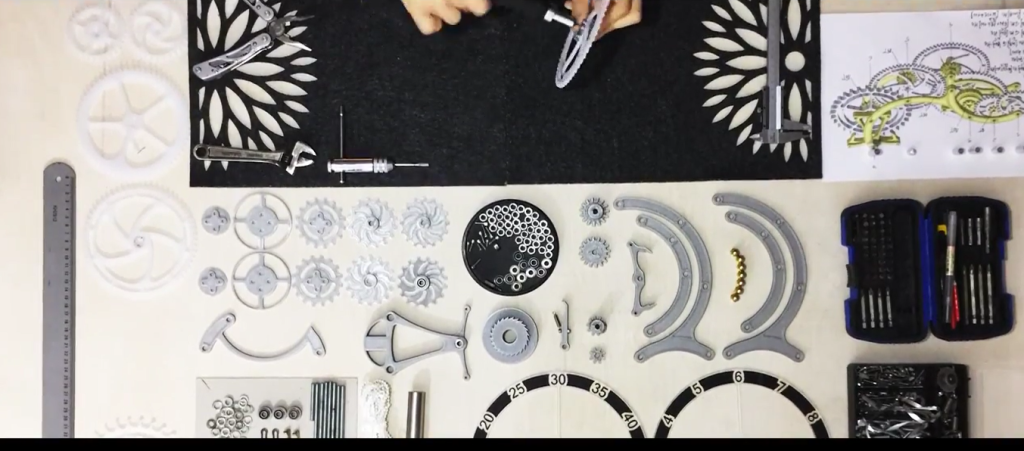
In its completed form you can see how the clock, which is quite elaborately designed, benefits from the use of all three of the ZMorph’s different toolheads. Here, 3D printing was not capable of realizing Olczyk’s design on its own, mainly because 3D printing offered only limited materials for making the clock. CNC milling and laser cutting were able to step in where 3D printing didn’t work for Olczyk, and the ability to simply switch out toolheads made all of the difference for the overall appearance and functioning of his clock.
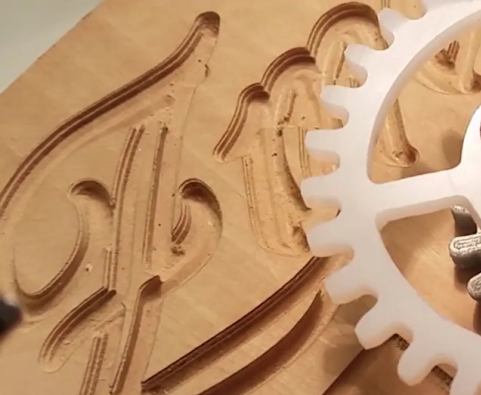 To make the clock, Olczyk used the ZMorph Essential Set with one Plastic Extruder 1.75 mm Toolhead, one CNC PRO milling Toolhead, and one Laser Toolhead. The materials he used include: Fiber Force Silver Glitter High Speed PLA, Acrylic glass (4 mm), Plexiglas (2 mm), and adhesive foil. (He also used Voxelizer software with the ZMorph.)
In general, Olczyk’s clock shows how several different machines are not only captured in one, but that using a hybrid 3D printer can yield some stunning results. The clock’s appearance is as original as all of the ways he chose to create this exceptional object. (You can also view a video of the making of the clock below.)
Subscribe to Our Email Newsletter
Stay up-to-date on all the latest news from the 3D printing industry and receive information and offers from third party vendors.
Print Services
Upload your 3D Models and get them printed quickly and efficiently.











You May Also Like
ROBOZE Buys Dimanex Assets to Build “Physical AI” Platform
Dutch firm Dimanex got its start as an MRO platform for the railways. The company had a contract with the Dutch Army in 2018, and later that year signed one...
3D Printing Financials: Nano Dimension Reports Q1 Growth Amid Restructuring and Asset Sales
Nano Dimension (Nasdaq: NNDM) started 2026 with a much larger first quarter business than it had a year ago, mainly because Markforged is now part of the company and included...
DMG Mori Joins $10M Defense 3D Printing Program
To look at the Biden administration and the Trump administration that succeeded it and find areas of policy overlap is obviously a bit of a challenge. But such areas certainly...
3D Printing & Drone Dominance: Speed, Performance, and Derisking the Supply Chain
A shift is underway in drone manufacturing. Government programs like the U.S. Department of War’s Drone Dominance, a $1.1 billion effort to deliver low-cost, one-way attack (OWA) sUAS at scale,...