Arcam’s AP&C Seeks Two New Patents for New Metal 3D Printing Powder Materials

 As metal 3D printing becomes a much more hotly demanded manufacturing process in a growing number of industries, the 3D printing industry is working hard to develop the technology and materials to meet that demand. Not only are they working to create entirely new 3D printing processes that can reduce the cost and speed up manufacturing time, but the metal materials market is exploding with new powders capable of producing a wider range of metal components. The goal is to increase the amount of metals that can be 3D printed, create use-specific variants of existing metal powders and develop new types of powders that increase the quality of the final part.
As you would expect, along with new materials come new patents. Metal 3D printing technology and materials manufacturer Arcam just announced that their Montreal, Canada-based metal powder manufacturing subsidiary, AP&C (Advanced Powders and Coatings), recently filed two patent applications. The patents are related to the high-yield manufacturing of metal powder materials made from reactive, or highly dense, metals that have a low gas to metal ratio and low gas pressure as well as a process for improved metal powder flowability.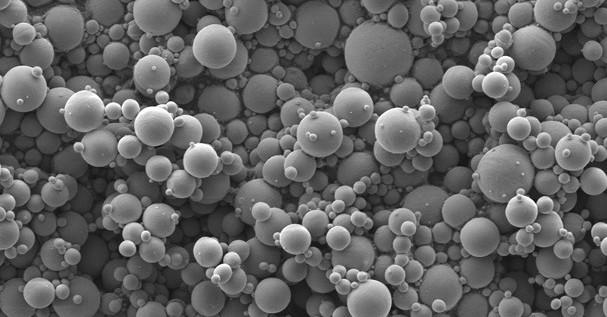
AP&C is one of the industry’s largest producers of high-quality, cost-effective titanium, niobium and nickel super-alloy powder materials optimized for the use with metal 3D printing technologies–specifically for a multi-reactor manufacturing set-up that uses product-specific equipment and tools. They strive to produce powder materials with a high rate of purity made with low oxygen content and ceramic free melting. Their powders are made to be highly spherical with minimal satellite material which will produce stronger finished parts with less flaws when melted or sintered. They distribute their powder materials to over twenty countries, and primarily serve the biomedical and aerospace industries.
 The first patent application involves the use of proprietary AP&C technology called Plasma Atomization on multiple heated metal sources like wire, rod and melt. The technology will allow the fine powders to be produced in large quantities for all metal 3D printing distributions and will prevent the risk of ceramic contamination of the final material.
“The production yield is one of the key drivers to produce powder at low cost. The combination of high-yield of fine powder with a low gas to metal ratio of about 10 is unique to AP&C’s proprietary Plasma Atomization process,” explained President of AP&C Jacques Mallette.
AP&C’s second patent application involves a process of obtaining the optimal flowability of very fine powders made from reactive metals for use with metal additive manufacturing technology. The patent will cover all of their methods for producing principal reactive metals powder, including Plasma Atomization, Plasma Spheroidization, Plasma Rotating Electrode, and several other Gas Atomization processes. This new process will allow AP&C to obtain the highest level of flowability for all metal 3D printing powder distribution methods and technologies.
Let’s hear your thoughts on this news in the Arcam Metal 3D Printing Patent forum thread on 3DPB.com.
Subscribe to Our Email Newsletter
Stay up-to-date on all the latest news from the 3D printing industry and receive information and offers from third party vendors.
Print Services
Upload your 3D Models and get them printed quickly and efficiently.











You May Also Like
Via EOS Partnership, Texas’s ACMI Is the First Customer for the AMCM M 8K 3D Printer
EOS’s two major announcements in the last few months have been the launch of the EOS M4 ONYX at Formnext 2025 and the news from a couple of weeks ago...
Reuniting ExOne and voxeljet: An Investor’s View on Building a Global Industrial Sand Printing Leader
Authored by Whitney Haring-Smith, Chair of the Board, ExOne Global Holdings & Managing Partner, Anzu Partners At Anzu Partners, we invest with conviction in industrial technologies that create categories—and then...
VulcanForms Raises $220M as Investors Back Scaled U.S. Metal 3D Printing
VulcanForms has closed a $220 million Series D funding round, a large vote of confidence at a time when investment in 3D printing has become more selective. Investors are backing...
Inside TCT Asia 2026: Exploring a Full-Chain Additive Manufacturing Platform
As Asia’s largest additive manufacturing event, TCT Asia 2026 continues to position itself as a leading showcase of the entire additive manufacturing value chain — spanning equipment, materials, software, services,...