China’s YouSu Plastic Technology Makes 3D Printing Filament for 3D Medical Models


 While not as flashy as some of the current 3D printing innovations being produced and inserted into the headlines these days, those being made in the medical industry are undeniably some of the most important. From quite mainstream 3D printed models being used more and more, to 3D printed medical devices that are able to change the lives of small children with very serious conditions, we follow some of the inventions that put the very definition in cutting edge. All of these models, devices, and 3D printed implants continue to evolve–both materially and in their uses.
 But most often while the design, uses, and procedures are being discussed in terms of mapping out what’s needed, how helpful a device was in improving the quality of or saving a life, and how it offered so much more speed and affordability–we don’t as often cover the actual filaments used to make a 3D printed model.
When a 3D printed item is being used in a medical diagnosis or procedure, there are myriad reasons why it must be impeccable as a material first and foremost. Guangzhou’s YouSu Plastic Technology Co., Limited is in the business of making sure that’s how it is, specializing in 3D printer filament for medical applications. They focus on research and development and then manufacturing. Currently, they’ve produced a material for healthcare, called YS-PC133. The 3D printing filament is certified for healthcare, having passed all tests and requirements for the ISO 10993 certification. It is compliant with USP class VI and also meets FDA/CFDA standards as well.
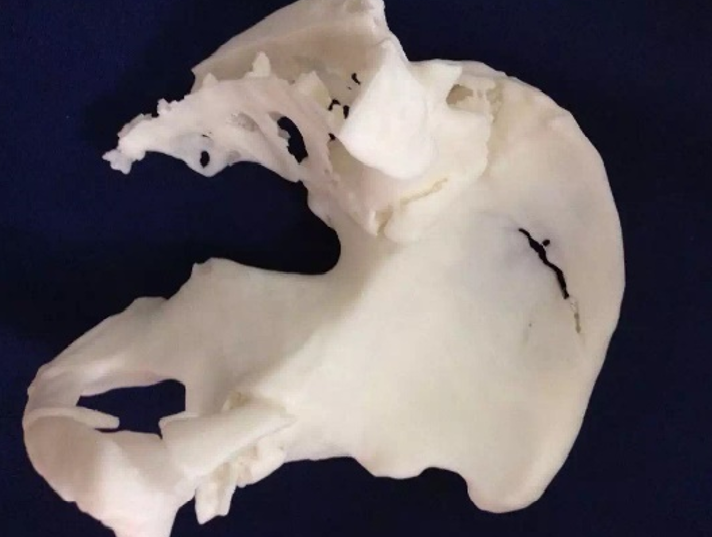
YouSu states that as one of the best materials in the health industry, it can also be used for a number of different applications due to its versatility, durability, and strength. They are now working with both an outside 3D printing company and with Affiliated Hospital of Southern Medical University to use the YS-PC133 material in a surgery. So far it has been used in a surgical simulation, with a scan performed of a patient’s bone and then 3D printed on a Qubea 3D printer. It was useful in making a plan for the surgery and then the doctor was able to make titanium bone plates that were patient specific.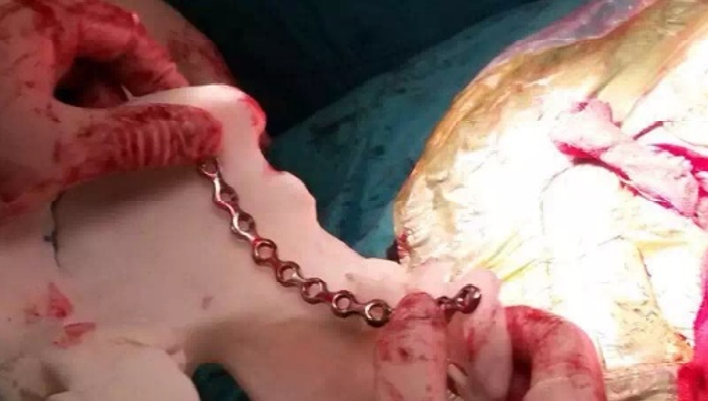
The material is important in that it is able to pass the ‘disinfection process’ at 85°C, and reaches temperatures as high as 129°C. With the 3D printed model being used during surgery, everyone agreed that ‘operation efficiency’ was greatly improved.
The company, headquartered in Guangzhou, China, will be debuting the new filament at the 2015 TCT Show in Birmingham from September 30 to October 1. They will be giving out free samples of their product as it is officially launched at the show.
Let us know if you happened to pay a visit to their booth at TCT and what you thought of this new product? Discuss in the Yousu Filament forum thread on 3DPB.com.

Subscribe to Our Email Newsletter
Stay up-to-date on all the latest news from the 3D printing industry and receive information and offers from third party vendors.
Print Services
Upload your 3D Models and get them printed quickly and efficiently.













You May Also Like
Printing Money Episode 42: Q2 2026 Public Markets 3D Printing Earnings Analysis with Troy Jensen, Cantor
Welcome to Printing Money Episode 42. Troy Jensen (Managing Director, Cantor) returns, joining Danny Piper (Managing Partner, NewCap) to review Q2 2026 publicly traded 3DP/AM company earnings reports. Troy’s quarterly...
3DPOD 314: Debinding, Sintering, and Metal Binder Jetting with Stefan Joens, Elnik Systems and DSH Technologies
Stefan Joens of Elnik Systems sells ovens. Their debind and sintering equipment powers a lot of high-volume binder jet and MIM production. We learn about Elnik and its origins. But...
The Frankenservice Part 1: Print the Rainbow
So far, most service bureaus and manufacturing companies stick to what they know. Not only for OCD reasons, but gleaming lines of identical LPBF machines are also arrayed on impossibly...
3DPOD 313: Patient-Specific 3D Printing with Ruben Wauthle, Amnovis
Ruben Wauthle studied at Leuven University at a very serendipitous time. Through working with pioneering additive professors and surgeons, he entered into a specialty that was emerging. He joined pioneering...