3D Printing Fabric with Thermoplastic Polyurethane

Israeli architect David Mussaffi is more than just a 3D print enthusiast, he’s a dedicated 3D print designer with an expert eye for fashion. Last year, he won second place in the Thingiverse #TrexRemix Challenge for his T-Rex High Heel which has the wearer placing her foot in the gaping maw of the carnivore as an intimidating set of teeth bristle threateningly from the surrounding jaw bone.
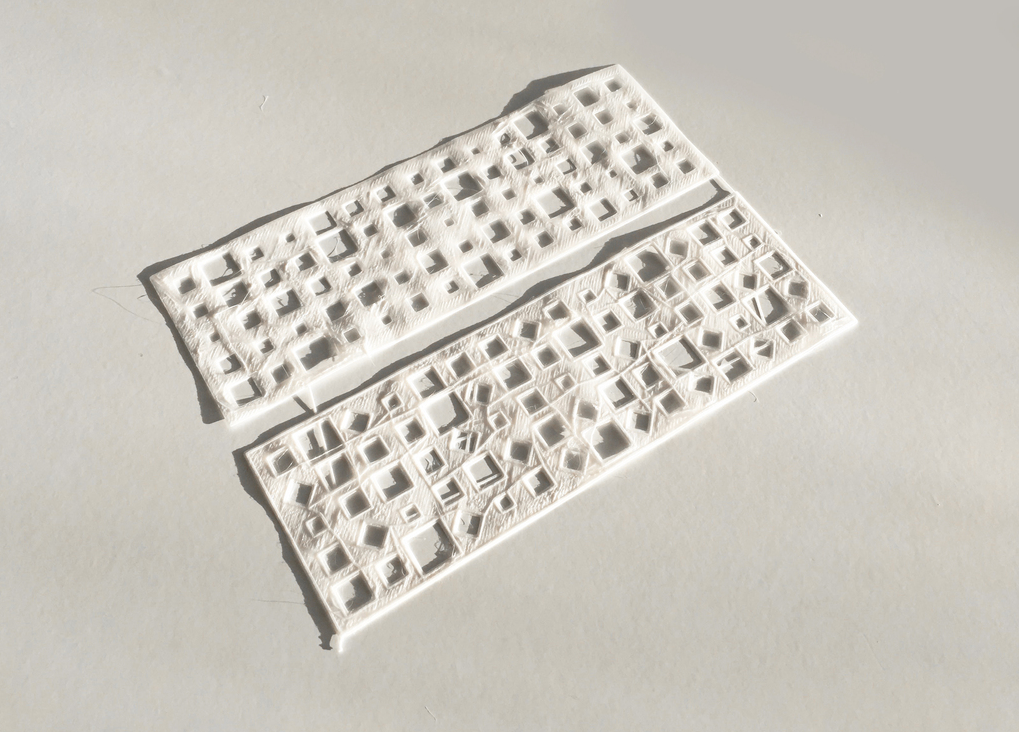
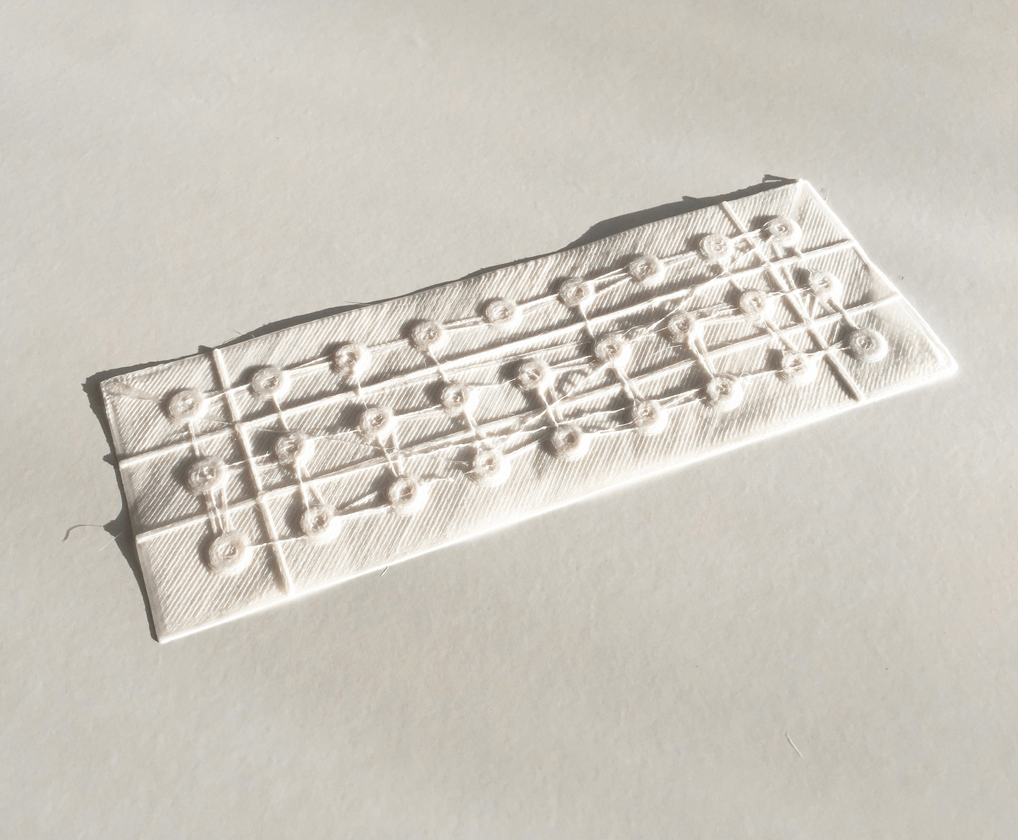 His latest 3D print creation springs from a material exploration using thermoplastic polyurethane (TPU), a filament that prints at an extrusion temperature of 200-220° Celsius (392-428° Fahrenheit). Mussaffi wanted to use this filament to create prints thin enough to be considered a type of fabric.
The idea of printing fabric is not new. In May the Electroloom, a 3D printer that has the ability to 3D print fabric using a process similar to metal electroplating, was introduced to the world through Kickstarter. The Electroloom was an exploration in the creation of a machine that would print in a particular form that would create the process for fabricating flexible, soft fabric with a 3D printer. Mussaffi’s project uses a standard 3D printer and investigates the possibilities for a particular material to become fabric-like.
 Mussaffi’s prolific contributions to 3D printing knowledge belie the freshness of his introduction to the technology. In an interview with 3DPrint.com, Mussaffi explained his experience with additive manufacturing:
“I started my journey in the 3D printing world two years ago with a kit of the Printrbot Simple 1405 model (the ‘makers’ edition). My YouTube channel is full of the prints I did on this great machine. I now own a Robox 3D printer, a Zeepro Zim 3D printer and an Ultimaker 2. I have just received another Kickstarter printer, the ‘Ibox-Nano’ but I haven’t had time to try it yet.”
For this experiment in filament, Mussaffi printed at a slow speed of 15-20 mm/sec with the retraction disabled. As TPU is a filament that has a tendency to melt quickly, the prints were produced with some oozing and stringing. He has plans to try the prints again at a higher speed to see if it is possible to avoid some of those features; however, he acknowledges that he thinks these ‘defects’ actually add to the textile-like look of the prints.
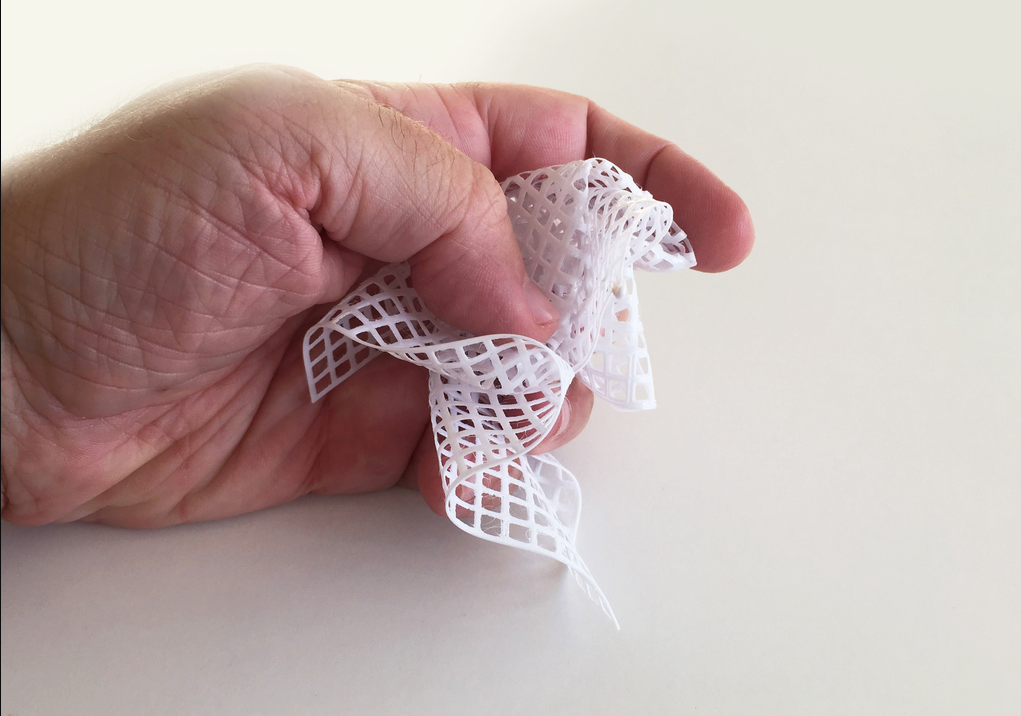
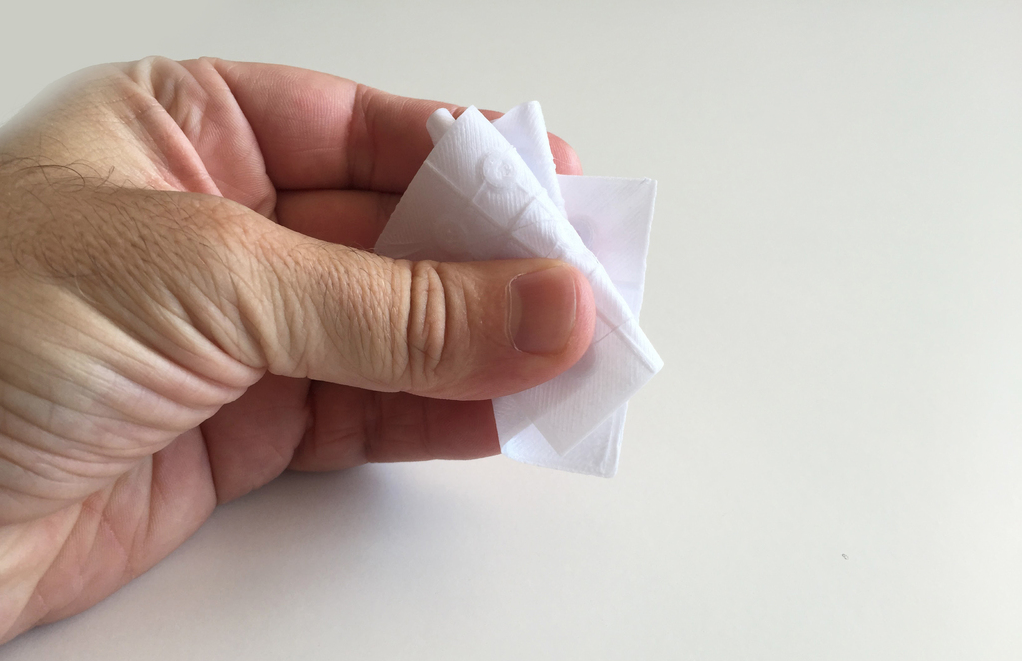 The key to evaluating the suitability of these fabrics for various applications comes in the feel, or in textile terms, the ‘hand’ of the goods. Not everything has to have the feel of silk, but clearly its flexibility and softness would impact the use. Maybe this wouldn’t breathe enough to be worn close to the skin, but imagine textiles that are used to cover work station partitions or as the curtains in medical facilities and the possibilities expand. Combine this technology with the self-cleaning properties that have been documented in water lilies and you could quickly end up with a self-cleaning fabric.
In that case, I think I will have my children’s clothing printed out of it – comfort be damned.
Let’s hear your thoughts on 3D fabric printing in the 3D Printing with Polyurethane forum thread on 3DPB.com.
Subscribe to Our Email Newsletter
Stay up-to-date on all the latest news from the 3D printing industry and receive information and offers from third party vendors.
Print Services
Upload your 3D Models and get them printed quickly and efficiently.











You May Also Like
ASTM International Works with UK MoD on America Makes Project
The UK Ministry of Defense (MoD) will work with ASTM International on a $1.1 million project to let it work in closer concert with the US Department of War (DoW)....
UK Government Funds Research to Develop 3D Printed Metal Alloys for Nuclear Fusion
The UK Atomic Energy Authority (UKAEA), a government-funded research organization, has demonstrated a persistent interest in developing metal additive manufacturing (AM) materials for nuclear fusion applications, including multiple phases of...
Top 10 3DPrint.com Stories of 2025: Kickstarter, Consumer Goods, Bankruptcy, & More
As Vanesa Listek wrote, last year was a major turning point for additive manufacturing (AM), as the industry is working to sort itself out. Customers want proven use cases and...
3D Printing Predictions 2026: Industrial Production & Polymer Additive Manufacturing
Polymer additive manufacturing is seeing less investment, attention, and disruption than metal additive manufacturing currently. Less crucial for defense needs, it has of late had far fewer new entrants. But,...