
Proto Labs Expands into New Additive Manufacturing Services

 For low-volume production, Proto Labs, with its global headquarters in Minnesota, is the world’s fastest digital manufacturer. Founded in 1999 as the ProtoMold Company by Larry Lukis, who was seeking a quicker and more cost-effective way to produce injection molded parts, the venture was clearly very successful. Thus far the company has focused its efforts on one-day injection molding services and CNC machining only. But all of that is about to change. Now they’re introducing an advanced additive manufacturing service for custom prototyping to its Telford, UK production facility that will greatly expand business offerings and customer opportunities.
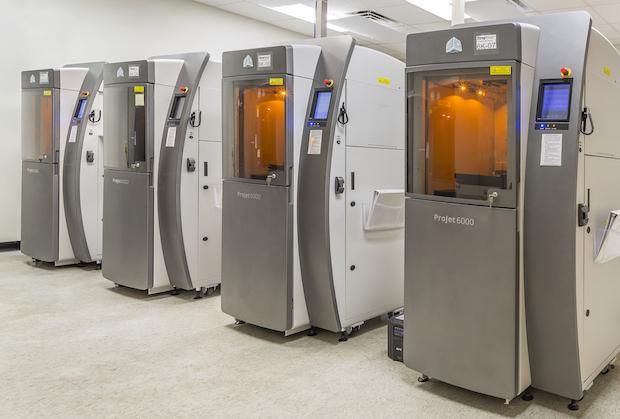
New stereolithography services will aid customers — like designers and engineers — by providing more ways to get a product from prototyping to low-volume production. Lee Ball, Operations Director for Proto Labs, explains how customers can benefit from this new stereolithography service:
“We are excited to be able to offer this new additive manufacturing service to our customers in Europe. When compared to the commonly available fused deposition modelling (FDM) processes that are popular with hobbyists, SL offers a vastly improved level of resolution, accuracy and surface finish. SL can build parts with a layer thickness of 25 microns (0.0250mm) compared to the typical, entry-level FDM layer thickness of around 127 microns (0.127mm).”
Stereolithography uses materials that mimic polypropylene and thermoplastics, and it works great when prototyping small parts comprised of complex formations. It provides smoother surfaces and higher accuracy, proving to be a better option than the FDM process more commonly used by 3D printing hobbyists.
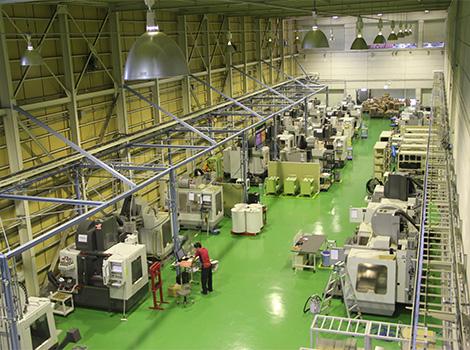
Proto Labs’ US location already offers selective laser sintering (SLS) and direct metal laser sintering (DMLS), and in 2016, the company plans to once again expand these offerings to some of its other locations. The company is represented in Japan, Germany, France, and Italy too.
In order to keep up on all of the changes within Proto Labs, the company is offering a “Digital Manufacturing” TCT-hosted webinar on September 17th. It will cover four learning objectives: what prototyping technology looks like today; the technology most suited to your project; how you can get support from Proto Labs for your project; and, finally, how digital manufacturing can help. Webinar speakers will be two Proto Labs employees: Damien Hennessey (Commercial Director) and Saleem Shariff (Senior Customer Service Engineer). You can register for this event here.
All of this is good news for Proto Labs fans and fans of additive manufacturing! Let us know your thoughts in the Proto Labs SLS Services forum thread over at 3DPB.com.
Subscribe to Our Email Newsletter
Stay up-to-date on all the latest news from the 3D printing industry and receive information and offers from third party vendors.
Print Services
Upload your 3D Models and get them printed quickly and efficiently.













You May Also Like
3D Printing News Briefs, September 26, 2026: Bioceramic Implants, 3D Concrete Printing, & More
In this weekend’s 3D Printing News Briefs, we’ll start with an integration between PanOptimization and AMCM, before moving on to healthcare news from KLS Martin and Lithoz, and then UltiMaker...
3D Printing News Briefs, September 24, 2026: Metallic Alloys, Nanobone, Alternative Meat, & More
In this week’s 3D Printing News Briefs, we’ll discuss some materials news: a reference material for standardizing photopolymer manufacturing, metallic alloys that help reduce energy loss in electric motors, a...
AMAsia Pulse: AM Investment Picks Up Across Asia-Pacific
The first half of September brought fresh investment and expansion activity across Asia-Pacific’s additive manufacturing sector. China’s Xinjinghe secured funding for an aerospace AM hub, South Korea’s Lincsolution outlined plans...
3D Printing News Briefs, September 17, 2026: 3D Printed Boat, UAS Development, & More
We’ll start with maritime manufacturing in this week’s 3D Printing News Briefs, and continue on to defense 3D printing. We’ll end with funding for Tripo AI. Read on for all...























































