SMU Unveils Video of Unique LBDMD Metal 3D Printing Process Using 6-axis Robot

 Some may say that metal 3D printing is what will ultimately bring the technology to the forefront of manufacturing. The idea of printing custom objects on a one-to-one basis brings unlimited potential to the entire manufacturing sector. Currently there are numerous methods of printing with metal materials, most of which are extremely expensive, pricing the technology out of reach for the majority of companies and individuals.
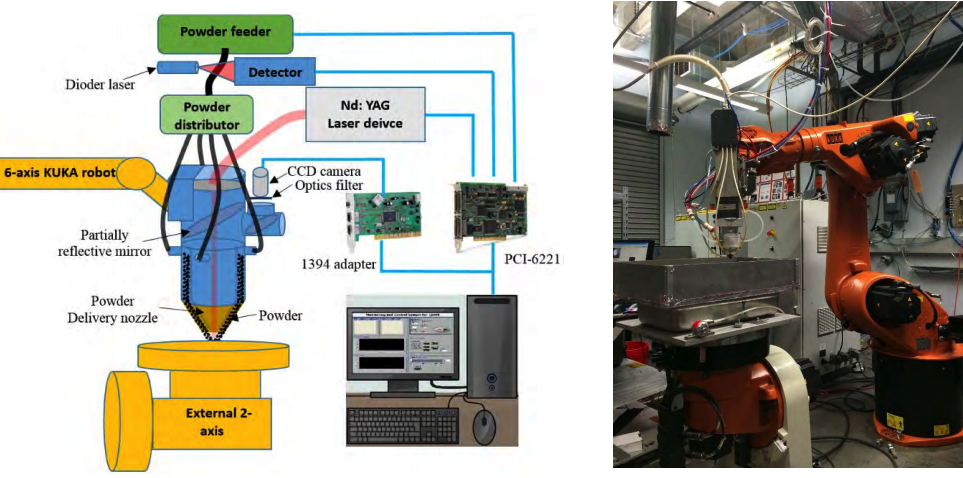
 Researchers at Southern Methodist University (SMU) have been working on a unique system of 3D printing metal objects, utilizing a 6-axis robot. The method is called Laser-based Direct Metal Deposition (LBDMD), and when combined with the Universitiy’s MultiFab System, provides for several benefits over other more common methods of additive manufacturing.
“MultiFab combines depositions by welding and laser cladding, multi-axis machining, and in-situ inspection into one highly integrated system based on a 6-axis robot and a 5-axis high speed CNC machining center, providing the next generation technology for rapid and precise net-shape manufacturing using metals and ceramics,” Radovan Kovacevic explained.
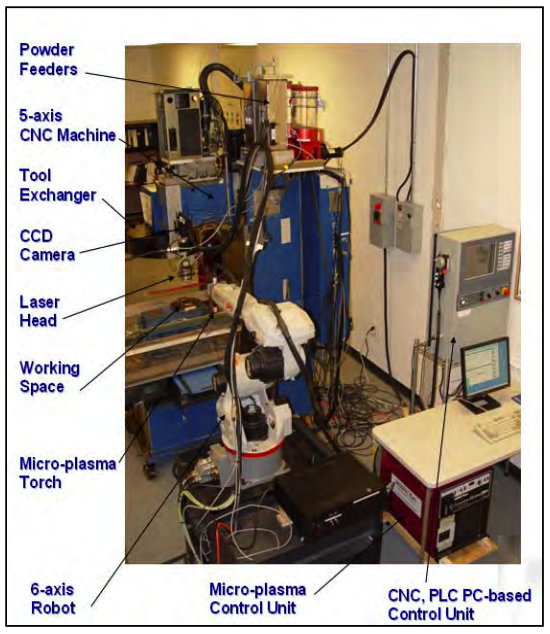
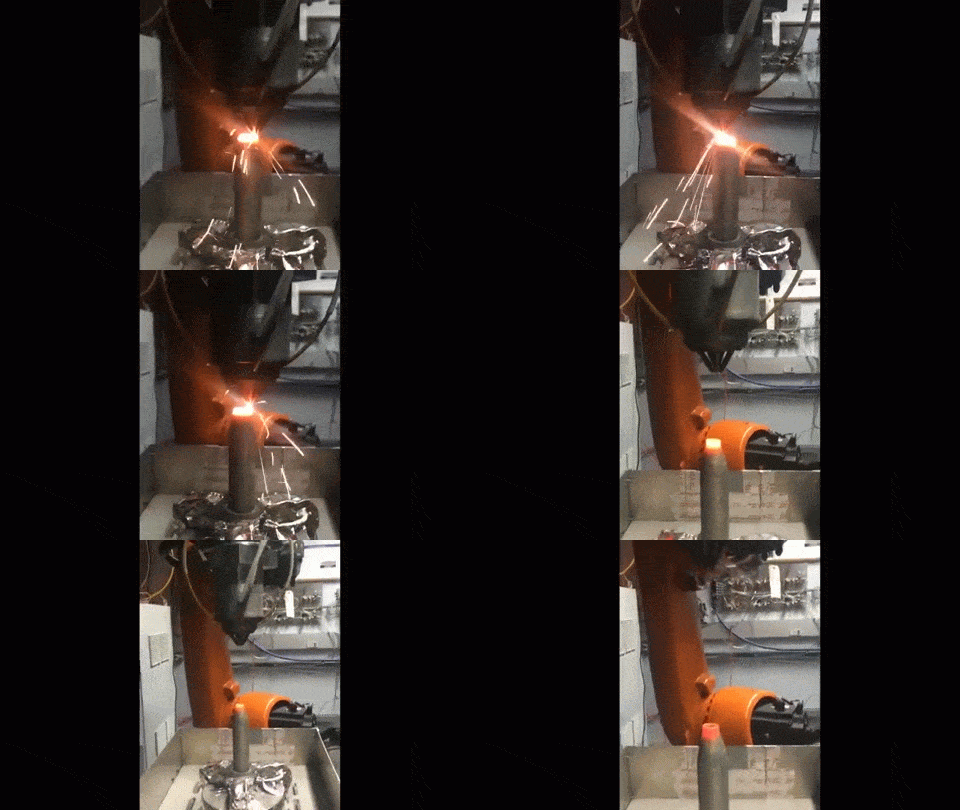
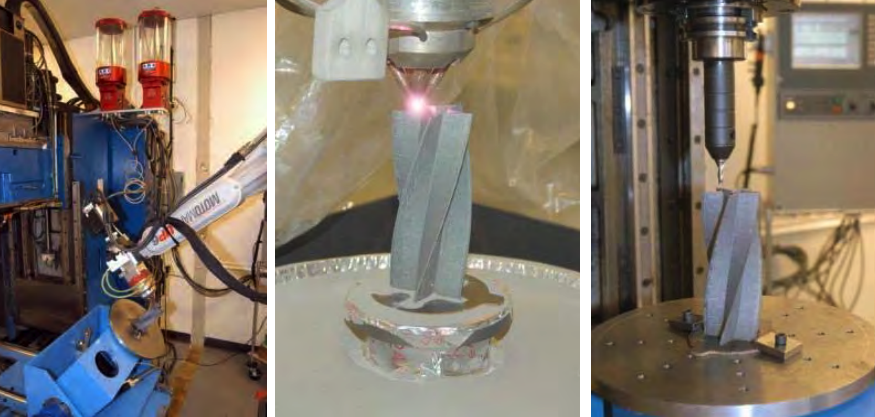
MultiFab is a process which utilizes a combination of laser technology with welding, and cnc machining to create metal objects of higher quality than other methods of 3D printing. The 3D printing process, unlike selective laser sintering (SLS) is able to build objects up, one layer at a time in a similar fashion as we have seen with FDM/FFF based machines which extrude plastics. Instead of extruding molten plastics however, the LBDMD method, lays down metal powder as a 4 kilowatt laser follows, sintering it in place.
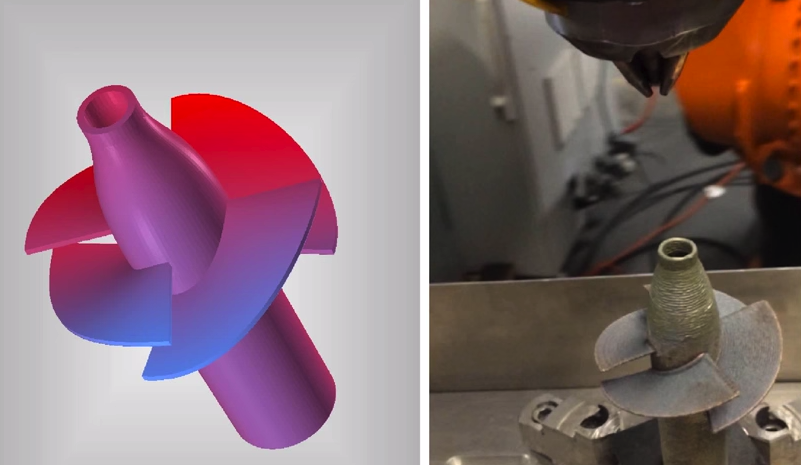
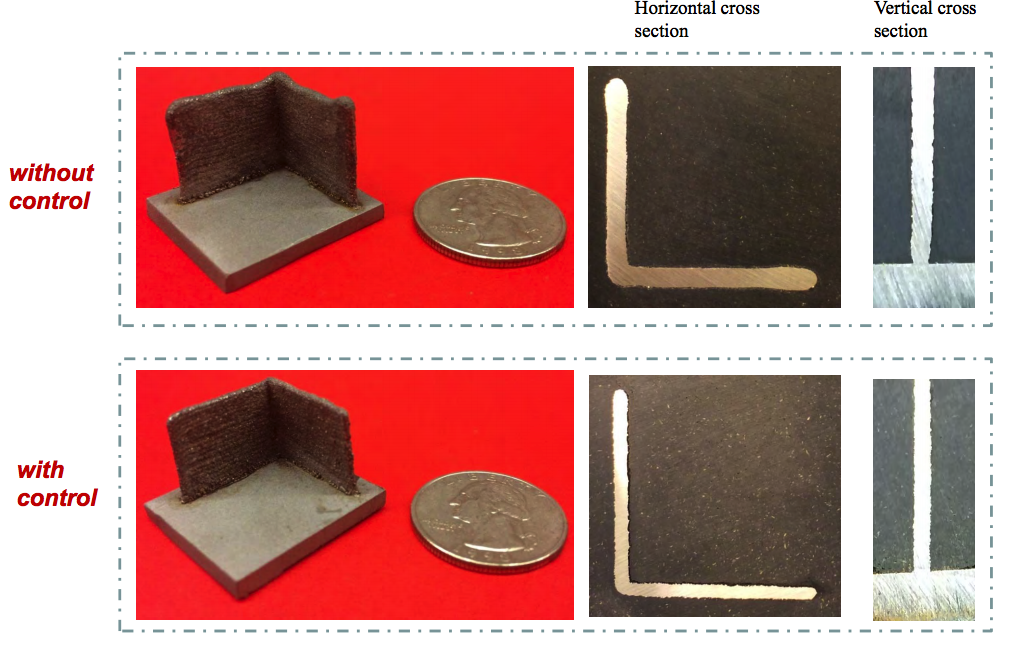
The technology actually dates back to patent filings by Professor Radovan Kovacevic in 2003, in which he came up with a method of controlling the molten metal pools in the process of laser based additive manufacturing. However, Kovacevic and SMU have just recently released a video of their working prototype, which utilizes this controlled molten pool system that allows for the fabrication of objects with straighter, more symmetrical lines and geometries (seen below).
Thanks to this laser system, the MultiFab process allows for less porosity in printed objects, a smaller heat affected zone, the ability to create fine geometrical features, potential for multiple metal fabrication, and better control of material properties. The welding aspects of the process lend themselves to creating objects with larger geometrical features, a controlled and higher deposition rate, and controlled heat input.
Both the LBDMD system and the MultiFab process remain a work in progress, but the potential is there for completely upending the metal 3D printing space. If a machine like this could be priced affordably, the future of metal product manufacturing looks very bright. What do you think about this process? Discuss in the LBDMD 3D printing forum thread on 3DPB.com. Check out the videos below.
Subscribe to Our Email Newsletter
Stay up-to-date on all the latest news from the 3D printing industry and receive information and offers from third party vendors.
Print Services
Upload your 3D Models and get them printed quickly and efficiently.











You May Also Like
3D Printing News Briefs, January 17, 2026: Titanium Scrap, Autopsy Analysis, & More
In this weekend’s 3D Printing News Briefs, we’ll start with government funding news from IperionX. Then, a German contract manufacturer has acquired its 6th and 7th Lithoz ceramic 3D printers....
3D Printing News Briefs, January 15, 2026: Project Call, Sports Medicine, Aluminum Alloy, & More
In today’s 3D Printing News Briefs, America Makes announced the winners of a $1.1 million Project Call, Austal USA named a new Vice President for Business Development and External Affairs,...
U.S. Navy Funds Senvol’s Machine Learning Software to Boost In-Situ Monitoring for 3D Printing
The additive manufacturing (AM) industry is well-positioned to benefit from increased incorporation of AI and machine learning (ML) into its core processes, and 2026 should provide plenty of opportunities for...
US Army Awards Contract to Phillips Federal for Containerized WAAM Factories
Everything that the U.S. Army has been doing with additive manufacturing (AM) over the last year or so suggests that the branch is getting serious about deployable production systems. One...