Defying the Wind: This 3D Printed Wind-Propelled Car Astonishingly Drives Straight into the Source


 MakerBot has come up with some brilliant ideas for their lineup of Thingiverse Summer S.T.E.A.M. Challenges, all of which have enticed some really incredible creations on behalf of makers, designers, engineers and students from around the world. One of this year’s challenges, which I took a keen interest in following, was the Catch The Wind challenge, one which asked designers to create models that “harness the power of the wind.” The challenge, which closed on August 2, had 159 official entrants, who entered in order to take aim at the first place prize of a MakerBot Replicator 3D printer.
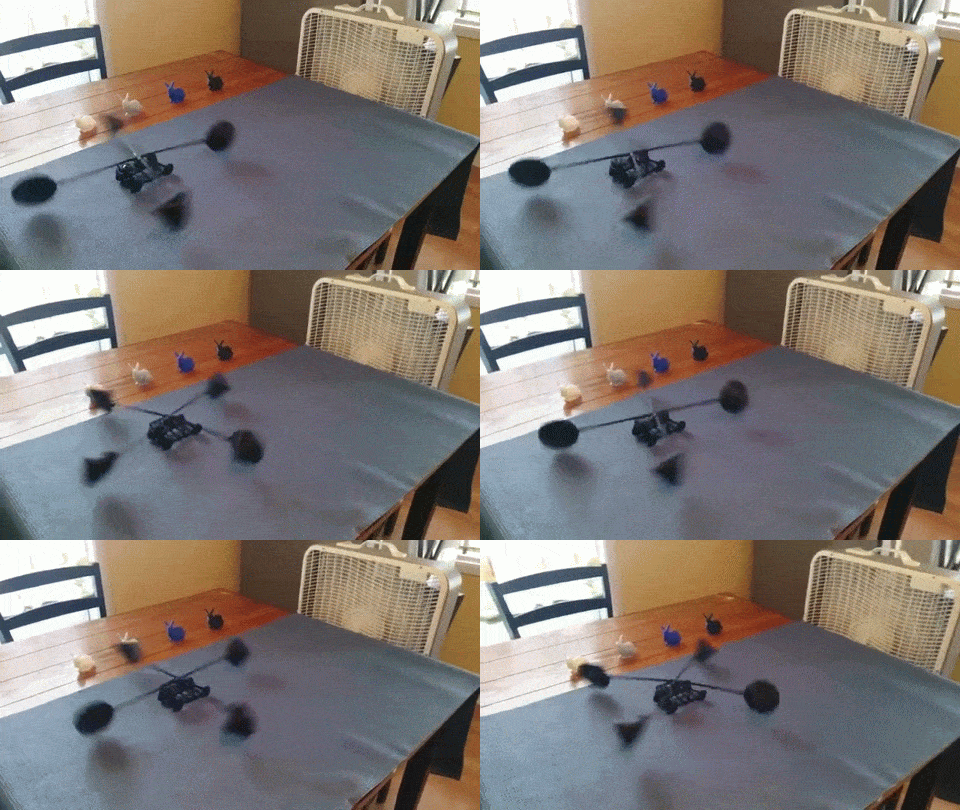
One 28-year-old structural engineer living in Illinois, named Kyle Carstens, elected to design quite the interesting creation — the Wind Car, a car that actually is propelled toward a wind source, rather than away from it like most would expect.
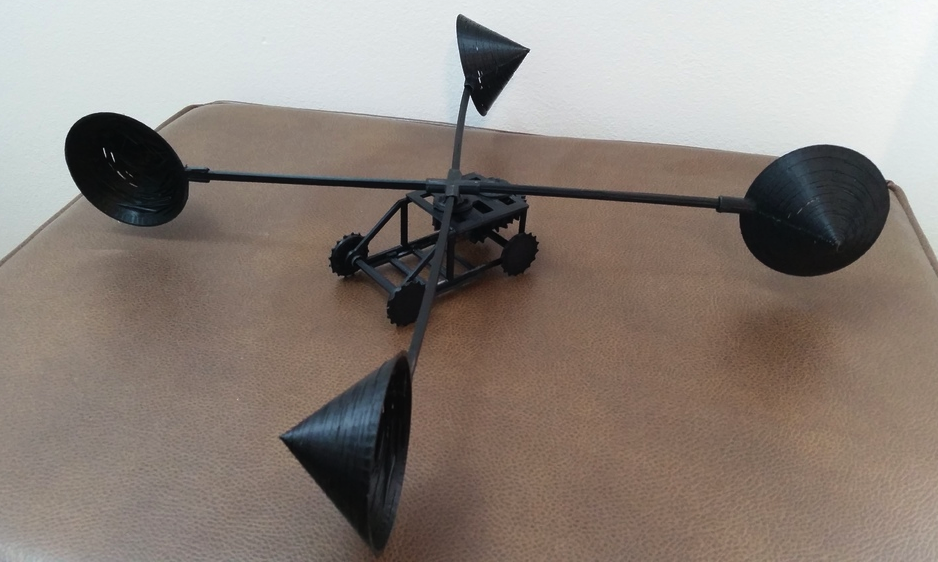
“My inspiration for this design was from sailboats and their ability to move forward despite being headed nearly into the wind,” Carstens tells 3DPrint.com. “I’ve always thought it was really neat to take an opposing force and use it to move in the opposite direction. My goal with this design was to take this concept all the way and design a working vehicle that can use the wind to travel directly into it.”
To design his creation, Carstens used Solidworks to model the 25+ individual 3D printable parts that his unique car is made up of. Several of his parts had to be redesigned and iterated upon prior to finalizing his creation. The way the model stands now, he admits that it takes a bit of model building skills to assemble once printed, although he plans to iterate upon the design further in order to make it less burdensome of a process.
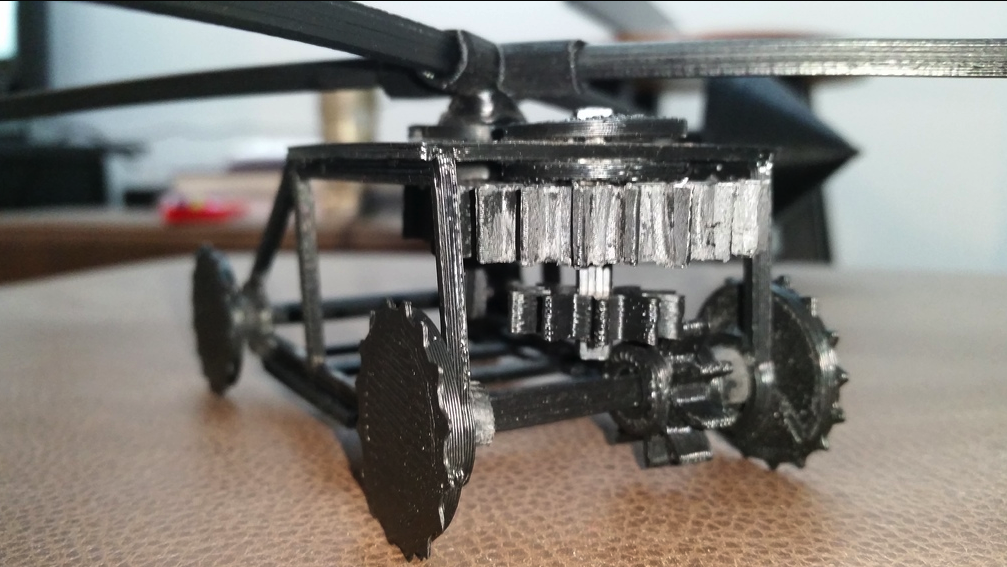
As you can see in the photos and videos provided, Carstens’ Wind Car uses special designed “wind cups” with relatively large surface area in order to harvest the wind. This sends the cups into a clockwise rotation, and the shafts attached to the cups then transfer the force to the fitting on the top of the car. Then this fitting transfers the torque to the first vertical shaft and the small gear within the car. Then the small gear interacts with the large gear in order to reverse the direction of the rotation and increase torque even more. The large gear shaft carries the torque to the transfer gears, rotating the axis of rotation 90 degrees to the axle, which sends the torque to the wheels, and moves the car directly toward the source of the wind.
“This model is a great example for engineering connections and energy transfer,” Carstens explains. “One possible assignment could include requiring students to estimate how many times the wind cups will rotate when the car travels a specified distance. This can be calculated after measuring the wheel and gear diameters.”
Whether you want to use this to confuse your friends or to teach students about engineering concepts, Carstens has made all of the design files and instructions available for others to download free of charge on Thingiverse. What do you think about this wind-defying creation? Discuss in the 3D Printed Wind Car forum thread on 3DPB.com. Check out the videos of this car in action below.
What are your thoughts on this ingenious design? Let us know in the 3D Printed Wind-powered Car forum thread on 3DPB.com.
Subscribe to Our Email Newsletter
Stay up-to-date on all the latest news from the 3D printing industry and receive information and offers from third party vendors.
Print Services
Upload your 3D Models and get them printed quickly and efficiently.













You May Also Like
Divergent Declares that German 3D Printers are Superior, And Plans Massive LPBF Expansion
Divergent has announced a new version of its Laser Powder Bed Fusion (LPBF) printer and a new site. The company aims to do nothing short of “further accelerating its mission...
Inside Haddy: Jay Rogers Wants 3D Printing to Build Real Products, Not Just Prototypes
A warehouse from the outside, but step inside Haddy and it shifts quickly: finished pieces up front, clean and minimal, furniture you can touch and sit on. Walking through the...
SpaceX IPO Puts a Major 3D Printing Powerhouse on Wall Street
SpaceX officially began trading on the Nasdaq today under the ticker symbol SPCX, marking one of the most anticipated and largest public offerings in Wall Street history. The company priced...
DEEP Manufacturing Collaborating with Fortius Metals to Demonstrate WAAM at Scale
DEEP Manufacturing is trying to build pressure vessels and marine habitats at scale with DED technology. Using commercial robot arms and wire arc additive manufacturing (WAAM), the company is hoping...