Ninth Grade Students Create a 3D Printed Biographical Timeline of WWII


 Often times when a teacher tells a student that they are going to be doing a fun assignment, the students know that whatever is next is going to be a lot of work. In this case, that was definitely true, but so was the part about it being fun. Ninth grade humanities teacher Heather Calabro, at Mid-Pacific Tech in Honolulu, Hawaii, was trying to teach her students in the MPX program about WWII by asking them to engage in a multi-stepped project resulting in a 3D printed artifact. Student Isabel Velazquez explained excitedly:
“It was a great learning experience to imagine that you were in the historical figure’s shoes and also to create something in your mind that was then printed so you could hold it in your hand.”
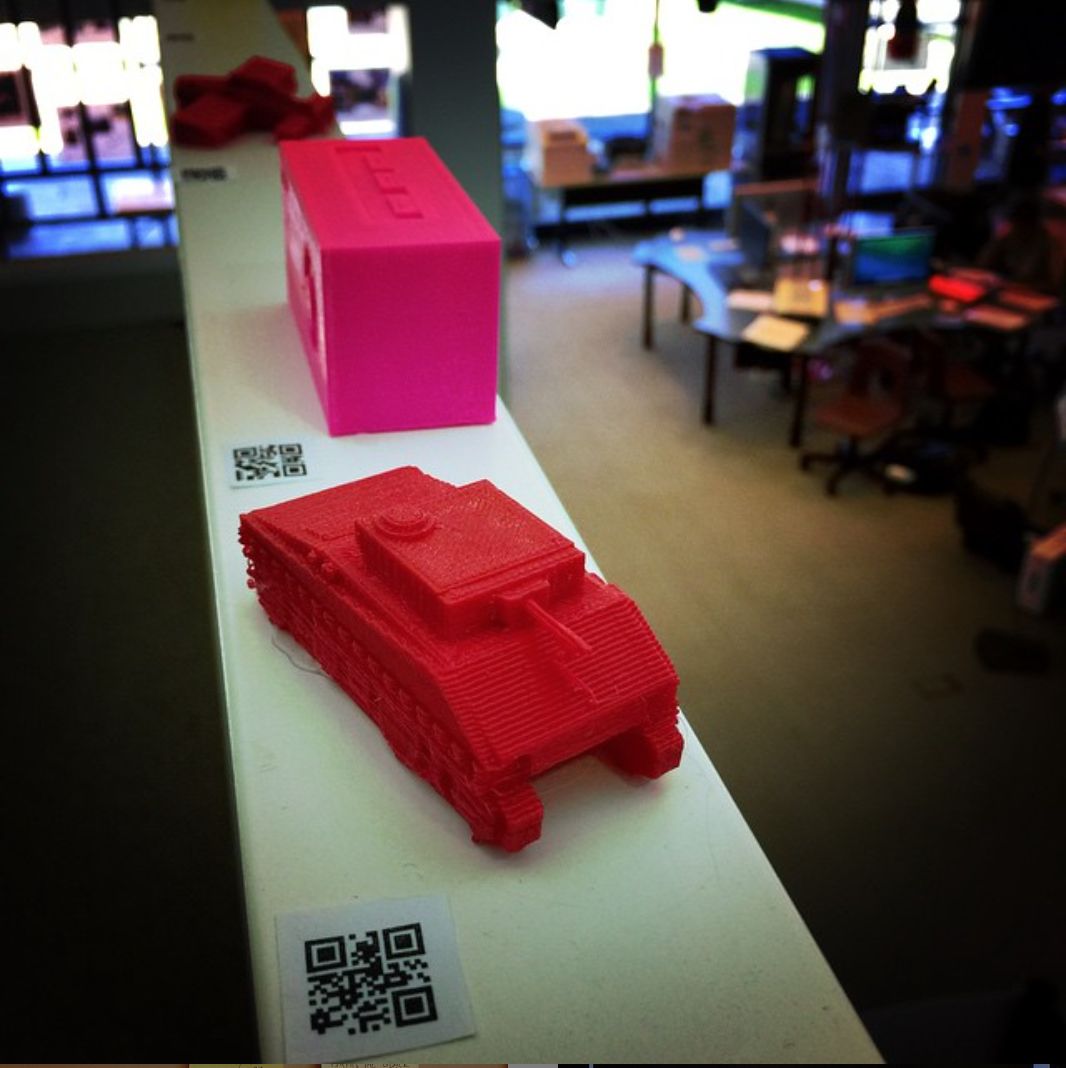
The first stage of this project was the research. Students were given the task of learning about an important event in WWII and then also asked to understand that event through the eyes of a figure who played a prominent role in the event. After steeping themselves in this information – and writing an MLA formatted paper about it and making an accompanying video – they were then asked to design an artifact that was representative of that particular event. Dan Wong, a member of the class, described his perception of the project:
“The process of learning, step by step, the programs and then seeing your creation come out of the 3D printer was cool! I also really liked how we got to dive deep into a WWII event that particularly interested us.”
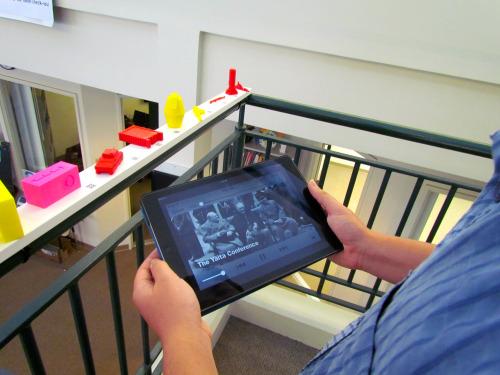
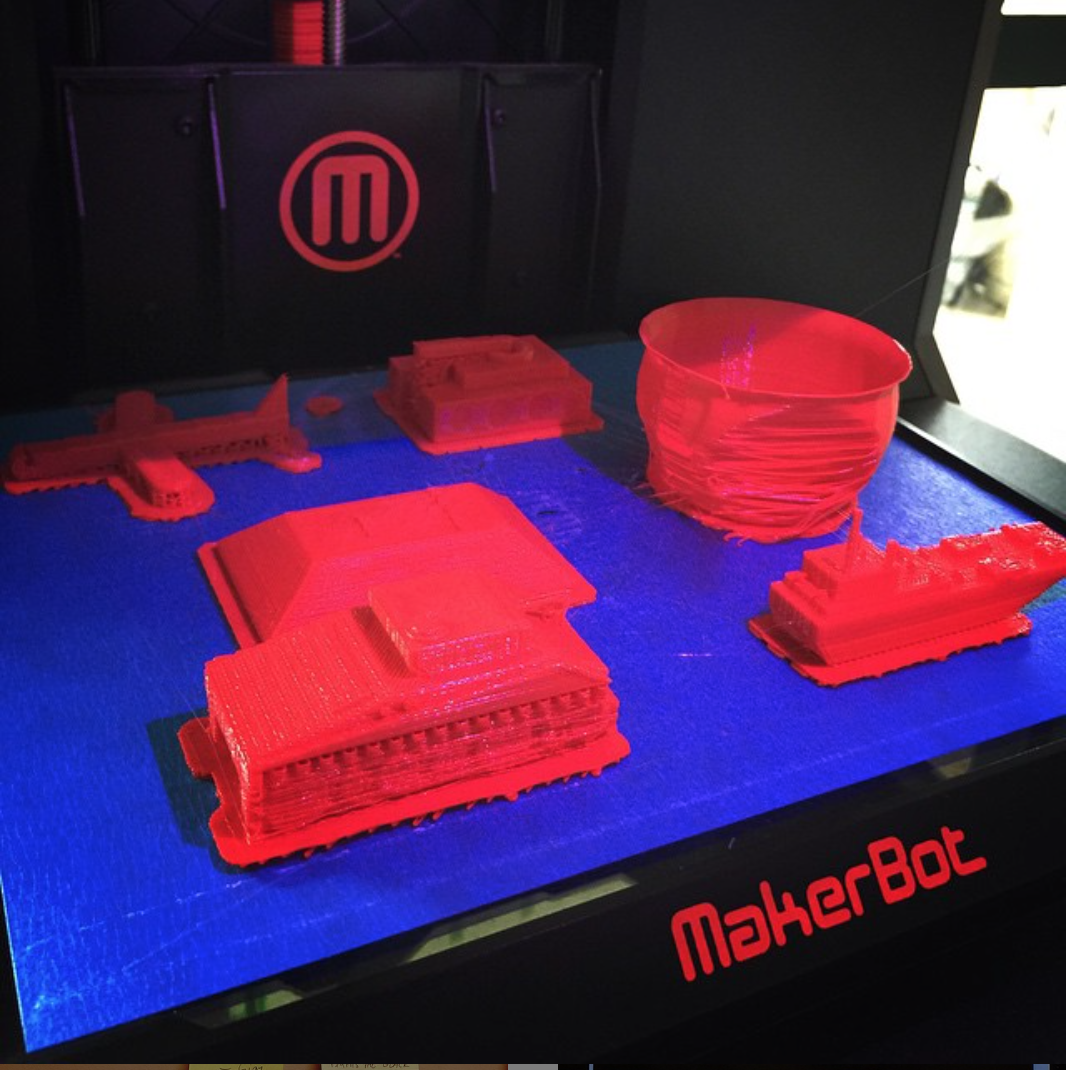
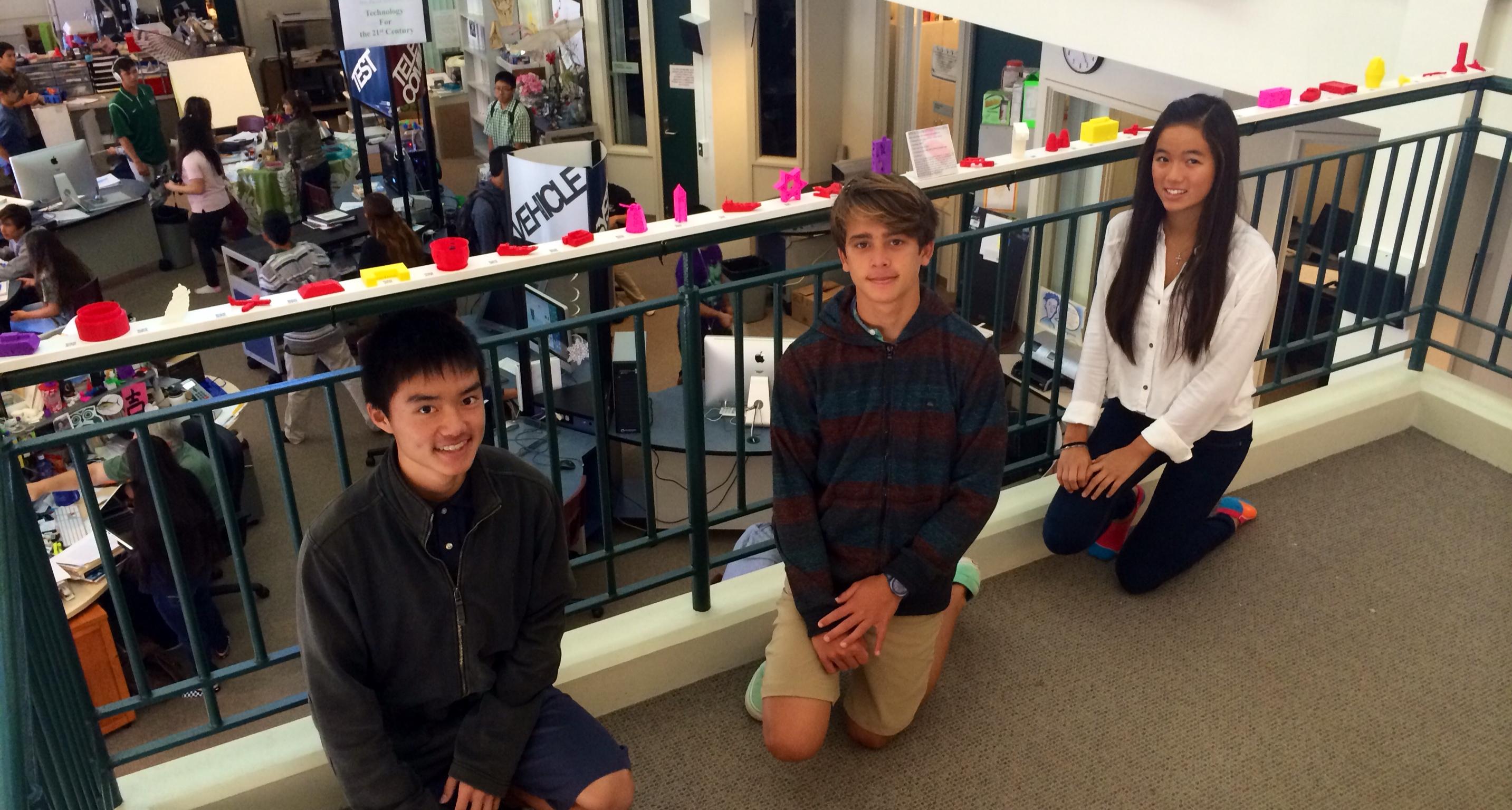
In order to create this artifact, the students first had to learn to use SketchUp by completing tutorials as homework and visiting the school’s tech lab during class time under the supervision of the school’s tech specialist, Tony Johansen. After creating their 3D models using the school’s MakerBot 3D printers, the students then printed their models and arranged them chronologically into a 3D printed timeline. Each model was also assigned a QR code that linked to the essay and video created by the student. This was done by using an app created by the school’s Chief Officer of Innoation, Brian Dote, called MPX9 WWII Stories. This way, visitors could scan the codes and pull up information relate to the artifact.
Calabro discussed the project with us in an interview:
“It was great to use the 3D printers on campus in an interdisciplinary way. The project incorporated elements of design, history, language arts, and technology which engaged the students throughout the process. The students were so excited to create WWII artifacts from scratch and then see them come to life through the 3D printer.”
Despite all of the handwork involved, the students really did seem to find the project very enjoyable. As well as gaining an in-depth understanding about a particular aspect of WWII, their engagement with technology left them skilled in the use of SketchUp and with an introductory knowledge of 3D printing. Given the prevalence of these types of technologies in all levels of school and work life, this will prepare them to become even more proficient in the future.
 Given the earlier and earlier integration of technology such as 3D printing in curricula around the world, we will most likely see more of this type of project in the future. Being able to integrate 3D printing as simply another tool, among many, available to educators really helps to expand the connectivity of the students and the relationships that exist among many different ways of knowing. No longer does everything have to result in a paper or a test…making is knowing too!
Let us know what you think of this hands-on history lesson in the 3D Printed WWII Artifact Timeline forum thread over at 3DPB.com.
Subscribe to Our Email Newsletter
Stay up-to-date on all the latest news from the 3D printing industry and receive information and offers from third party vendors.
Print Services
Upload your 3D Models and get them printed quickly and efficiently.













You May Also Like
AM Investment Strategies 2026 Sets the Stage for AMS 2027
AM Investment Strategies 2026 Nov. 5 · 12 p.m. ET · Free online event RESERVE YOUR SPOT ↗ A one-hour online discussion featuring some of the biggest names in 3D...
With Its Latest $200M Round, ICON May Be Running Away With the 3D Printed Construction Market
I used to view ICON, the Austin-based additive construction (AC) firm, as one of a handful of companies that could realistically consider itself the leader of the 3D printed construction...
How Should Businesses Build New Business? Dirk Simon Weighs In — Part 1
Dirk Simon had deep experience in materials and chemistry before joining the 3D printing industry. Instrumental in BASF and Farsoon’s market introduction, Dirk has spent a lot of time thinking...
3D Printing Services Near $2.5B as AM Market Shifts Beyond Hardware
The additive manufacturing market may be growing again, but one of the more interesting numbers behind that recovery has little to do with selling 3D printers. AM services generated nearly...