Chinese Man With Rare Form of Cancer Receives First 3D Printed Sacrum Bone in Breakthrough Surgery

 3D printing has played a huge role in making the impossible possible. This certainly has pertained to the medical field quite a lot as of late, as doctors from around the world are finally realizing the benefits that the technology can provide, both inside and outside the operating room. For one man in China, 3D printing literally helped save his life.
Wang Li of Guangxi, China was diagnosed with a very rare form of cancer, called Sacral Chordoma. Chordoma is so rare that only about 1 in 1,000,000 people throughout the world are diagnosed with it. Usually effecting the bones of the skull and base of the spine, Li’s tumors attacked his sacrum.
For those unaware, the sacrum is a triangular bone located at the base of the spine and the upper part of the pelvic cavity. Consisting of five fused vertebrae, the area is extremely important to human movement. After having the tumor removed, Li had experienced a recurrence because the cells were so deeply rooted into his sacrum. Along with the cancer coming back, he also experienced much pain and discomfort, including pain in his bowels, dysfunction of his bladder, and several other problems. After multiple treatments had failed, he decided to travel to Beijing and take a visit to the Peking University People’s Hospital.
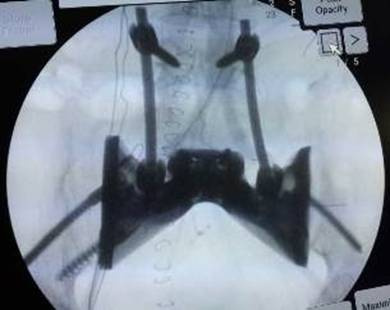
Once there, Professor Guo Wei, and his team of doctors and surgeons, carried out a full analysis of Li, according to clinical data that they had retrieved. After much discussion, the team decided that the best course of action was a complete posterior sacral resection (removal). At the same time though, removing Li’s sacrum would come with complications of its own.
The sacrum is an important bone structure connected to the torso and limbs,” Professor Guo Wei explained. “A full sacrum bone defect after resection will cause the loss of the connection between the torso and pelvis. After surgery, this leaves the patients unable to stand or walk, without the ability to take care of themselves. Sacrum bone tumor resection reconstruction is a major international academic difficulty. “
Wei, however, decided to try something new when it comes to sacral resection, in that he would, for the first time, use 3D printing technology to create a sacral prosthesis that would in effect take the place of Li’s removed sacrum. Using Li’s anatomy, they were able to construct a 3D model of the bone replacement. Once they had the model rendered correctly, they 3D printed it out of titanium, ensuring that the material was porous in structure to allow for Li’s normal bone to grow into and around it. This would ultimately allow the spine, pelvis and sacrum to all come together as one, like it was prior to the resection.
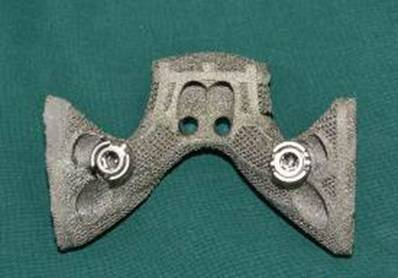
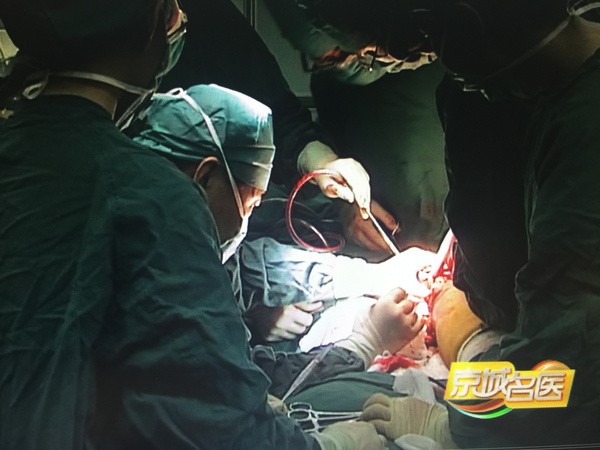
After a 4-hour surgery, surgeons were able to completely remove the tumors, place and insert the 3D printed sacrum, and tie up all the loose ends. The surgery was deemed successful, and Li is expected to make a full recovery.
Professor Wei believes that 3D printing has tremendous potential within medicine, and it will continue to allow for various forms of reconstructive surgery which were not possible just a few years ago. At the same time, it has been proven to show that in instances such as Li’s, when large portions of bone are required to be removed due to cancer, 3D printing can create replacements that are just as strong and fit just as well as the original bones.
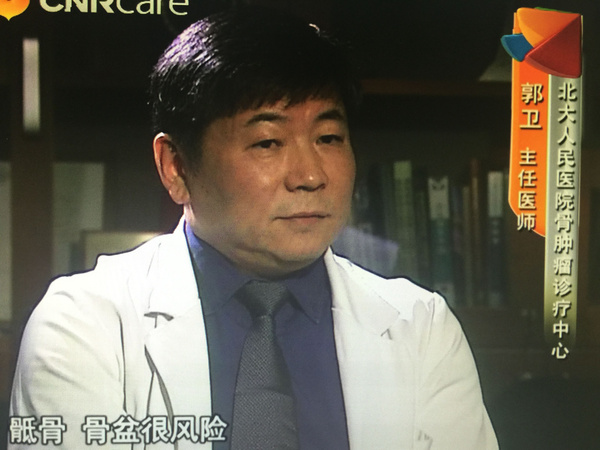
Professor Wei
What do you think about this incredible story? Will 3D printing ultimately end up in every hospital in the world? Discuss in the 3D Printed Sacrum forum thread on 3DPB.com.
Subscribe to Our Email Newsletter
Stay up-to-date on all the latest news from the 3D printing industry and receive information and offers from third party vendors.
Print Services
Upload your 3D Models and get them printed quickly and efficiently.












You May Also Like
The Dental Additive Manufacturing Market Could Nearly Double by 2033, According to AM Research
According to an AM Research report from 2024, the medical device industry, specifically in dentistry, prosthetics, and audiology, is expected to see significant growth as these segments continue to benefit from...
Heating Up: 3D Systems’ Scott Green Discusses 3D Printing’s Potential in the Data Center Industry
The relentless rise of NVIDIA, the steadily increasing pledges of major private and public investments in national infrastructure projects around the world, and the general cultural obsession with AI have...
AM Research Webinar Explores Continuum’s Sustainable Metal Additive Manufacturing Powders
Metal additive manufacturing (AM) powder supplier Continuum Powders is working to develop solutions that empower industries to reduce waste and optimize their resources. An independent life cycle assessment (LCA) of...
3D Printed Footwear Startup Koobz Lands $7.2M in Seed Round
California-based Koobz is focused on reshoring the U.S. footwear supply chain with advanced manufacturing processes, including 3D printing. The startup just announced that it has added $6 million to its...