3D Printed Aircraft Fuselages? Constellium, STELIA Aerospace & CT INGENIERIE Partner


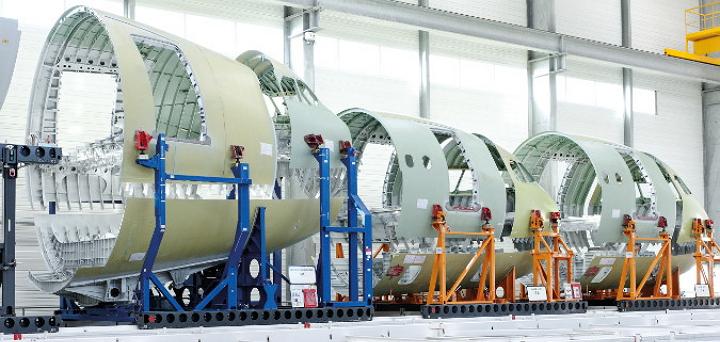 Based in Amsterdam, Constellium (NYSE:CSTM) is a global corporate player with nearly 8,800 employees whose activities stretch across industries such as aerospace, automotive and packaging, but the common thread among all their divisions is aluminum which the company produces via several different metallurgical processes.
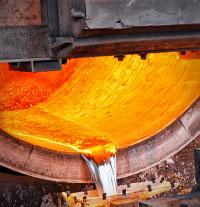 At sites around the world, Constellium produces some 1 million tons of aluminum annually, and for aerospace applications, the company has developed a “closed-loop” recycling process for three main industries: automotive structures, packaging and automotive rolled products and aerospace and transportation. That last division provides advanced aluminum and specialty materials products such as plate, sheet, extrusions and precision casting products for clients which include Airbus, Boeing, Mitsubishi, Embraer, Dassault, Bombardier and Kawasaki.
Constellium now says they have formed a partnership with STELIA Aerospace, a design and production company of aircraft fuselages, and CT INGENIERIE, an engineering company known for technological innovation, to engage in a research and development project called FAST.
The FAST program will focus on topological optimization of aero structures and additive manufacturing processes. The companies say FAST will seek to optimize design and technologies to make large aerospace structures and parts more efficiently.
Bruno Chenal, the Director of R&D at Constellium Research and Technology, says 3D printing and AM offer a wide range of alternatives for the design and production of large aerospace components such as their fuselages. He says existing available technology falls short when it comes to the design of large scale modules, but he adds that 3D fuselage printing will allow for simpler design modification, parts duplication and customization.
“The goal of the FAST project is to change the way innovative technologies are implemented and to expand the usage of 3D printing,” Chenal says. “3D printing will allow us to create metal shapes and properties that were previously impossible to produce.”
A long-term project initiated last year, FAST remains in early stages of development and Constellium will serve as the primary materials supplier while STELIA Aerospace will lead the design and production efforts. CT INGENIERIE will use their expertise to optimize the designs.
Chenal says that, while 3D printing is already widely used in technology and extrusion manufacturing, this project will take the technology to an “unparalleled scale.”
Constellium generated €3.7 billion in revenue for 2014.
 Can you envision the system which will allow Constellium and their partners to build enormous fuselages for aerospace applications from aluminum? Let us know your thoughts in the Constellium forum thread on 3DPB.com.
Subscribe to Our Email Newsletter
Stay up-to-date on all the latest news from the 3D printing industry and receive information and offers from third party vendors.
Print Services
Upload your 3D Models and get them printed quickly and efficiently.













You May Also Like
3D Printing News Briefs, August 13, 2026: 510(k) Clearance, Dental Resin, Project Call, & More
We’re starting off today’s 3D Printing News Briefs with a little FDA news, and then a new dental material for the Axtra3D Lumia X1. We’ll end with the winners of...
3D Printing Financials: Velo3D Revenue Climbs 52%, 2026 Forecast Raised
Velo3D (Nasdaq: VELO) reported a sharp increase in second-quarter revenue and raised its full-year outlook as the metal additive manufacturing (AM) company expands production to meet demand from aerospace and...
Ricoh USA Sells 3D for Healthcare Spinout to Former VP and GM, Rebrands as Myrava
Japanese companies are really good at internal diversification and spin-outs, and this seems to be true even in cases involving foreign subsidiaries of Japanese multinationals. Ricoh USA recently demonstrated this...
Walter Reed Gets Premarket Clearance to Make 3D Printed Point-of-Care Medical Devices
The Walter Reed National Military Medical Center’s 3-D Medical Application Center (3-D MAC) has received premarket clearance to make 3D printed medical devices. This is the first time that a...