ProjectSeafood: The Traveling 3D Printing & Recycling Lab Looks to Conquer Ocean Waste Within a Mini-van

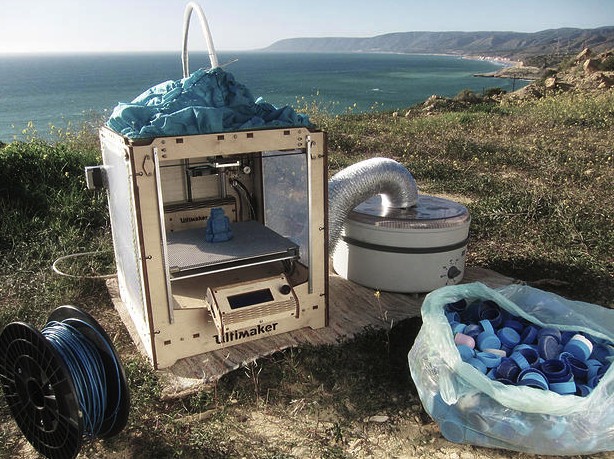 Desktop 3D printers are capable of fabricating objects out of simple plastics — usually PLA or ABS — providing designers with the ability to take a concept, idea or model and turn it into a real tangible product in a matter of hours. Without a doubt, the technology has, and will continue to, revolutionize prototyping, product development and innovation in the future.
For one couple, Jennifer Gadient and Fabian Wyss, they see 3D printing as not only a miraculous technology that spurs innovation, but also a means of cleaning up the planet, reducing litter on our beaches, and ultimately providing for the recycling of waste. The Swiss couple has taken to the road in a mini-van lab that they’ve created. This lab features an Ultimaker 3D printer, a plastic shredder, and a filament extruder; all the tools needed to turn plastic waste into useful products.
“Ultimaker [the 3D printer manufacturer] gave us a printer, and in exchange we give them feedback on their machine and content,” explained Gadient to Wamda.com. “I think what interested them was that idea of recycling, and mobility. What does it mean if someone doesn’t have a factory, but travels with it?” added Wyss.
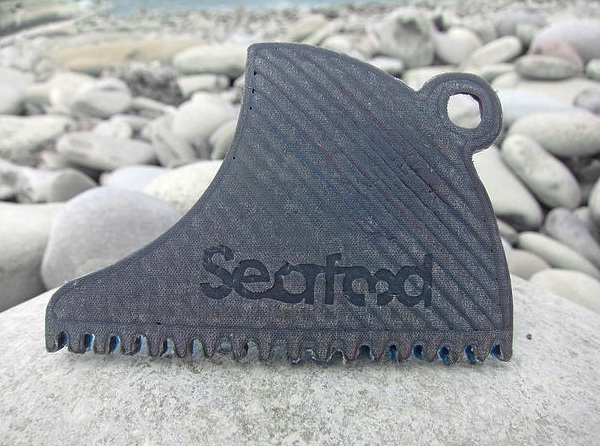
During the journey, which has taken them to France, Spain and now Morocco, they have collected plastic waste in the form of water and soda bottle lids, shampoo bottles and other objects that happen to be made up of polyethylene and polypropylene. Then, using their plastic shredder, they shred these objects before putting it into their filament extruder, to create feedstock for their 3D printer. From there, they can print whatever designs they would like, which so far includes surf wax combs, charms, sunglasses and more. The project, which they call ProjectSeafood has provided for an interesting learning experience while also showing the potential that 3D printing has on the future of recycling.
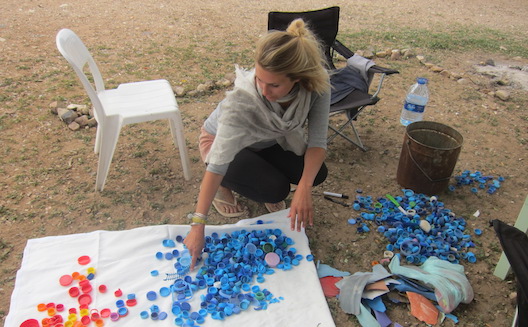
Finding the plastic doesn’t seem to be a problem for the couple, as apparently our planet’s beaches are littered full of the necessary feedstock for their 3D printer.
“We quickly have a bag full of plastic bottle lids,” says Gadient. “And the more we go South, the more we find.” Some of these bottle lids were left by tourists, she explains, but much more were drawn by the sea current.”
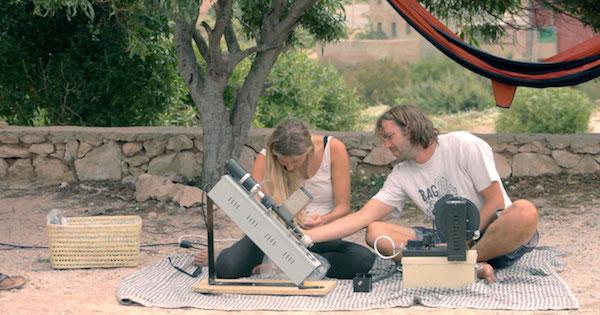 The Ultimaker 3D printer that they use, has slightly been modified so that it can be used from the convenience of the mini-van while also standing up to the potentially windy and cold weather that the couple frequently runs into, in addition to other environmental factors along the way. They’ve enclosed the printer with windows on the sides, moved the motors to the outside of the machine and even created their own custom flexible “textile rooftop” that follows the movements of the printhead.
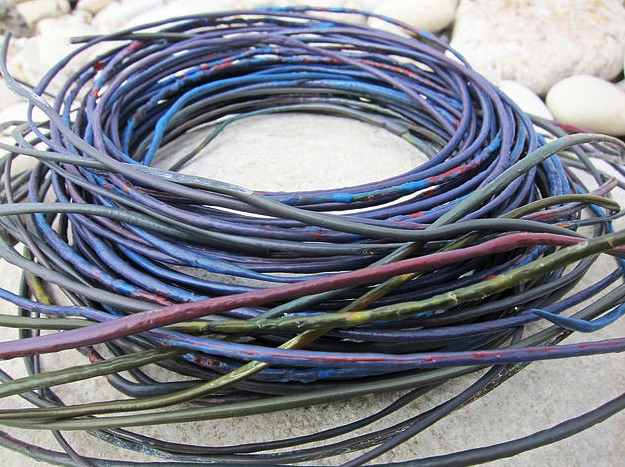 Because of the various colors associated with recovered waste, there is no knowing what the end filament will look like. Much of it is rainbow-colored or grayish-brown due to the mixture of colors.
“To transform the granules into filament, we use a Noztek filament extruder in combination with a lasers ensored winder. As the size, quality and meltpoint of recycled polyethylene-flakes varies, extruding a filament from multiple objects like bottlecaps in constant diameter is quite a challenge and some filament has to be re-recycled due to large diameter variations,” the couple explains.
The printable material, which is referred to as HDPE (high-density polyethylene) is not quite as easily printed as more traditional PLA and ABS filaments. The biggest problem that the couple runs into is with the material’s first layer adhesion when extruded onto the printers build plate. HDPE has a tendency to warp and delaminate, even when a heated bed is used. To help combat this problem, they have discovered that using a cloth covered build platform works quite well.
 While this endeavor has not made the couple wealthy by any means, they are enjoying their time together, meeting a lot of interesting people along the way, and ultimately taking a step to clean up our planet. At the same time, they are proving that 3D printing can be a very useful tool in the recycling of certain types of plastics.
“We never expected to make a lot of money,” says Wyss, “But there was this hope to find a way to make it sustainable. What we gained is human experiences, technical exchange, and meeting great people.”
What do you think about this interesting endeavor? Do you think more people should be looking into 3D printing with waste? Discuss in the ProjectSeafood forum thread on 3DPB.com.
Subscribe to Our Email Newsletter
Stay up-to-date on all the latest news from the 3D printing industry and receive information and offers from third party vendors.
Print Services
Upload your 3D Models and get them printed quickly and efficiently.













You May Also Like
How Should Businesses Build New Business? Dirk Simon Weighs In — Part 1
Dirk Simon had deep experience in materials and chemistry before joining the 3D printing industry. Instrumental in BASF and Farsoon’s market introduction, Dirk has spent a lot of time thinking...
The Frankenservice Part 2: Have Your Cake and Eat it Too
This series of articles delves into a thought experiment. What if we let go of using a few machines very optimally, but instead use lots of different machines to meet...
The Additive Chicken Coop, Part IV: Lemmings
If we look at our past, we can see how making custom machines, incessantly watching ourselves, and our inability to rescope shaped our industry. We have also looked at the...
The Additive Chicken Coop, Part III: Bananas
A friend of mine, Ed Davis, once pointed out the level of strategic replication in additive. I wasn’t aware of it before and haven’t been able to unsee it since....