The Filament Safe Protects 3D Printer Filament from Damage, Kit Now on Kickstarter


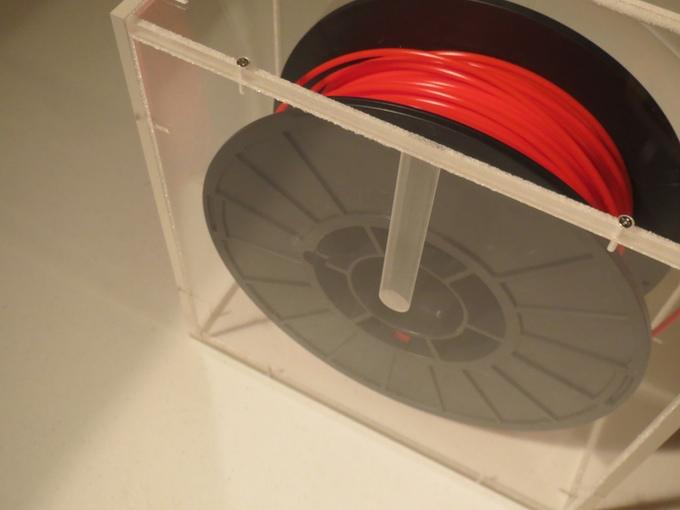 How many of us have toiled away perfecting 3D models, prepping for 3D printing, excitedly supervising a print–and then discovering with tremendous disappoint that the final print did not meet our expectations because the filament had absorbed moisture when it was stored? Those bubbles or that delamination? They could easily have been the result of moisture taken in even in the short time between unwrapping the material and loading it into the printer and the end of the print cycle. So, you have to begin the printing process all over again.
Now there’s some good news on the 3D printing front: Problems like that, almost imperceptible flaws that can render a 3D print useless whether from delamination, jamming of the hot end, or unwanted pockets or bubbles, are easily prevented if the filament is protected during the printing process. That’s precisely what Stephen Wierenga had in mind when he designed the Filament Safe Kit, a storage unit for 3D printer filament.
 Wierenga heads Perception Engineering in Grand Rapids, Michigan. Perception Engineering is a product design firm that specializes in sheet metal and plastics. The company creates 3D solid models, detailed prints, and assemblies particular to its customers’ needs. Thanks to 3D printing, they produce quick-turn prototypes, providing customers with what they call “start to finish design assistance.” Basically, customers come to them with ideas and they help them materialize them.
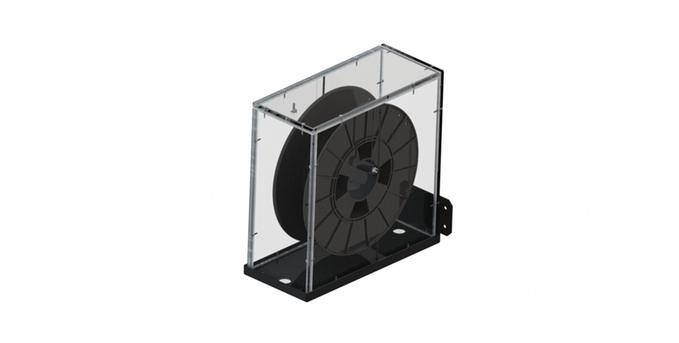
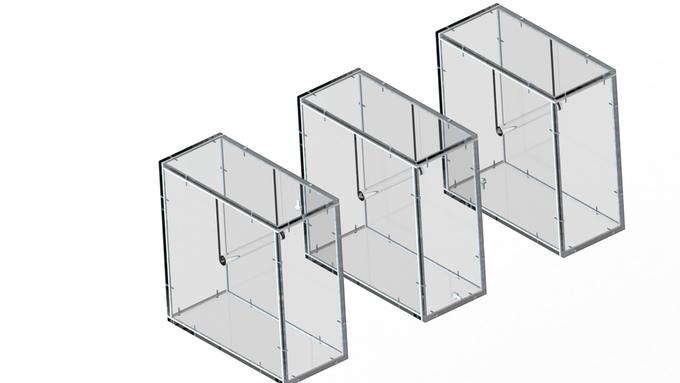 The Filament Safe is made from high-quality components. The 9.25” x 9.25” x 4” Filament Safe can accommodate spools of several different sizes. One end of the filament extends from the Safe and the spool turns smoothly, virtually friction-free, on the reworked (from a previous iteration) setup.
In 2013, Perception Engineering released its first Filament Safe via a Kickstarter campaign. They sold and shipped units to 73 backers and, at the same time, processed the feedback of their customers so that they could improve on the original unit. One of the major improvements was the addition of a rigid metal frame that allows users to mount the Filament Safe on a wall or other surface near the 3D printer work space, either above or below the printer.
Now they’ve launched another Kickstarter campaign and are already nearly halfway to their goal with nearly four weeks remaining in the campaign. With this new launch, rather than selling the pre-manufactured units, they are offering kits so that users can assemble the Filament Safe after shipment.
The fundraising effort will help Perception Engineering cover the cost of manufacturing the components for the kits, which is scheduled to begin in late August. The company hopes to begin shipping the kits out in late September, with “early bird” supporters receiving their kits first. Rewards to backers of the Kickstarter campaign range from heartfelt thank yous to complete Filament Safe Kits, with some levels including wall mounts.
Starting with a $35 early bird pledge, the Filament Safe Kits are available to backers. The Kickstarter, seeking to raise $4,500, runs through July 30th.
Subscribe to Our Email Newsletter
Stay up-to-date on all the latest news from the 3D printing industry and receive information and offers from third party vendors.
Print Services
Upload your 3D Models and get them printed quickly and efficiently.













You May Also Like
Apple’s 3D Printed Hinge Cover & the Inauguration of the Ternus Era
Marc Andreessen notwithstanding, it turns out that hardware is, in fact, eating the world. Perhaps after being starved for so long, the hardware side of tech innovation is now overcompensating,...
The Exploration Company Raises $450M to Rival SpaceX
The space industry is currently worth about $650 billion globally, growing nearly 50 percent since 2020, which is certainly impressive. But over the next decade, the total market opportunity in...
3D Printing News Briefs, September 10, 2026: Tax Credits, Polymer Research, Microneedles, & More
We’re starting off this week’s 3D Printing News Briefs with a little business from Axtra3D and Beehive Industries, before moving on to a scientific collaboration agreement between Roboze and a...
The Formlabs Shuffle
For the latest development on 8/31/26, please see an update at the end of this article. Formlabs is doing a management shuffle, pointing the firm even more surely towards an...