Architects are Using 3D Printed Furnishings to Bring a Fun Factor to Clients


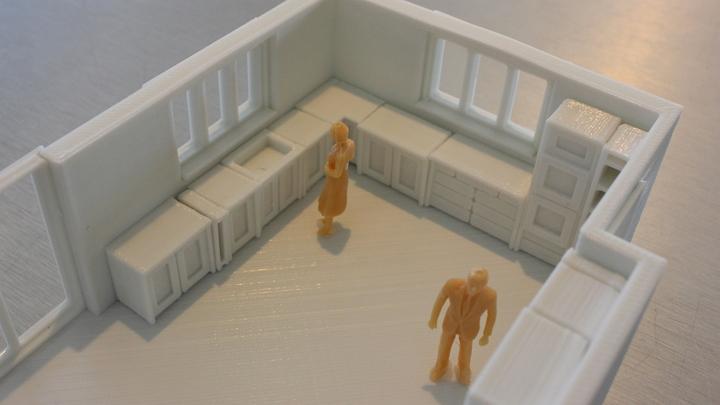 When a client tries to imagine how their home or structure will look, they face a relatively daunting task in that experiencing a full-scale version of their dream will simply have to wait until the builders pack up their tools and hand over the keys.
That’s why Nat Ellis, Head of 3D Visualization at JB Architecture, decided to use 3D printed models to bring a more tangible reality to his company’s 2D blueprints. Known as jbA, the Chichester, West Sussex-based company was founded by John Brown in 1999. Since then, the firm has developed a reputation for delivering quality design, structural engineering, and planning advice to clients.
Ellis was tasked with leading a project to expand jbA’s 3D visualization capabilities and oversees a team who produce 3D, photorealistic images and animations for all the firm’s clients. As of late, Ellis has worked to bring 3D printing into his tool kit.
Using an Airwolf 3D Hdx printer, JB Architecture says they’ve improved the customer experience by using 3D printed replicas of proposed building projects to convey a more realistic vision of what they can expect in a finished product.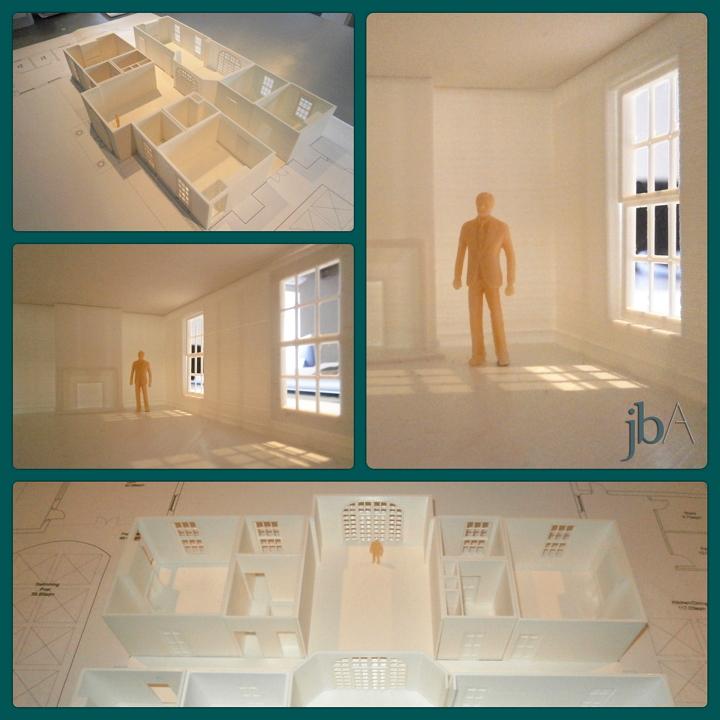
“Most people can’t read, or haven’t had experience reading, 2D plans so they struggle to visualize exactly what the property will be like,” Ellis says.
3D printing has bridged a gap in communication between architects and their clients. Contractors and support teams involved in the construction process benefit from the technology as well when they see a furnished, 3D printed model of a project at 1:50 scale.
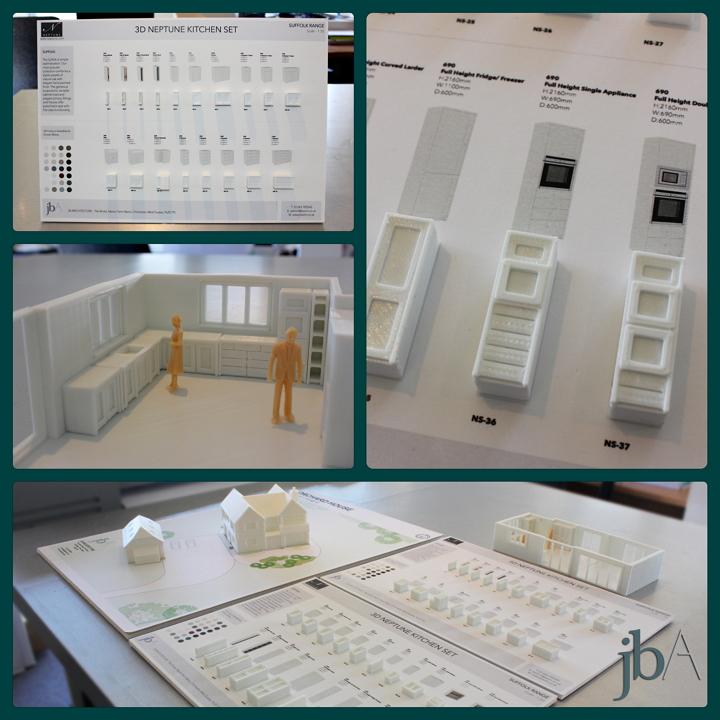
JB Architecture takes furnishings from popular designers, such as Neptune Kitchens, and places them within the environment to give clients a more realistic presentation of how the interior of a structure will look and function, and the companies use the 3D printed pieces – models of real products – to incorporate those ideas into a client’s design plan.
Airwolf says when clients receive a “dollhouse sized” model of their dream home packed with detailed models like a toaster oven or other furnishings, the process has the benefit of an added “obvious fun factor.”
Ellis’ 3D printed models allow customers to organize and match their proposed furnishings in a variety of combinations to visualize the end results in ways not possible before his company introduced those 3D printed models.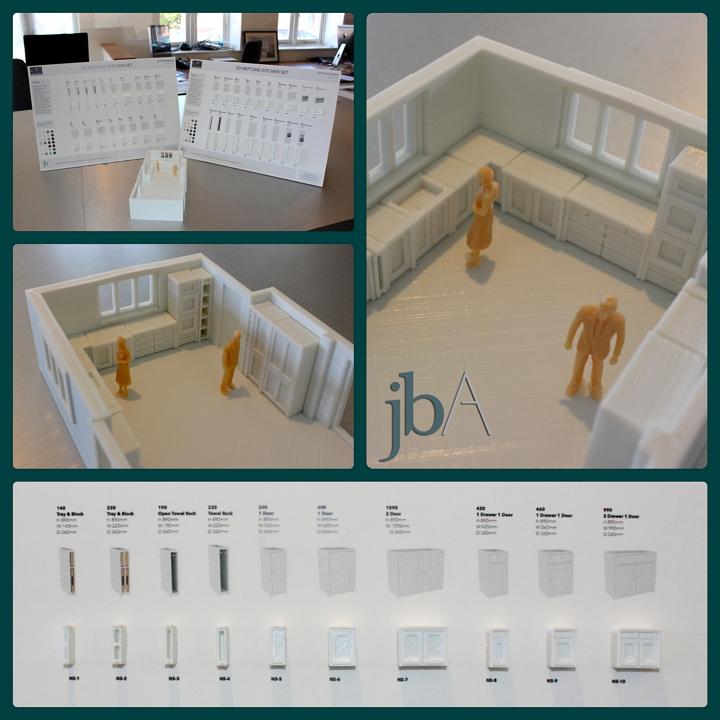 JB Architecture uses their AW3D HDx 3D printer to produce scaled down models of buildings, floor plans, and furnishings, and the large build volume of 1150 cm³ and print layers of .60 microns mean the models are highly detailed.
The HDx uses Airwolf’s patent pending JRx hot end, which can easily handle very high temperatures of over 315° C. It’s fully capable of printing with Bridge nylon, Nylon 645, and polycarbonate materials, and at $3,495, it’s priced at the low end of the professional grade printing market.
Subscribe to Our Email Newsletter
Stay up-to-date on all the latest news from the 3D printing industry and receive information and offers from third party vendors.
Print Services
Upload your 3D Models and get them printed quickly and efficiently.













You May Also Like
Impossible Objects Closes $40M Series B
The Pentagon, along with deep-pocketed collaborators in the private sector, is urgently coordinating the buildup of all the elements necessary for a domestic US drone supply chain. Even so, those...
Meshy 7: All the Fingers and Toes
Generative AI modeling has come a long way from three-fingered Shrimp Jesus in an incredibly short time. Meshy 7 launched in mid-August, promising to solve the biggest hurdle in AI...
3D Printing News Briefs, September 10, 2026: Tax Credits, Polymer Research, Microneedles, & More
We’re starting off this week’s 3D Printing News Briefs with a little business from Axtra3D and Beehive Industries, before moving on to a scientific collaboration agreement between Roboze and a...
Alibaba Selling Fiber Optic Military Drones for $200
Ukraine was saved by Turkish-made Baykar Bayraktar drones and many brave soldiers in the first stages of the conflict. Then hobbyists and their DJI Mavics showed how drones could be spotters...