3D Printing is About to Get Even More ‘Conductive’ with Graphene 3D Lab Doubling Production Capacity

 With the 3D printing materials space expanding each and everyday, it’s those companies which are willing to spend capital resources to expand their presence that will ultimately win out in a market that is suddenly becoming quite crowded. When we talk about the various materials available within the desktop FFF/FDM 3D printing space, one company that has stood out recently is Graphene 3D Lab (OTCQB:GPHBF).
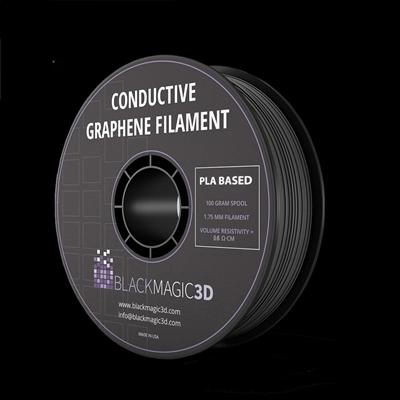 Back in January, the company announced that they would begin industrial scale production of graphene 3D printer filament. The significance of this announcement was the fact that the availability of this material would mean that the desktop 3D printing space would suddenly be presented with a super conductive 3D printable material that would ultimately allow for the 3D printing of electronics. In March, the company officially launched BlackMagic3D filament, which is the official brand name for their graphene 3D printing material.
Apparently things have been going quite well for Graphene 3D Lab, as today they announce that they have received additional extrusion equipment which will allow them to double the potential production capacity of their functional filaments, which include the conductive BlackMagic3D material.
“This new extrusion equipment will help us to meet the increasing demand for our conductive filament,” Dr. Daniel Stolyarov, CEO of Graphene 3D explained. “The extra manufacturing capacity will also allow us to move forward with production of new specialty materials. We anticipate releasing at least three new materials in 2015.”

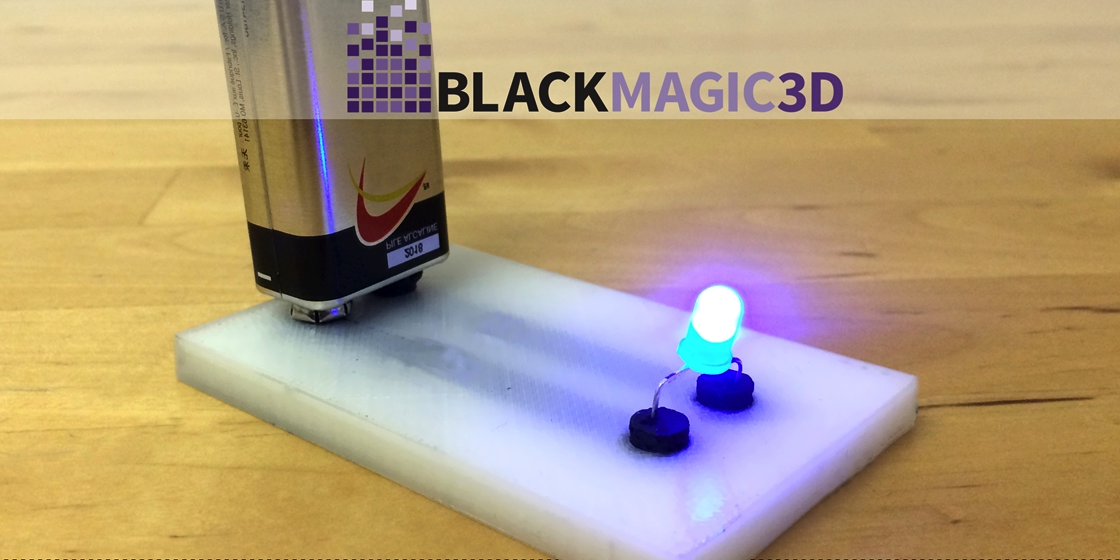
It will certainly be interesting to follow Graphene 3D in the coming months as they release even more unique material options. BlackMagic3D filament has already allowed for individuals and businesses to 3D print objects which require electrical components, conductive traces and touch sensors, such as those found in trackpads, video game controllers and switches. Undoubtedly 3D printing is headed in a direction that brings the technology closer to allowing individuals to create end-use products that are just as capable as products produced by other more traditional means of manufacturing. It is allowing these individuals to manufacture their own goods, and surely we will only see this idea of self manufacturing continue to increase as time goes by. Graphene 3D Lab will, without a doubt, play a major roll in this evolution, or perhaps we should say, “revolution”.
What do you think about Graphene 3D Lab expanding their manufacturing capabilities? Do you foresee a future where individuals 3D print their own electronics? How soon before we begin seeing a more mainstream adoption of this technology? Discuss in the Graphene 3D Lab forum thread on 3DPB.com.
Subscribe to Our Email Newsletter
Stay up-to-date on all the latest news from the 3D printing industry and receive information and offers from third party vendors.
Print Services
Upload your 3D Models and get them printed quickly and efficiently.













You May Also Like
UniFormation S10 Heads to Kickstarter with an Integrated Resin Printing and Post-Processing System
UniFormation will launch its S10 desktop resin 3D printer on Kickstarter on October 22, 2026, with pledges starting at $999. The S10 integrates printing, washing, and drying, allowing a print...
Creality Goes Pro with Sermoon P1S 3D Scanner
From making millions of value-engineered Prusa clones, Creality really has aggressively pivoted to more complex machines. The company has made strides forward in software, and the Ender’s of yore is...
Stratasys Showcases 3D Printed Automotive Applications & New Printer at IMTS 2026
Just ahead of last week’s International Manufacturing Technology Show (IMTS) in Chicago, Stratasys launched the F870, a new large-format, production-grade FDM 3D printing platform designed to drive industrial manufacturing at...
Creality Launches SPARKX i8 on Indiegogo, Bringing Fastest, No-Purge-Waste Printing
Creality announces the launch of the multi-color 3D printer SPARKX i8 on Indiegogo, at an early-bird price of $309 (MSRP $399) starting from Sept. 21. Designed for ultimate user experience,...