UNYQ Raises $1 Million and Begins Taking Pre-orders for Below Knee 3D Printed Prosthetic Covers

 If you know anyone that has a prosthetic arm or leg, you know how much they probably dislike the appearance that these man-made appendages provide. In most cases, prosthetics are made for optimal use, while neglecting their outward appearances. This is something I have learned, from experience, that many amputees really show a displeasure with.
One company, UNYQ hopes to change this. Their goal is to make prosthetic arms and legs a focal point, not for their distasteful appearances but for their artistic and awe inspiring displays. There is no reason why prosthetic devices can’t be artistic in nature. After all, a good percentage of people cover their legs and arms with artistic tattoos. Why shouldn’t an amputee be able to do the same?
Just announced today, UNYQ has closed its seed funding round by raising $1,050,000 in order to fund the development of their specialized 3D printed prosthetic arm and leg coverings.
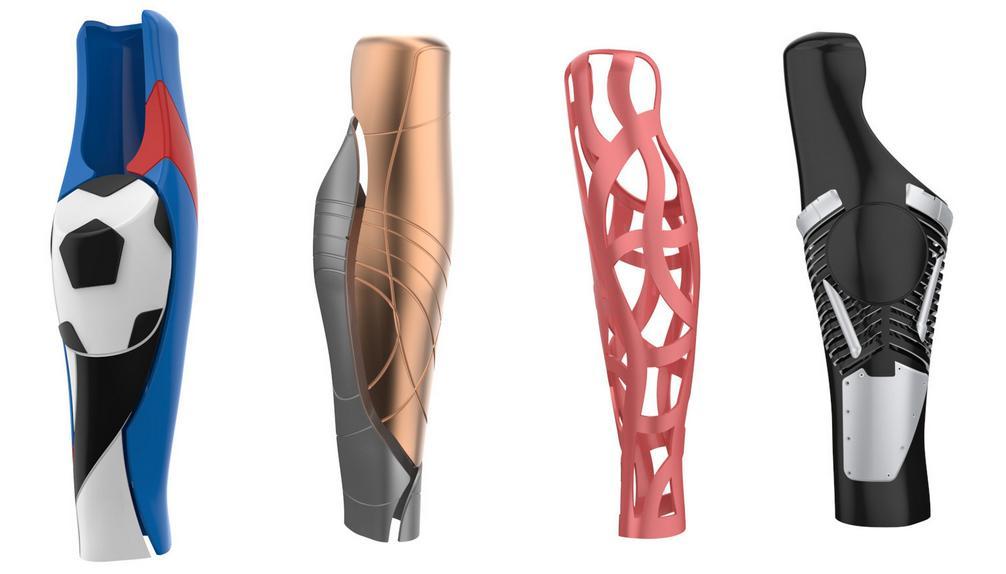
“The seed funding will enable us to invest in state-of-the-art 3D printers and related technologies. We will also expand our product lines to include both lower and upper extremity fairings and accessories,” said Eythor Bender, co-founder and CEO of UNYQ.
Also today, UNYQ has announced that they are opening pre-orders for below knee fairings. “After much demand, we are excited to announce that we are opening pre-orders for below knee fairings,” said the company. “Reserve your spot in the queue today.”
For a $230 deposit, customers can pre-order one of these beautiful prosthetic leg coverings, which are completely customizable. The deposit will ensure that they are put in the queue to receive one of the first devices, when they begin shipping, and it will be deducted off the final price of the product. The company offers 20 designs to choose from, and they will send instructions on how to take custom measurements, along with iPhone photographs. From these measurements and photos, UNYQ will then completely customize the covering for their customers’ specific prosthetic devices.
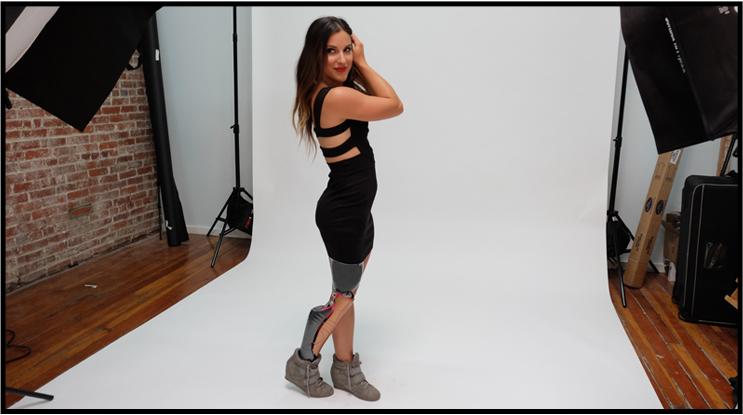
Gone are the days of unattractive looking prosthetic silicon and poles, thanks in a large part to 3D printing and UNYQ. 3D printing has allowed UNYQ to take what would have traditionally been a very expensive process and create a totally custom product that is guaranteed to fit. What do you think? Would you consider wearing one of these rather inexpensive prosthetic coverings? Discuss in the UNYQ forum thread at 3DPB.com
Subscribe to Our Email Newsletter
Stay up-to-date on all the latest news from the 3D printing industry and receive information and offers from third party vendors.
Print Services
Upload your 3D Models and get them printed quickly and efficiently.











You May Also Like
Scaling AM Suppressor Production: Oerlikon AM & ATLIX Rise to the Challenge
End-of-barrel suppressors, oftentimes referred to as silencers, function by capturing and redirecting high-pressure propellant gases through carefully engineered internal structures and channels. By disrupting the gas flow before it exits...
Unlocking Big Part Manufacturing for the Energy Sector: How EPRI’s Convergent Approach Proves the Potential of Large-Area DED 3D Printing
The U.S. hydropower fleet, more than 2,200 plants averaging 65 years of age, relies on large, bespoke components that are increasingly difficult to source. Long lead times, disappearing suppliers, and...
In-Situ Automated Toolpath Generation and Auto-Alignment for Performance-Driven Directed Energy Deposition (DED)
The evolution of Directed Energy Deposition (DED) systems has increasingly focused on improving process adaptability, geometric fidelity, and integration into automated manufacturing environments. FormAlloy has advanced this progression through the...
From Material Maturity to Fleet Execution: What Comes Next for Additive Manufacturing in the U.S. Navy
Additive manufacturing is steadily moving from experimental use toward routine application in U.S. Navy shipbuilding, sustainment, and much more. In recent years, the Navy, working through its Maritime Industrial Base...