High School Student Builds This Amazing Vulcanus V1 3D Printer

 Johannes Rostek is a sixteen-year-old high school student in Germany who plans to continue his education and study electronics or technology, and he’s also a budding 3D printer design engineer.
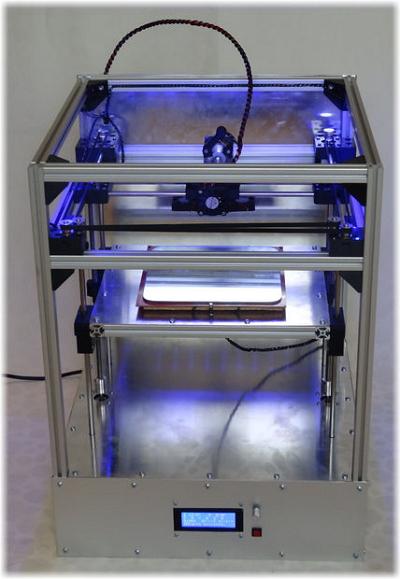 During March of this year, Rostek decided he wanted to build a RepRap 3D printer – but it had to look professionally built, and it also had to be inexpensive. So over the Easter holiday period, he worked every day starting first thing in the morning and continuing on into the afternoon. Once the holidays were over, he’d managed to complete the mechanical elements of what he calls the “Vulcanus V1.”
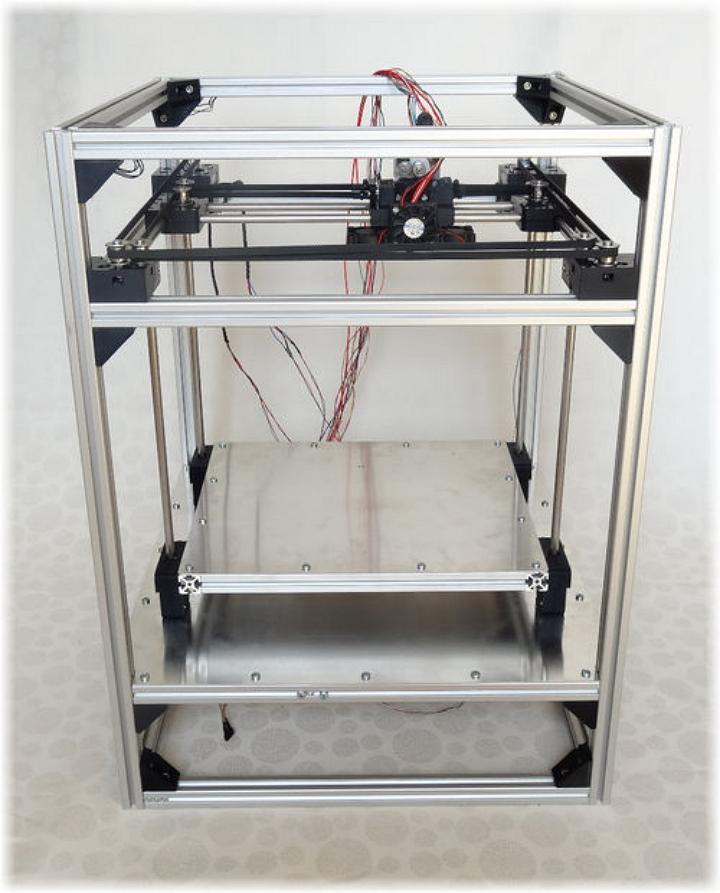
“At first I made a rough plan on how to build it,” Rostek says. “After that, I designed it on the computer with Sketch-up and made the BOM and bought the needed things like electronics and mechanics on the Internet. I went to the scrapyard to get some aluminum plates. Then I drilled and cut the aluminum plates by hand because I had no CNC mill, so it took a lot of time.”
He says he’s surprised at how well his design works, and he cites his experience building a RepStrap printer last year as critical to his final outcome with the Vulcanus.
“It helped me to solve problems like warping, layer shifts in the print…. all the RepRap problems,” Rostek says. “Overall I can say that it works really good.”
Based on the CORE-XY mechanical design, Rostek says the Vulcanus allows him to print with high acceleration, high speed, and good resolution, and he adds that, because the design uses 1/256 micro-stepping motor drivers, it’s quiet and “the bearings are the loudest things on the printer.”
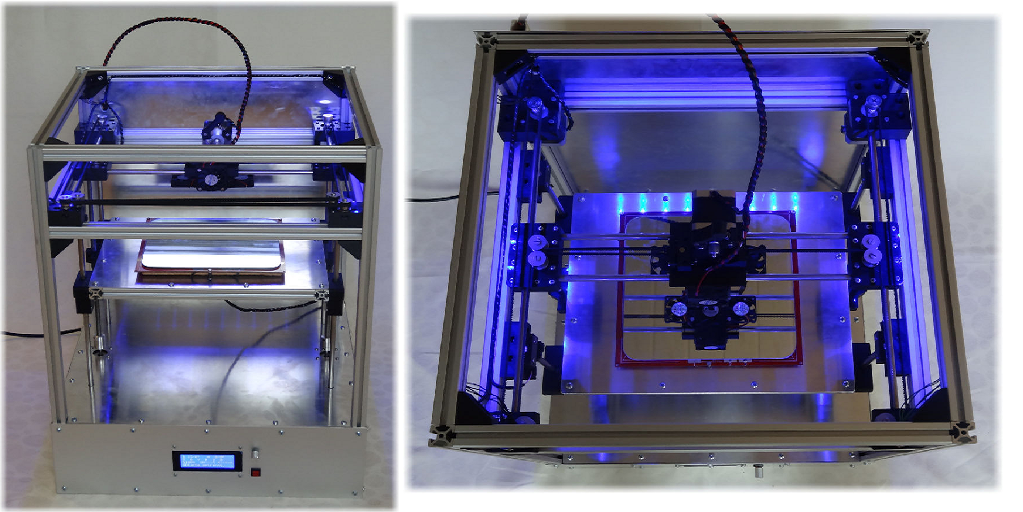
He also designed the Vulcanus to be very compact for use on the desktop, and he adds that it’s open source to allow others to build their own versions.
All it all, Rostek says the Vulcanus cost less than €300 to build, but he has no plans to sell them himself.
“It’s very hard to build this printer when you have no CNC mill and you have to drill and cut the aluminum plates by hand. It takes a lot of time to build the printer up, and at the moment, I haven’t got so much time because [I] have to go to school,” Rostek says. “It would be more possible to sell the printed parts, because it’s easier to make them and doesn’t take so much time.”
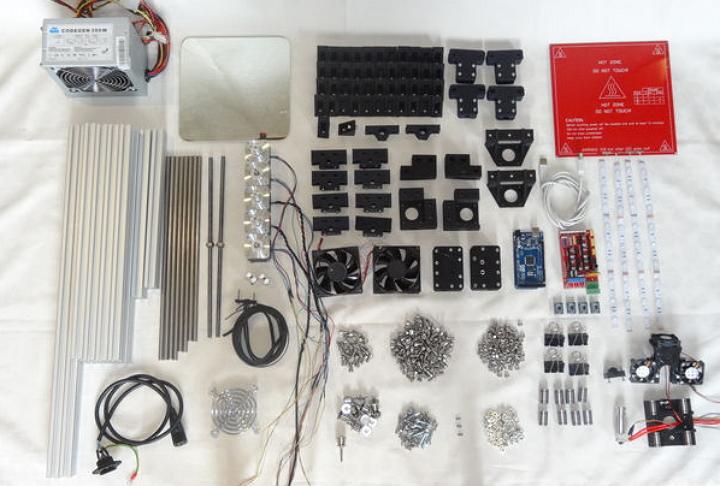 But as for selling them at €300? Rostek says that’s not very likely and would only be possible if all the parts were purchased from Chinese suppliers and you built the printer by yourself.
According to Rostek, the Vulcanus V1 features a print speed of a tested 300mm per second, but he believes that could be upped with some tweaking and more testing. It prints at a resolution of .05mm or greater, has a build volume of 20 x 20 x 26 cm, and takes up just 44 x 44 x 60 cm of desktop space. The printer also includes a heated build platform for using materials like ABS and nylon.
If you’d like to see some step-by-step instructions on how Rostek built his Vulcanus V1, you can check out his very thorough Instructable on the project.
What do you think of high school student Johannes Rostek’s Vulcan V1 printer design? Do you think you could build one yourself? Let us know in the Vulcanus V1 forum thread on 3DPB.com.
Subscribe to Our Email Newsletter
Stay up-to-date on all the latest news from the 3D printing industry and receive information and offers from third party vendors.
Print Services
Upload your 3D Models and get them printed quickly and efficiently.











You May Also Like
Printing Money Episode 36: Recent 3DP/AM Deals and More with John Barnes (TBGA & MPW)
Welcome to Printing Money Episode 36! For this episode Danny is joined by a new guest, John Barnes (Founder and President, The Barnes Global Advisors, Founder and CEO, Metal Powder...
Friendshoring and Additive Manufacturing: Turning Australia’s Research Strength into Commercial Impact
Global supply chains are being re-written. After decades of globalisation driven primarily by cost efficiency, geopolitical tensions, trade disputes and pandemic-era disruptions have exposed the risks of concentrating manufacturing and...
Velo3D’s $32.6M Defense Contract Highlights Why U.S.-Made 3D Printing Is Suddenly Critical
When the U.S. government talks about supply chain security, it’s no longer theoretical. It’s now written directly into law and into defense contracts. That detail matters for Velo3D, which this...
Northrop Grumman & Titomic Achieve Successful Hot Fire Test with 3D Printed Thrust Chamber
Back in April, leading Australian cold spray additive manufacturing (CSAM) original equipment manufacturer (OEM) Titomic announced that the company was partnering with defense giant Northrop Grumman to test the use...