Amazing 6-Foot Tall 3D Printed Augmented Reality Cockpit Required 75 Days Worth of Printing to Complete


 Virtual reality and augmented reality are two technologies which have been growing in use over the past few years. As computers become more powerful and software development continues to improve, these augmented experiences are becoming much more common. One artist, named Micah Ganske decided to take things one step further by combining not only virtual reality and augmented reality into one, but he also added some 3D printing into the mix as well.
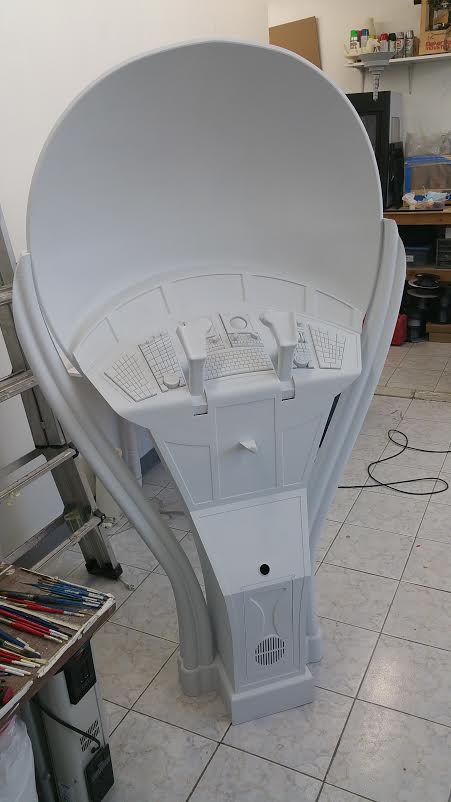
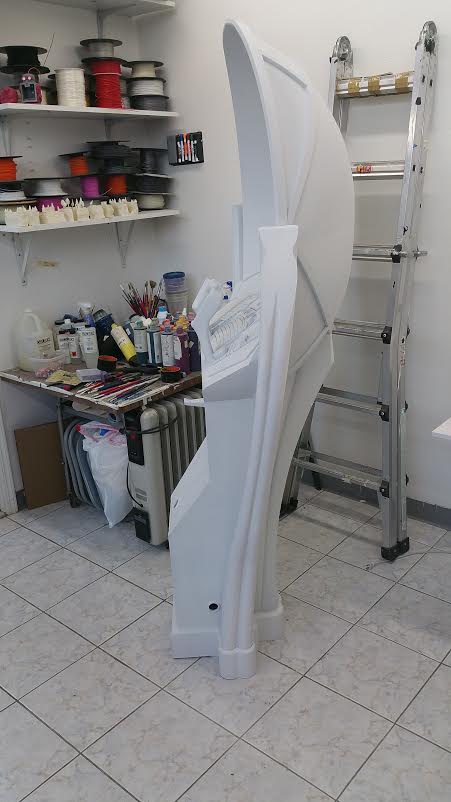
In doing so, he created a 6-foot tall 3D printed cockpit, which he tells 3DPrint.com took him an incredible 75 days of print time to complete.
“I did a lot of the printing myself on my Gigabot [3D printer], but the fine folks at Bold Machines also gave me access to their [MakerBot] z18s to relieve some of the printing burden,” Ganske tells 3DPrint.com. “Assembly was, as you can imagine, pretty grueling with about 2 weeks of nonstop sanding and grinding and filling to get the seams and warped corners of the larger parts to disappear. It’s still not perfect, but I think a little imperfection is okay since it helps to remind us of the current state of the technology.”
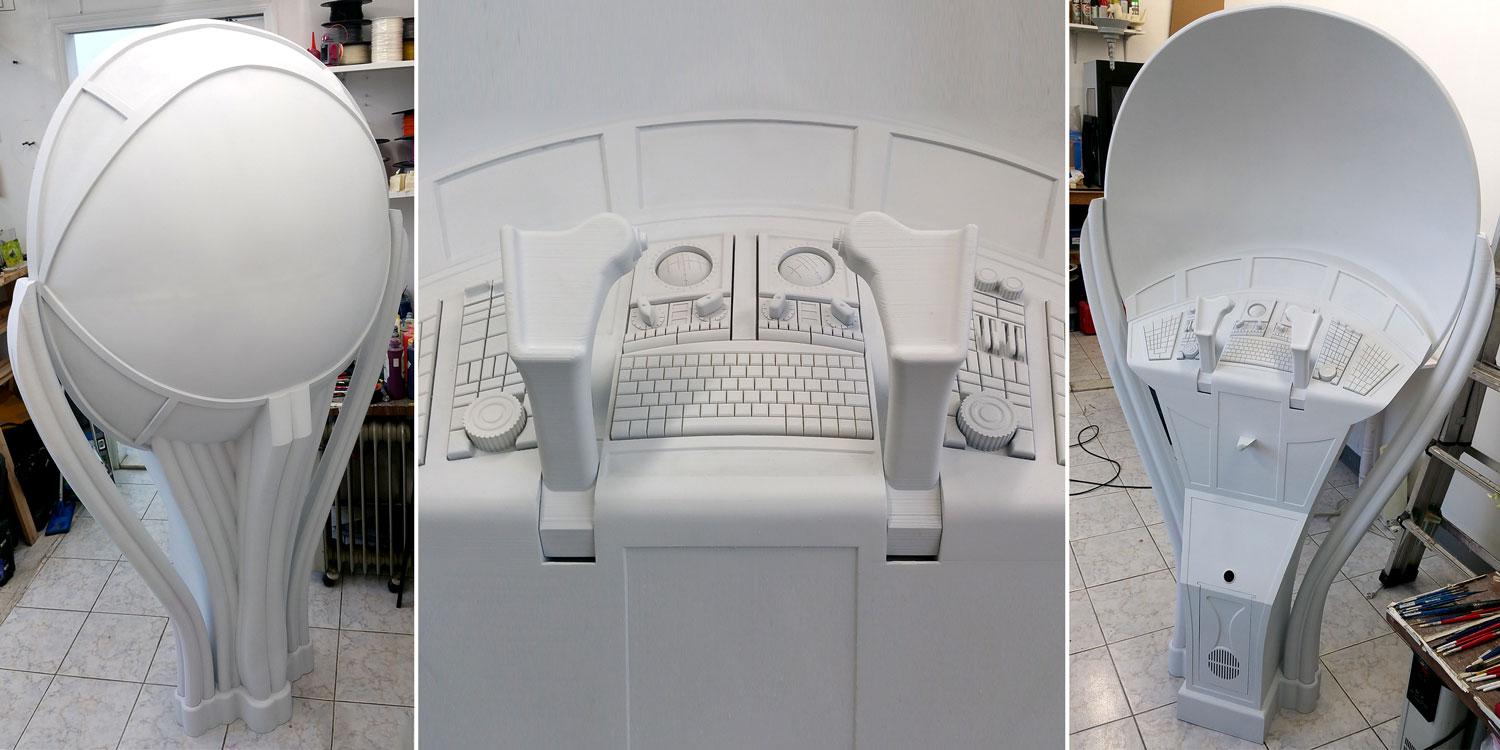
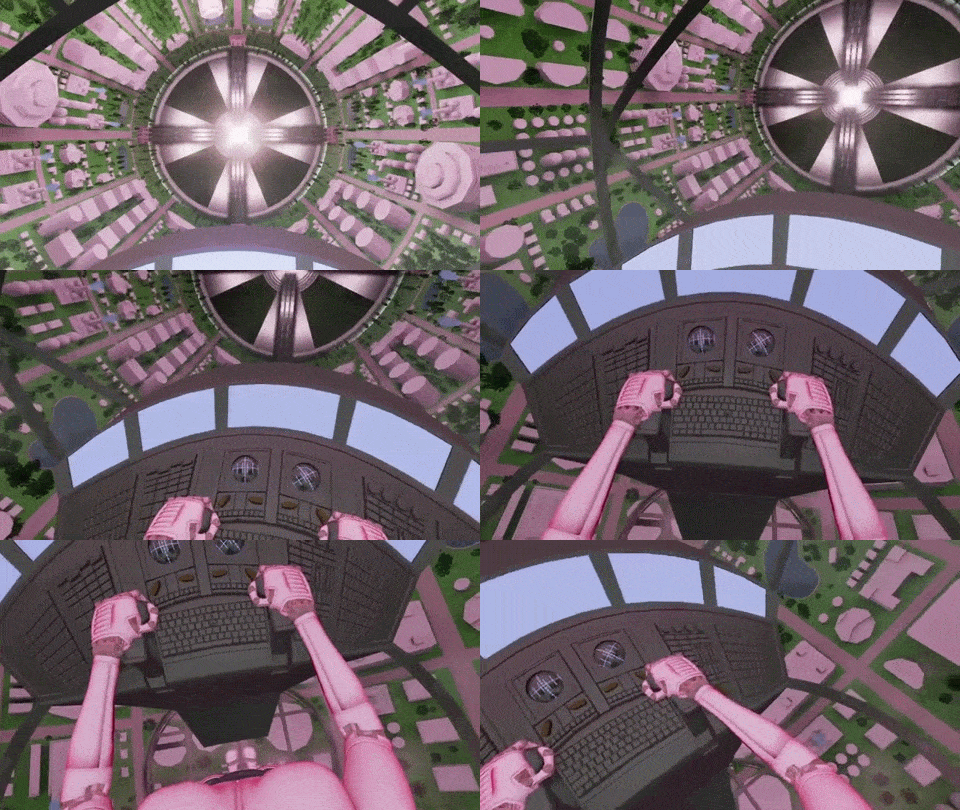
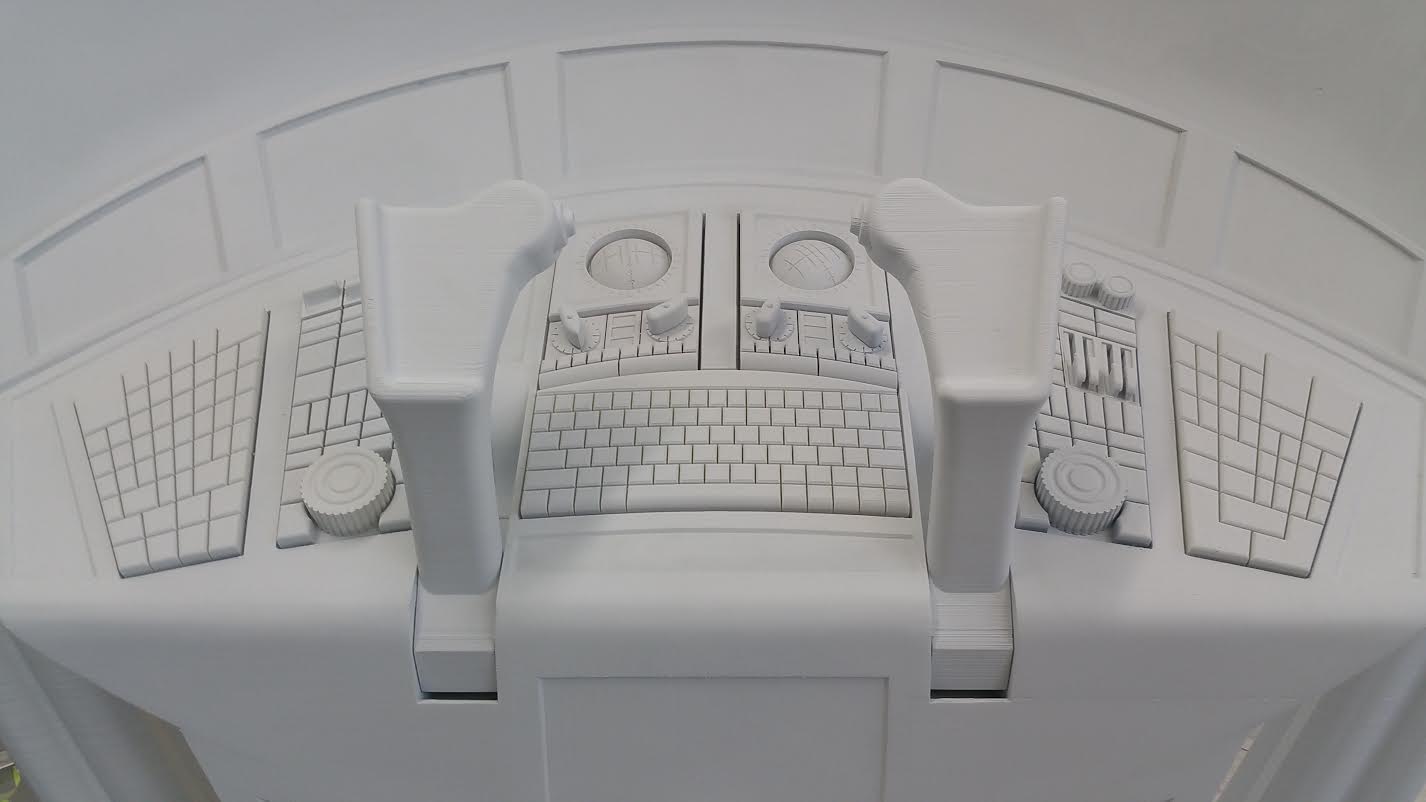
Perfect or not, the cockpit itself is amazing, but when the additional augmented reality and virtual reality experiences are added to it, is when the project totally comes to life. In what Ganske refers to as his very first AVR (Augment/Virtual Reality) project, users stand in front of the large 3D printed cockpit while wearing the Oculus Rift. They hold onto the controls, and are then provided with a virtual tour through Ganskie’s previous artwork from his “The Future is Always Tomorrow” exhibition, including various sculptures and paintings. The cockpit, which is entirely white in its 3D printed form, becomes completely transformed into a fully closed off glass EVA vehicle that virtually tranports users through space, when combined with the AVR elements via the Oculus Rift.
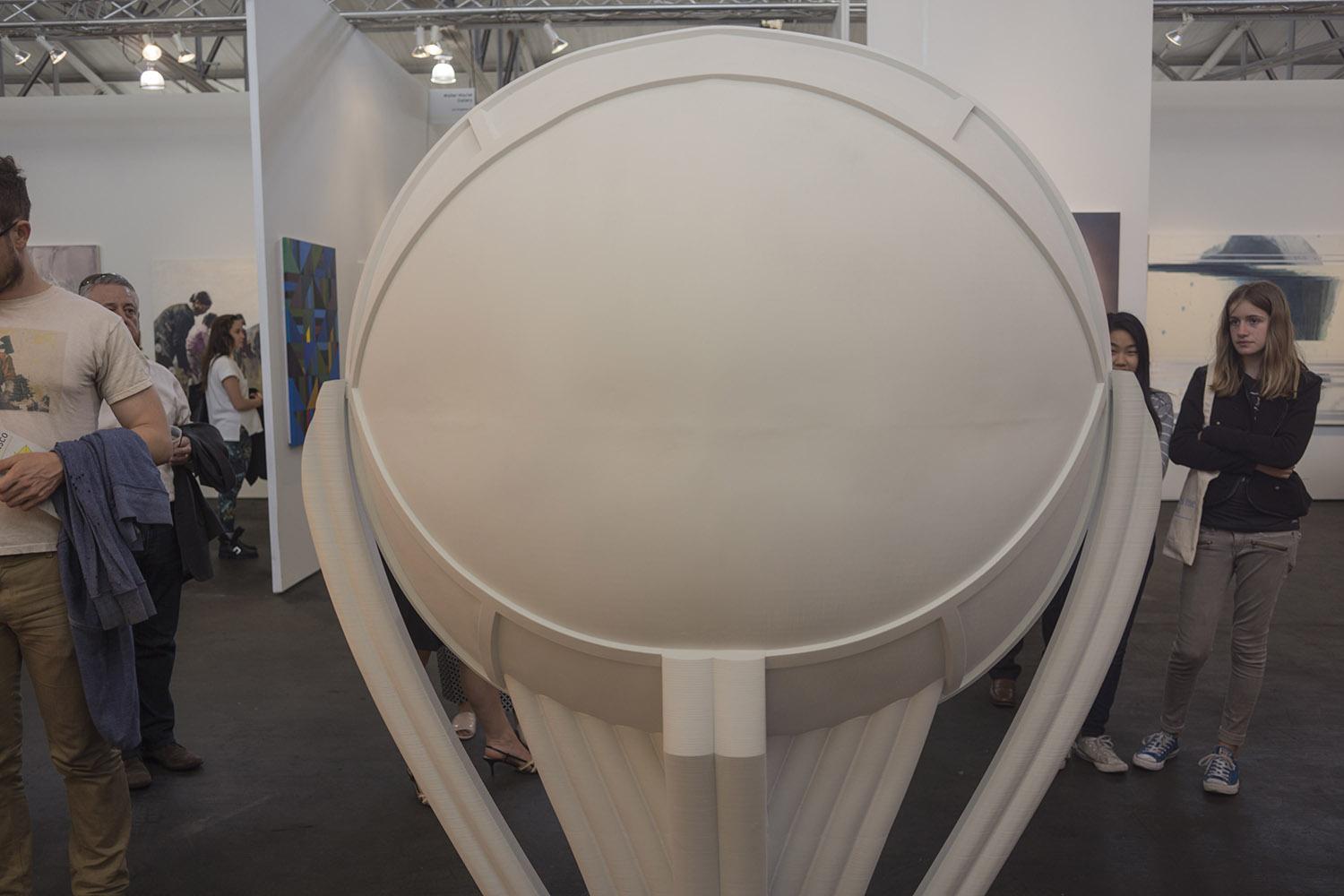
“The idea is that the viewer holds onto the joysticks and the sculpture is replicated in the virtual space,” Ganske explained to 3DPrint.com. “In VR, the cockpit is part of a small glass pod that takes the viewer through the central axis of a rotating space habitat.”
The VR experience was designed by Ganske, using Unreal Engine. He also plans to eventually make it available through Steam. Ganske’s LA gallery, 101/Exhibit was exhibiting the project to attendees of the San Francisco Art Market last week, and undoubtedly viewers and attendees walked away quite amazed. He is also currently selling his 3D printed cockpit for anyone interested in the amazing piece of art.
What do you think of this incredible 3D printed cockpit that took 75 days worth of printing to complete? Discuss in the 3D Printed AVR Experience forum thread on 3DPB.com. Check out the video of the cockpit’s AVR experience in action below.
Subscribe to Our Email Newsletter
Stay up-to-date on all the latest news from the 3D printing industry and receive information and offers from third party vendors.
Print Services
Upload your 3D Models and get them printed quickly and efficiently.













You May Also Like
HeyGears G1 Passes $14M on Kickstarter with Full-Color 3D Printing
HeyGears was started in 2015 and has been making value-driven Vat Polymerization systems for dental and home use. The company is marketing savvy and very driven. Now the firm has...
3D Printing News Briefs, August 26, 2026: Meshy 7, 4D Printed Implants, & More
We’re kicking things off today with software news, as the new Meshy 7 is now live. Then we’ll move on to business, with ExOne and voxeljet now operating as a...
Hi3D V3.0 Launches Industry’s First Commercial 2048³ Ultra-High-Precision AI 3D Model, Free for 48 Hours
Hi3D, the all-in-one AI 3D creation platform, has launched Hi3D V3.0, the industry’s first commercially available AI 3D model with 2048³ voxel resolution. The new version is designed to dramatically...
One Machine, Three Worlds of Creation: Inside the HeyGears G1 Series
Turning a digital idea into a finished full-color physical product often requires several machines, multiple software tools, manual coloring, repeated positioning, and outsourced production. For creators and small businesses, this...