Israeli Government & Aerospace Business Consortium Target 3D Printing Titanium Components

A consortium of groups, led by Elbit, Israeli Military Industries, and Orbit, will begin by focusing on exploiting existing printers used to manufacture aerospace parts rather than develop new printers–but the Israeli Ministry of Economy research and technological development committee, headed by Chief Scientist Avi Hasson, has given its blessing to a project aimed at developing a 3D titanium printer to produce aviation components in the future.
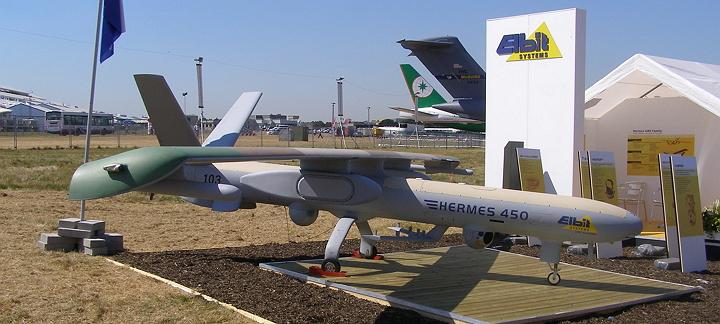 The consortium is slated to begin operations during the second half of 2015, and the work will be led by Cyclone, a subsidiary of Elbit Systems. Cyclone is the Elbit Systems design and production center for metal and composite aircraft components for aerospace companies and is tasked with building an infrastructure to design and manufacture systems for the Israeli aviation sector.

Avi Hasson
These new innovations concern systems to build the complex geometric structures needed by the aerospace industry, and the consortium includes Cyclone, Orbit, Algat, IAI, and IMI, as well as researchers from the Technion, the Institute of Metals, Afeka College, Tel Aviv University, and Ben Gurion University.
According to Hasson, the project is critical to keeping Israel up to date with 3D printing as it relates to modern manufacturing processes.
“This is a fascinating field, and we should expect it to have a substantial impact on future processes and products,” Hasson says. “It is important that Israel will enter the field of 3D printing with components that must comply with rigid quality and strength standards, as required by the aviation market.”
 The project will also focus on a cooperative effort with ATID. It’s the largest privately-owned educational network in Israel which specializes in management and operation of advanced technological schools and colleges, and it has some 25,000 students in attendance each year. Established in 1990, the group owns nine colleges and twenty high schools, and employs 1,500 professional instructors.
Hasson leads the Magnet Committee, a group that provides grants for industrial concerns which pair up with academic partners on technology projects. Hasson said he expects the committee to cover up to 90 percent of the expenses for such projects which he says is critical in the long term as private industry is reluctant to take on such investments alone.
The Magnet Committee effort will be driven by a dozen business clusters and take advantage of a budget of nearly $51 million.
 Elbit is an international high-tech company that develops and supplies a range of airborne, land, and naval systems which include products for defense, homeland security, and commercial aviation applications. The company builds military aircraft and helicopter systems, helmet mounted systems, commercial aviation systems, unmanned aircraft, command, control, communications, computer, and intelligence C4I systems, and electro-optic and countermeasures systems, among other products.
Elbit Systems is listed on the NASDAQ (ESLT) and also trades shares on the Tel-Aviv Stock Exchange (TASE).
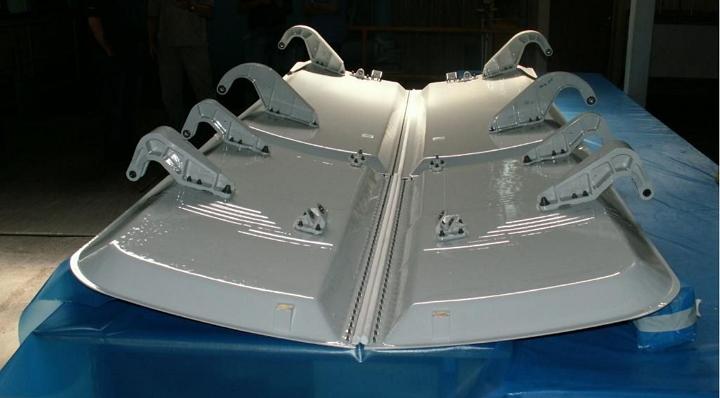
Cyclone, a subsidiary of Elbit Systems, builds composite components like this one for the Boeing 787
Do you think this sort of government and private industry cooperation is the future of manufacturing as it relates to 3D printing? Let us know in the Israeli Government and Aerospace Consortium forum thread on 3DPB.com.
Subscribe to Our Email Newsletter
Stay up-to-date on all the latest news from the 3D printing industry and receive information and offers from third party vendors.
Print Services
Upload your 3D Models and get them printed quickly and efficiently.











You May Also Like
3D Printing News Briefs, January 17, 2026: Titanium Scrap, Autopsy Analysis, & More
In this weekend’s 3D Printing News Briefs, we’ll start with government funding news from IperionX. Then, a German contract manufacturer has acquired its 6th and 7th Lithoz ceramic 3D printers....
3D Printing News Briefs, January 15, 2026: Project Call, Sports Medicine, Aluminum Alloy, & More
In today’s 3D Printing News Briefs, America Makes announced the winners of a $1.1 million Project Call, Austal USA named a new Vice President for Business Development and External Affairs,...
U.S. Navy Funds Senvol’s Machine Learning Software to Boost In-Situ Monitoring for 3D Printing
The additive manufacturing (AM) industry is well-positioned to benefit from increased incorporation of AI and machine learning (ML) into its core processes, and 2026 should provide plenty of opportunities for...
US Army Awards Contract to Phillips Federal for Containerized WAAM Factories
Everything that the U.S. Army has been doing with additive manufacturing (AM) over the last year or so suggests that the branch is getting serious about deployable production systems. One...