Creative Tools Release #3DBenchy – The Coolest 3D Printer Calibration & Benchmarking Tool Yet


 When it comes to desktop 3D printers, calibration is key. If a printer is not calibrated correctly, this means that your prints will probably not come out the way you want them too. Because of this, we have seen many 3D printer calibrations tool come about over the past couple of years, as well as designs that help users benchmark the quality of their printer to others of the same make or from different manufacturers. For example, there is the 3D Hubs Marvin, the often 3D printed Yoda, and the LeFabShop Elephant. All of these are tremendous tools that can be used to test, calibrate and compare your 3D printer.
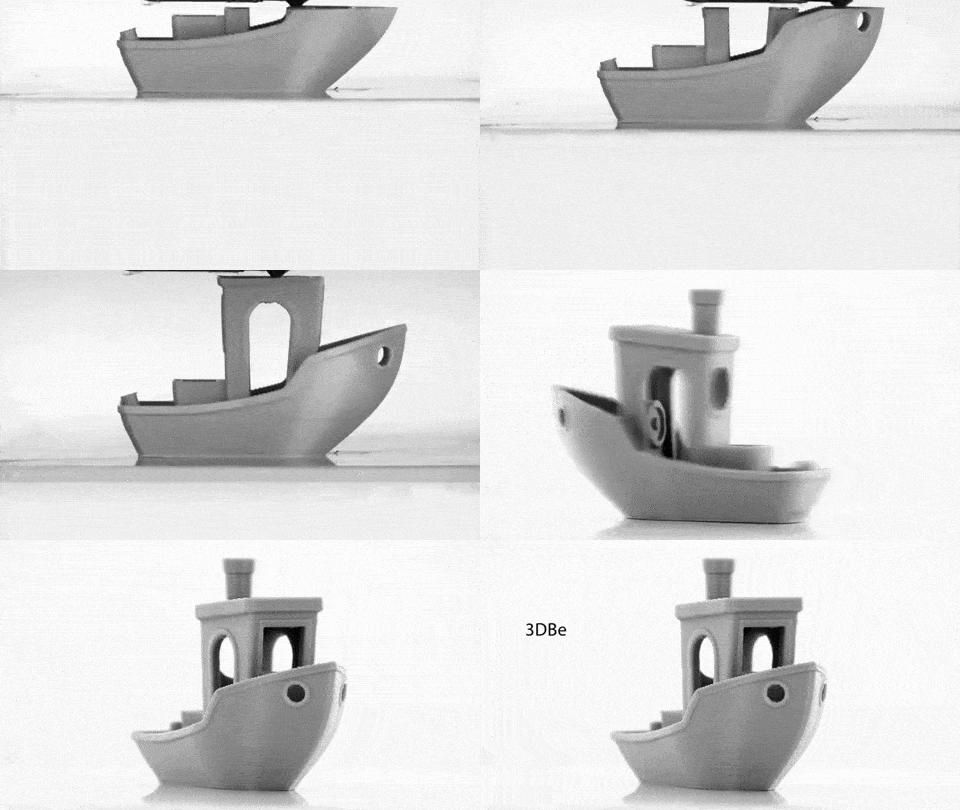
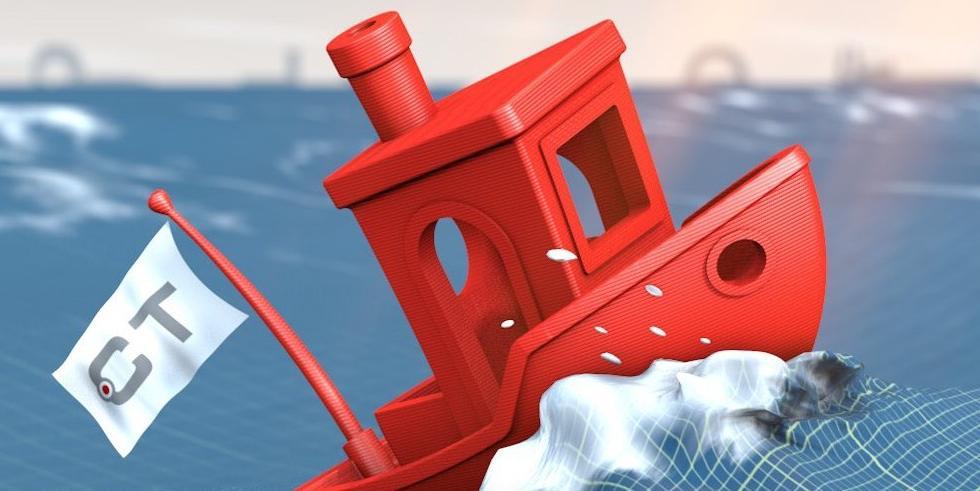
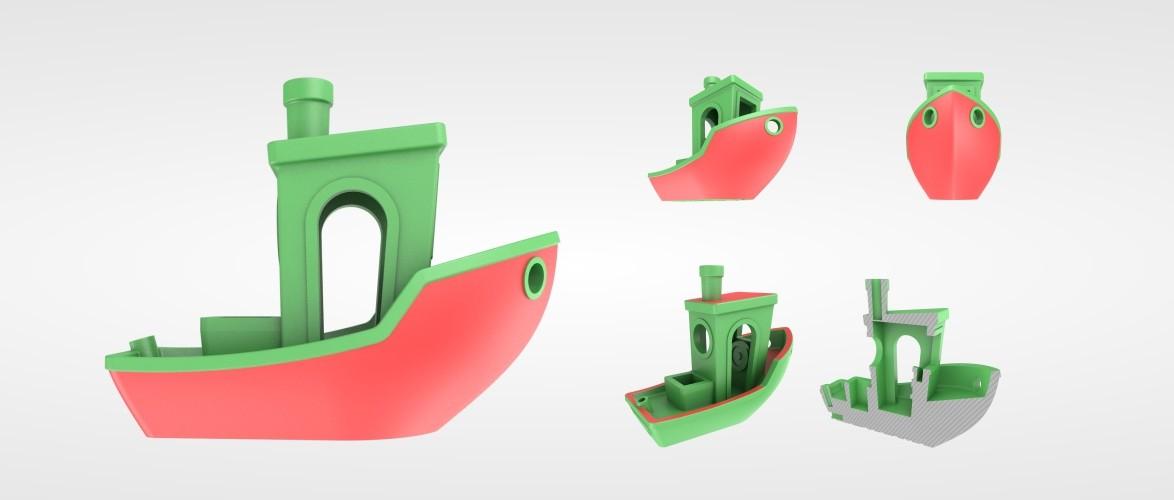
Now, there is a new kid on the block, in the form of a cute little boat called #3DBenchy. Released by Creative Tools, 3DBenchy is a cute little boat designed for the specific purpose of testing and benchmarking 3D printers.
“It is a recognizable object that you can download for free, make and share,” says the company. “It is small, 3D-prints quickly. A perfect tool for calibrating your 3D printer.”
Anyone can download the STL file now on Thingiverse and print this little boat out in just about an hour. Once the file has been downloaded, Creative Tools recommends printing it out with the following settings:
- Scale: 1:1 (60.00 mm in length).
- Layer height: 0.2 mm
- Infill density: 10%
- Print speed (extrusion): up to 50 mm/s / (travel): up to 150 mm/s
- Print nozzle diameter: 0.4 mm
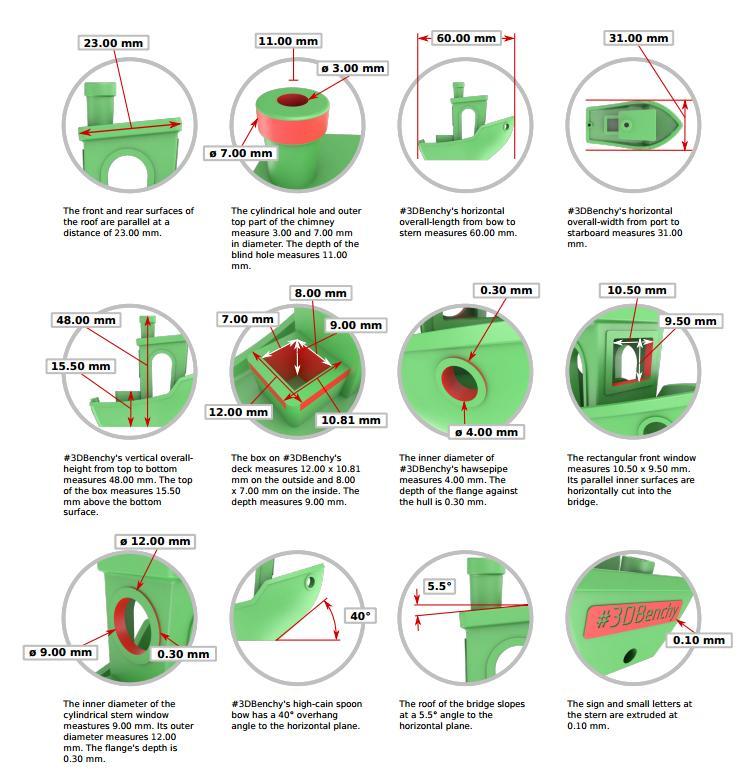
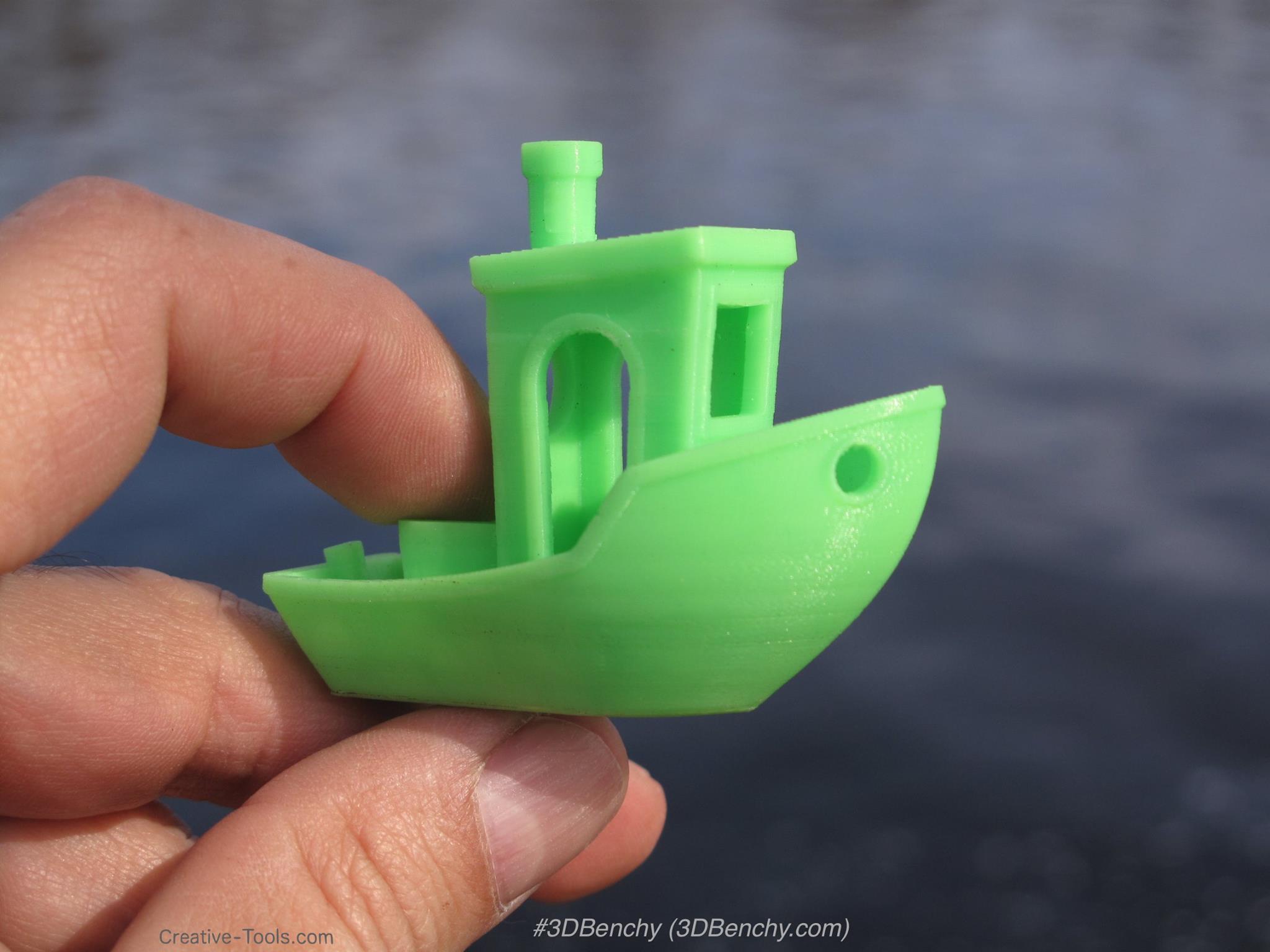 Once completed, you can compare your results with the measurements that the #3DBenchy website provide, in order to see exactly how well your 3D printer was able to accomplish the task. These measurements include the following:
- Bridge roof length – The front and rear surfaces should run parallel for a distance of 23mm.
- Chimney roundness – The hole in the middle should measure 3mm in diameter, while the outer top part should measure 7mm, and the depth of the hole should be 11mm.
- Length of the boat – The length of the boat should measure 60mm.
- Width of the boat – The width should measure 31mm.
- Height of the boat – The height should measure 48mm from the very top to very botom and 15.5mm from the bottom of the boat to the top of the cargo box in its stern (rear).
- Cargo box size – The box should measure 12 x 10.81mm on the exterior and 8 x 7mm on the interior, with a depth of 9mm.
- Hawsepipe diameter – The internal diameter of the hawsepipe should measure 4mm with a depth of the flange against the hull of 0.3mm.
- Front window – The front window on the bridge should measure 10.5 x 9.5mm and run parallel to all other inside surfaces of the boat.
- Rear window – The circular rear window on the bridge should measure 9mm in diameter from the inside and 12mm measured from the outer frame, and the flange’s depth should be 0.3mm.
- Bow overhang – The bow of the boat should have a 40 degree overhang, to the x/y axis of the printer. This should be printable on just about all desktop 3D printers.
- Bridge roof – The roof of the bridge should have a 5.5 degree angle slope to the x/y axis.
- Detail nameplate – The #3DBenchy nameplate on the stern of the boat should be readable, extruded at 0.1mm
What do you think? Is this the coolest 3D printable benchmarking tool yet? Have you printed one out? We’d love to see and hear your results in the #3DBenchy forum thread on 3DPB.com. Check out the video below.
Subscribe to Our Email Newsletter
Stay up-to-date on all the latest news from the 3D printing industry and receive information and offers from third party vendors.
Print Services
Upload your 3D Models and get them printed quickly and efficiently.













You May Also Like
3D Printing News Briefs, October 10, 2026: Drones, WAAM, Ceramics, & More
We have a packed 3D Printing News Briefs for you this weekend! First, America Makes celebrated the recent National Manufacturing Day with 3D printed drones, and then it’s on to...
3D Printing News Briefs, October 3, 2026: Hypersonics, Hotends, & More
We’re starting off with defense in this weekend’s 3D Printing News Briefs, as Titomic was awarded a $5 million U.S. defense contract, and VulcanForms announced a partnership with Specter Aerospace...
The Part Is Only Half the Story: Why 3D Printing Needs a Digital Thread
A 3D printed part can generate a lot of information. The challenge is keeping track of it. Manufacturers need to know which design was used, what material went into the...
Advanced Manufacturing at IMTS 2026: 3D Printing and AI and Drones, Oh My!
Last week’s International Manufacturing Technology Snow (IMTS) in Chicago welcomed over 90,000 attendees to the jungle that is McCormick Place. With over 1.17 million square feet of exhibit space, and...