Texas Gun Dealer 3D Prints a Plastic Silencer


Call them what you will — a silencer, a suppressor, a moderator, a muffler, or a can — but they’re all devices to reduce the sound of a round being discharged from a firearm. For our purposes, we’ll call them silencers, and now a Texas gun dealer has 3D printed one from plastic material.
So why a silencer? Firing a gun without one makes a very loud noise, produced as the bullet breaks the sound barrier. Propellant gases exiting the bore of a gun at supersonic speeds disrupt the surrounding air, causing the noise, and a silencer is designed to contain those burning propellant gases and dissipate the energy they contain. For the most part, silencers are made up of a series of chambers and baffles which allow the propellant gases to spread out. Imagine a tube filled with a series of washers attached at the end of a rifle barrel and you have the general idea.
Correctly designed, a silencer can reduce the sound of a gunshot from 180 or so decibels (depending on the caliber of the firearm in question) by up to 40 decibels or more. As a general rule, the larger the silencer, the better it will work. They’re typically made, due to the pressures and forces they have to contain, from metals like various alloys or even aluminum.
 Silencer designs range from the simple to the sublime, and a top of the line silencer model can cost $1300 or more.
In the United States, silencers are regulated by the National Firearms Act. To own one, you need find out if they’re legal in your jurisdiction (and they are in 39 states), fill out a form with some personal information, and submit it to the Bureau of Alcohol Tobacco and Firearms and Explosives. After a few months, the BATFE returns a stamp that allows the silencer to be purchased from a dealer who possesses a federal firearms license.
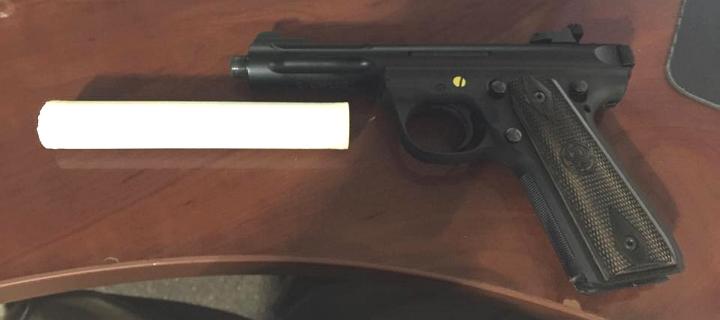
Now a Texas firearms dealer, West Fork Armory, has 3D printed what they call a suppressor for a .22LR rifle from plastic. They say printing the device took around 3 hours and 20 minutes and resulted in what’s essentially a disposable .22 suppressor. Why would this be useful? It’s because the inexpensive nature of the device means it won’t require cleaning, and cleaning a silencer is difficult due to the design, and the many chambers, involved.
Of course, the key components are plastic, so it’s this isn’t necessarily a practical device as they would melt quickly under continued use, but it does appear to do the job.
As West Fork Armory applied for a Special Occupational Tax Class license (SOT) before printing their suppressor, they should avoid the felony charges which would result had they failed to follow the laws restricting the manufacture of silencer or suppressor devices.
There have been, of course, a number of silencers already built with various laser sintering metal processes, but the West Fork Armory device is the first we’ve seen made with plastic baffles.
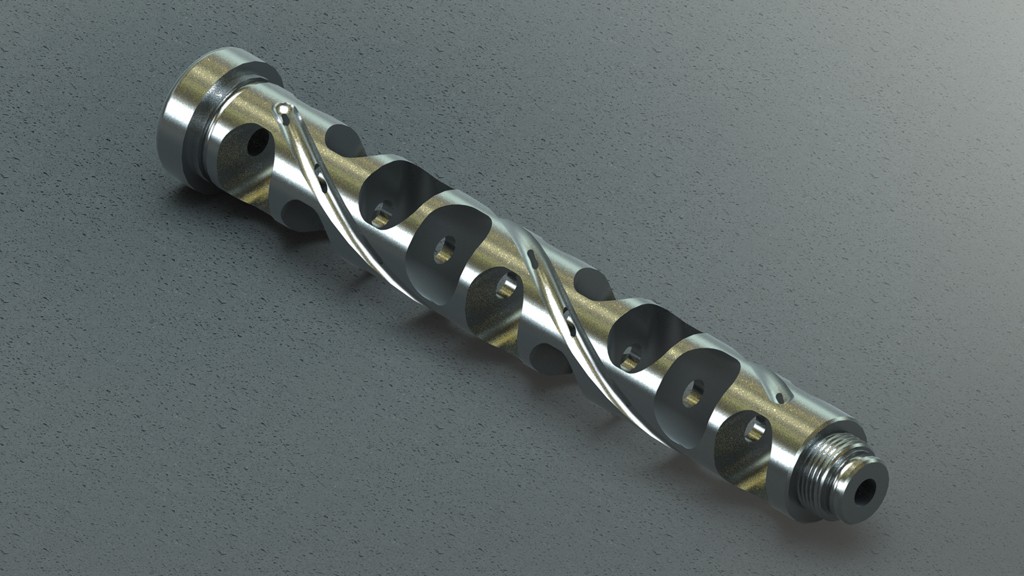
Silencer design
If you want to see – and hear — what the 3D printed West Fork Armory silencer looks and sounds like in action, you can check it out below. What do you think about the West Fork Armory 3D printed gun silencer? Let us know in the Gun Dealer 3D Prints a Plastic Silencer forum thread on 3DPB.com.
Subscribe to Our Email Newsletter
Stay up-to-date on all the latest news from the 3D printing industry and receive information and offers from third party vendors.
Print Services
Upload your 3D Models and get them printed quickly and efficiently.













You May Also Like
Bedrock 3D Gets Investment from 819 Capital
After Bedrock 3D split from BASF, the company was independent but still a little unsure about its future. The former Innofil3D operation, later dubbed Forward AM Technologies Netherlands, was BASF’s main...
The State of the Desktop Filament Market 2026, Part 4: An OS for Reality
OK, so in this four-part series, we used a cutting-edge stealth mode AI business intelligence tool that outperforms all commercially available LLMs. We then gussied up the data using Google’s...
The State of the Desktop Filament Market 2026, Part 3: Special Hamburger Meat
Essentially, I used a cutting-edge stealth-mode AI tool that goes far beyond the capabilities of commercially available LLMs to conduct deep research into the desktop 3D printing filament market. I...
The State of the Desktop Filament Market 2026, Part 2: AI is a Fitful Day Drinking Intern
In this series, we’re using cutting-edge AI research tools, including an unreleased deep research tool to look at the desktop 3D printing filament market. We’re then comparing it with our...