3D Print Molds for Candles Made with Colorful Crayons

In between projects, one MIT engineering student — Lily Marie Jackson, known as “MITInventorbot” on Instructables — decided to go crafty with her 3D printer. A self-professed “passionate inventor,” this maker’s interests range from 3D 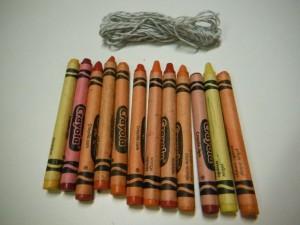 printing (last month, we covered her use of leftover filament to create handmade bracelets), Arduino, electronics, electrical, and mechanical engineering to Raspberry Pi and Beaglebone, MITInventorbot used 3D printing to make a favorite craft pastime a little easier. Download the .stl files on her Instructables page and you can produce your own homemade candles.
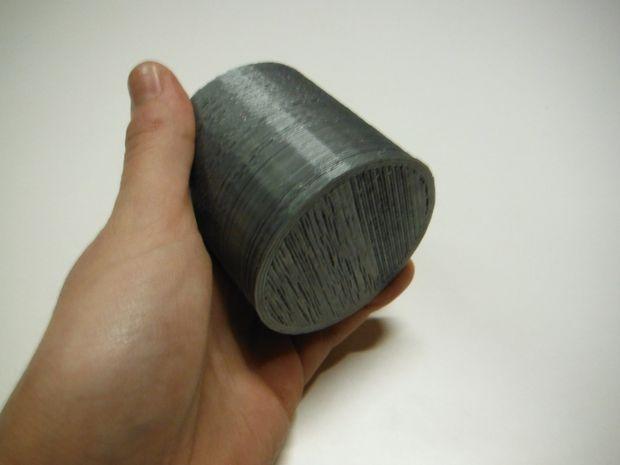
It’s not only a fun project, it’s a money-saving one for just about any college student. MITInventorbot’s process involves 3D printing three different candle molds — a tube, a cylinder, and a cube. If you don’t have a 3D printer of your own, you can easily upload the .stl files to one of the 3D printing services you’ll find online such as Shapeways, Sculpteo, or i.materialise.
Once you have the molds, you’ll need some wax to produce your candles and, of course, you’ll need candlewick. MITInventorbot suggests using crayons, which you will melt and then pour into your molds. The estimate is that you’ll need around 10 to 15 candles and some small paper cups in which to melt them in a microwave.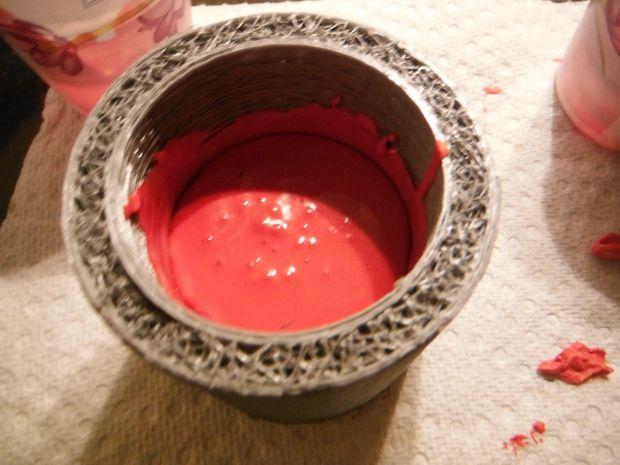
In the spirit of community, of working together to improve or refine a project, I’d like to suggest an alternative to the crayon step in this project. I want to emphasize, however, that the urban myths about crayons being toxic are just that — myths. Reading products labels is always a good idea and you’ll want to do that if you’re going to use crayons, but most of them are non-toxic, including the dyes, because children are sometimes known to eat them. So, if you’re going the crayon route, melting and burning crayons is not going to harm you, although burning crayons do produce more smoke than your average beeswax candle.
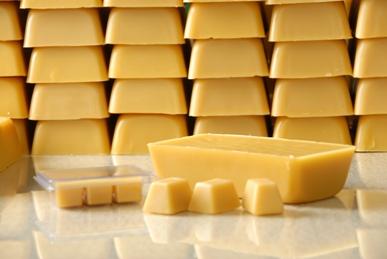 And speaking of beeswax, I would like to suggest using beeswax as an alternative to melting the crayons. For one thing, using crayons can be expensive if you want the same colors and you won’t likely find a box full of green or orange or purple crayons. Also, as noted above, the crayon wax tends to produce a lot of smoke when it burns.
You can melt it in a double boiler rather than in a paper cup in the microwave. It’s tough to control the temperature in the microwave and you risk burns if you’re not careful. If you don’t have a double boiler, put water in a large saucepan and float a smaller saucepan in it, melting the wax in the smaller pan (kind of like melting chocolate or cheese for fondue).
Beeswax comes in a light yellowish white color. If you want to color your candles using dyes that are not toxic, use food coloring or grate the crayon of your choice into the beeswax as it is melting, stir, and keep adding grated crayon until you get the color you like. Another way to color beeswax, which costs about $8 per lb, is by using spices. You can also add essential oil to your candles for a subtle scent.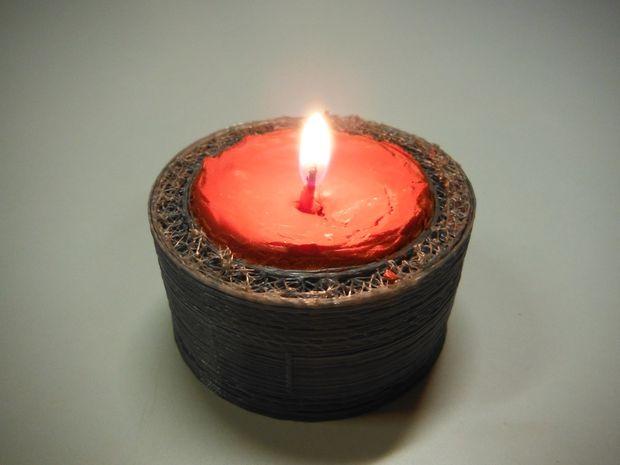
Before melting your wax, be sure you’ve prepped your 3D printed molds by inserting the wicks in the center of each mold. For easy removal from the molds, put your fully cooled candles still in the molds into the freezer for a little while and they should pop out pretty easily.
Thanks to MITInventorbot for this great idea and for the 3D printed candle molds! Will you make one? Let us know your thoughts on this fun, easy project in the 3D Printed Molds for Crayon Candles forum thread at 3DPB.com.
Subscribe to Our Email Newsletter
Stay up-to-date on all the latest news from the 3D printing industry and receive information and offers from third party vendors.
Print Services
Upload your 3D Models and get them printed quickly and efficiently.











You May Also Like
Export-Import Bank of U.S. Loans $27.4M to 6K Additive to Boost U.S. Metal Powder Output
Critical minerals have overtaken news cycles all year, with U.S. tariffs and Chinese export curbs disrupting supply chains and driving new waves of investment. As recently as last week, at...
Pushing Hypersonic Limits: LEAP 71 & Farsoon Reveal AI-Designed Precooler at Formnext
There has still never been a single-stage-to-orbit (SSTO) craft launched from Earth, but plenty of companies are working tirelessly to realize that dream, and additive manufacturing (AM) is integral to...
Europe’s Reshoring Moment: How AM Can Power Industrial Recovery
For years, Europe has seen much of its manufacturing base shrink as production has moved overseas and global competition has increased. Now, the region is trying to bring that work...
Advanced Manufacturing Reinvents Defense Castings, Strengthens Industrial Base
The convergence of the Fourth and Fifth Industrial Revolutions, compounded by rising geopolitical pressures, calls for a more agile and resilient supply chain. In response, the Department of War (DoW)...