Ed Tyson of rigid.ink Challenges You to Find a Better 3D Printing Filament


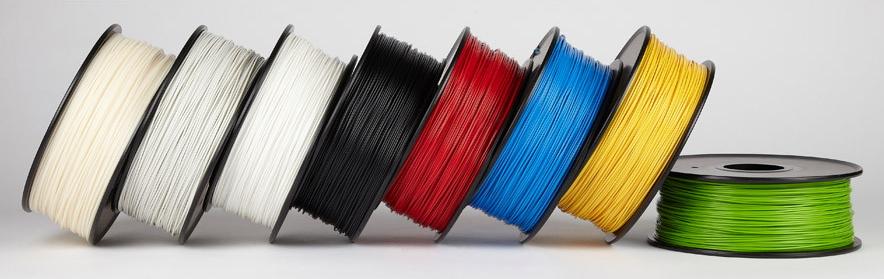 Ed Tyson of rigid.ink says 3D printing can become a less than satisfying experience if you have filament that isn’t up to the standards of your creations.
“We use pure materials so the raw materials we start with are as good as you will get anywhere,” Tyson told TCTMagazine. “The machinery we use to get the tolerances tight is very consistent. We challenge people to find better quality.”

Ed Tyson of rigid.ink
Tyson says that the difficulty in finding a reliable supplier of filament led his company to make their own brand, and adds that rigid.ink went “all-out and invested in the best machinery and raw materials to produce a filament so good – our tolerances are an astoundingly low +/-0.03mm – we’d be surprised if you found better.”
“We’re not just interested in supplying outstanding quality filament either; we’re hot on excellent customer service,” Tyson says. “That means fast delivery, hassle free returns and a personal service with a smile. In the unlikely event there’s anything you don’t like about your order, just let us know. We’ll bend over backwards to help you out.”
From their location in Wetherby, UK, rigid.ink has launched two lines of filament in eight colors and available in 1.75mm and 3.0mm. But Tyson says his company sets itself apart from other filament manufacturers by providing sample materials to customers before they’re forced to commit to the purchase of a large batch of filament, and that rigid.ink offers their filaments in lengths of just 10 meters while providing sample packs to schools and universities free of charge.
“We want to really drive it in the education sector as best we can because we want to support, schools, universities and colleges,” Tyson says.
 But according to Tyson, it’s the filament itself that makes the difference. He says that he’s heard that some companies use material like saw dust in their products, and he thinks that’s bad for the 3D printing industry as a whole.
“Here at rigid.ink, we decided enough was enough,” Tyson says. “There’s far too many poor quality 3D filaments out there. When 2 or 3 in every 5 of your prints are ruined, that’s less than optimal. That’s why in 2014, we decided to come up with something a little bit better, and do it a little bit differently. OK, a lot better and a lot differently.”
Tyson says customers can expect more color and material options coming from rigid.ink in the coming months, and that the current line of materials is available through the rigid.ink website and Amazon UK. The company is also offering a loyalty program for repeat purchasers of their filament to establish and encourage a strong customer base.
Have you ever used filament from rigid.ink? How important do you think quality 3D printing filament is to the finished product? Let us know in the rigid.ink Filament forum thread on 3DPB.com.
Subscribe to Our Email Newsletter
Stay up-to-date on all the latest news from the 3D printing industry and receive information and offers from third party vendors.
Print Services
Upload your 3D Models and get them printed quickly and efficiently.













You May Also Like
AM Investment Strategies 2026 Sets the Stage for AMS 2027
AM Investment Strategies 2026 Nov. 5 · 12 p.m. ET · Free online event RESERVE YOUR SPOT ↗ A one-hour online discussion featuring some of the biggest names in 3D...
With Its Latest $200M Round, ICON May Be Running Away With the 3D Printed Construction Market
I used to view ICON, the Austin-based additive construction (AC) firm, as one of a handful of companies that could realistically consider itself the leader of the 3D printed construction...
How Should Businesses Build New Business? Dirk Simon Weighs In — Part 1
Dirk Simon had deep experience in materials and chemistry before joining the 3D printing industry. Instrumental in BASF and Farsoon’s market introduction, Dirk has spent a lot of time thinking...
3D Printing Services Near $2.5B as AM Market Shifts Beyond Hardware
The additive manufacturing market may be growing again, but one of the more interesting numbers behind that recovery has little to do with selling 3D printers. AM services generated nearly...