The ‘World’s First’ 3D Printed Air Conditioner Sells in China for $6395


 China has been at the forefront of 3D printing, taking the technology and utilizing it in ways that other countries around the world have been reluctant to do. Whether it is 3D printing houses, apartment buildings, or other large objects which some look at in amazement, while others just ask, “why”?, China certainly has been grabbing the attention of the international media when it comes to 3D printing intuitively designed products. So what could possibly be next for the world’s most populated country?
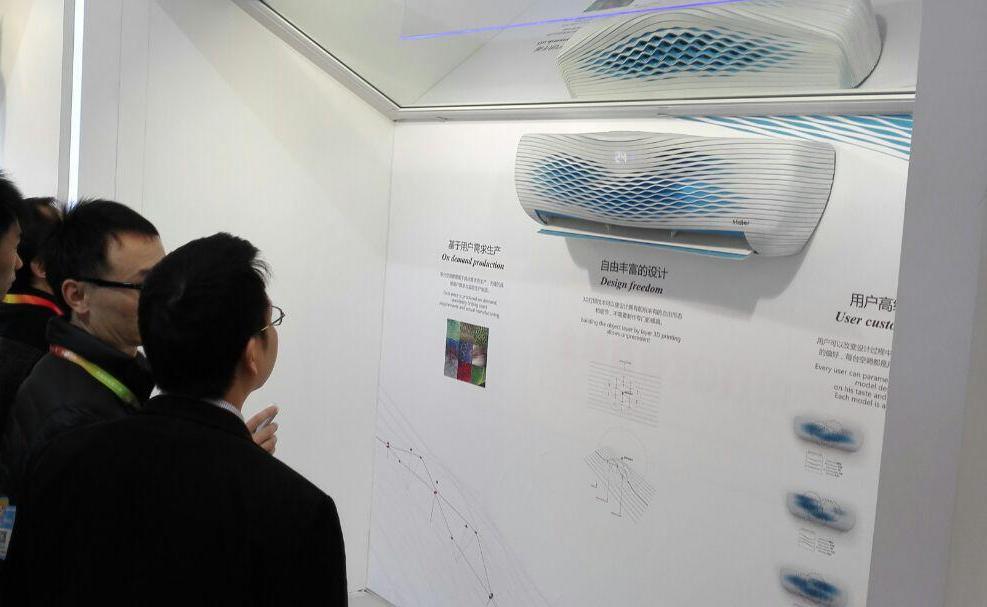
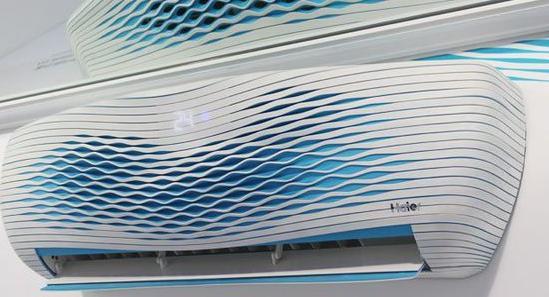
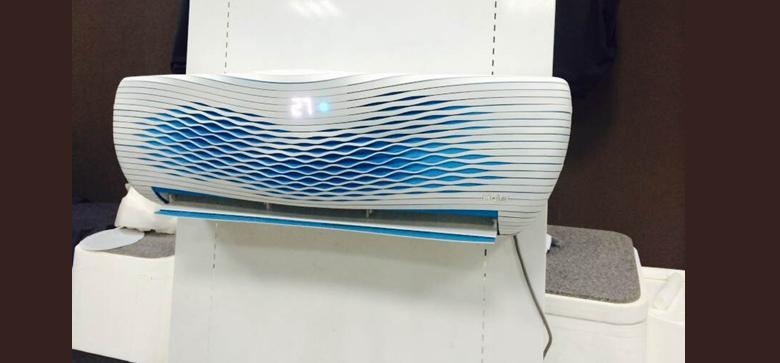
How about a 3D printed, aesthetically designed, working air conditioning unit? This is exactly what Chinese multinational consumer electronics and home appliance company, Haier Group has come up with. The Qingdao, Shandong based firm has unveiled what they call the “World’s first 3D printed air conditioner” — although some may debate that fact. This week at the Appliance & Electronics World Expo 2015 in Shanghai, the company was on hand to present the new 3D printed appliance.
While some may look at a 3D printed air conditioner and wonder what the point is, for one individual, the unit was worth spending a whopping 40,000 Chinese Yuan for. That’s right, the first production unit, and the only one created thus far, sold for approximately $6,395.
What makes the Haier 3D printed air conditioner so special is the fact that it can be completely customized to look and function exactly how its buyer wants it to. Who would have thought that there would be a day when you could customize the look of your air conditioner? Well, apparently that day has now arrived.
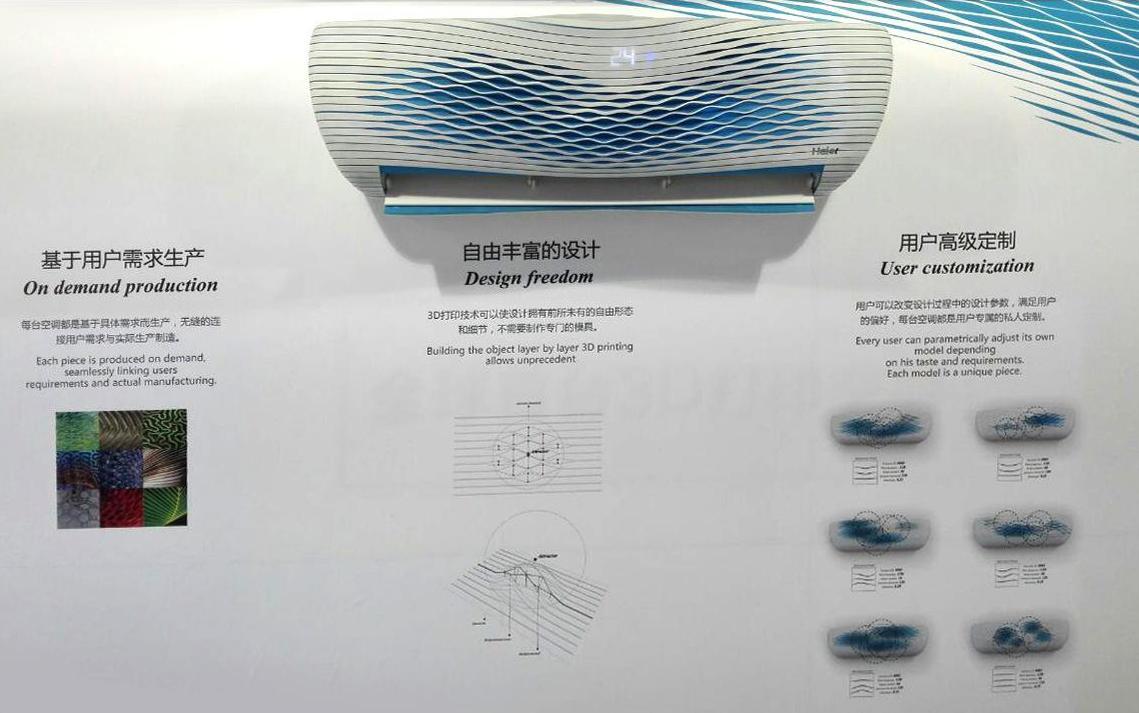
“Each piece of the unit is produced on demand, seamlessly linking users’ requirements and actual manufacturing,” Haier explains. “Building the object layer by layer, 3D printing allows unprecedented user customizaton. Every user can parametrically adjust their own model, depending on his/her taste and requirements. Each model is a unique piece.”
How’s that for a sales pitch? “No two air conditioners are alike!”
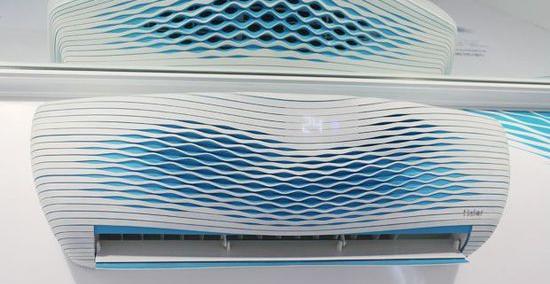 Even the casing for the LCD screen is 3D printed into the unit, allowing users to display the temperature and working status. Future units of the air conditioner will also feature 3D printed computer boards, allowing for even more customization to the end user. The company hopes that customers will utilize the customization options in order to personalize their units, with design elements such as photos, anniversary dates, quotes, art work and other personalized print patterns.
It should be interesting to see how many of these custom 3D printed air conditioning units are sold in the coming year, as a price tag of 40,000 yuan ($6395) seems a bit hefty. What do you think? Would you pay this price for your own custom 3D printed air conditioner? Discuss in the 3D printed AC unit forum thread on 3DPB.com.
Subscribe to Our Email Newsletter
Stay up-to-date on all the latest news from the 3D printing industry and receive information and offers from third party vendors.
Print Services
Upload your 3D Models and get them printed quickly and efficiently.













You May Also Like
Kalogon Wants to Patent Its Variable Density Wheelchair Cushion
Kalogon has brought the Verro to market. This is a 3D printed wheelchair cushion, made with vat polymerization technology. Using a variable density lattice, it hopes to give wheelchair users...
Pogačar & Fairlight Cycles Show Us Low Cost 3D Printed Components for Bikes
There has been a lot going on in 3D printing for bicycles over the years. The most successful implementation so far is in bicycle seats. Carbon 3D printed seats are...
3DPOD 295: From Product to Design at Carbon, with Kristi Eveland Smith
Kristi Eveland Smith started as a competitive soccer player before moving into consulting, operations, and 3D printing. She’s now Vice President, Design to Production at Carbon 3D and has been...
AMS 2026 in Photos: Snow, Songs, and Serious Conversations
AMS 2026 may have been altered by flight delays and snow-covered streets, but once you made it, the energy felt anything but frozen. This year’s Additive Manufacturing Strategies, which wrapped...