Formlabs’ 3D Printers Headed to China After Signing Distribution Deal with Xi’an Elite Robotics


 One thing I often hear when speaking with economists, is that 3D printing may benefit American manufacturers and our economy quite dramatically. As the technology becomes available within small businesses, homes, and manufacturing facilities in the U.S., our reliance on importing goods from countries such as China will likely fade. As to what may happen to China’s economy in the midst of all this, there is still some debate.
The government of China certainly isn’t stupid. The have the same ability to predict the future as we do, and they certainly are preparing for the effects that additive manufacturing may eventually have on their still-thriving economy. China has been adopting these same technologies as quickly as their trade partners have been. Ultimately, 3D printing is sure to change their economy, just like it does ours, allowing them to produce more affordable goods, and innovate at a more rapid pace.
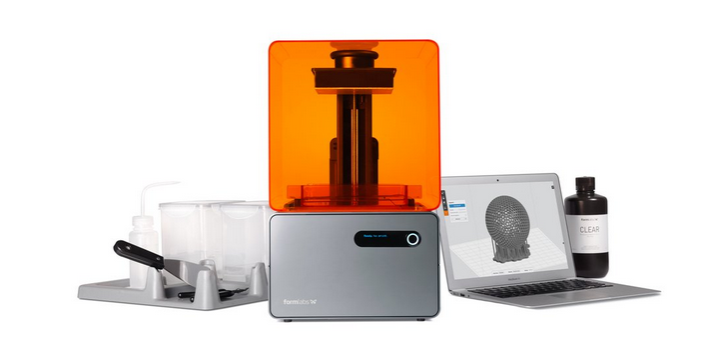
Today we got word that the largest desktop SLA 3D printer manufacturer, Formlabs, will be bringing their printers to China in a distribution agreement signed with Shaanxi-based Xi’an Elite Robotics. Xi’an Elite Robotics was formed in September of 2011 and currently sells products such as robotics as well as other 3D printer from brands like Stratasys and MakerBot. This deal will provide sales, support and after-sales care to the Chinese market, in a similar fashion as to what is currently being offered within the U.S. and Europe.
“With Xi’an Elite Robotics, our local partner in the region, we are thrilled to offer our Chinese customers the Formlabs’ experience that our customers have come to love,” says Luke Winston, Formlabs Operations Lead.
FormLabs’ flagship product, the Form 1+ is already available and being offered on the Xi’an Elite Robotics’ website, along with various resin types for the machine.
“The Form 1+ is a breakthrough product in the digital fabrication landscape,” stated Wang Hui, the founder of Elite Robotics. “We are proud to be the first official distributor of Formlabs’ 3D printing technology in China, and bring this award-winning 3D printer to Chinese consumers.”
Such a partnership should go a long way in extending the reach of Formlabs to one of the world’s largest economies, providing additional sales as well as name recognition. The company seems to be firing on all cylinders as of late, after reaching a settlement agreement with 3D Systems over alleged patent violations, as well as signing other distribution deals in Singapore and Australia late last year.
“China is an exciting market for us. We’re looking forward to what designers and engineers in China will create with the Form 1+ 3D printer,” says Max Lobovsky, Formlabs’ co-founder.
Let us know your thoughts on this distribution deal between Xi’an Elite Robotics and Formlabs. Discuss in the Formlabs China forum thread on 3DPB.com.
Subscribe to Our Email Newsletter
Stay up-to-date on all the latest news from the 3D printing industry and receive information and offers from third party vendors.
Print Services
Upload your 3D Models and get them printed quickly and efficiently.













You May Also Like
3D Printing News Briefs, May 28, 2026: Continuous Fiber Reinforcement, Bioprinted Trachea, & More
In today’s 3D Printing News Briefs, America Makes announced the winners of its JAQS-SQ Project Call. Axtra3D is partnering with Keystone Industries to expand its dental material ecosystem, while BigRep...
3D Printing News Briefs, March 21, 2026: Resin Safety, 3D Printed Bandages, & More
We’re kicking off this weekend’s 3D Printing News Briefs with some America Makes project call news, and then moving on to resin safety myths. We’ll end with a 3D printed...
New Materials and Curing Unit at Formlabs
Formlabs is showcasing new SLA materials and a new curing solution. The new Tough 1000 Resin, with a tensile modulus of 1000, a Tough 1500, and an improved Tough 2000...
3D Printing News Briefs, October 25, 2025: Strategic Investment, Inner Ear Organoids, & More
In this weekend’s 3D Printing News Briefs, we’ll start off with some business news, as Xact Metal announced continued double digit growth in Q2 and Q3 of 2025, and the...