NanoSteel Continues to Improve Powder Portfolio for Metal 3D Printing

 NanoSteel is in the business of leading the steel industry in nanostructures for steel material design. After many dedicated years, NanoSteel has taken risks with innovation that have paid off. Due to their willingness to embrace progress, they have achieved success and made breakthroughs regarding nanostructures in steel benefitting industries such as automotive, oil and gas, mining and power, and more.
With the realization that the steel business is indeed growing and changing, the NanoSteel team has a long list of innovations, achievements, and a line of products and progressive iron alloys under their belt. This includes the addition of 3D printing as they have endeavored to complement the evolution currently happening in the steel industry.
Not long ago at all, 3D printing was something completely unknown to most manufacturing companies. That’s still the reality in many cases. But NanoSteel is at the point where they are already working hard to improve the innovative technology they embrace, and they are staying up to speed as 3D printing evolves as well.

Harald Lemke
In their latest announcement, they are supporting ‘metal 3D printing of complex high hardness parts and the ability to customize properties layer-by-layer through gradient material design.’ Backing up to last year, NanoSteel was on the frontier in metal 3D printing as they came through with materials for 3D printing metal for impellers and bearings, which boasted amazing resilience and strength. Dense and ‘crack-free,’ objects present extreme levels of hardness.
Continuing in their dedication to progress and evolution within the industries they serve, NanoSteel has been working with the Connecticut Center for Advanced Technology on further innovations, as they delve into freeform direct laser deposition, This process allows for streamlined and reliable transitioning between ‘hard and ductile properties’ without having to use heat treatment afterward.
Their improved gradient materials offer:
- Impact resistance
- Overall robustness
- Extreme hardness
- Wear resistance
 The bottom line for manufacturers is lower, and they benefit from maximized efficiency by being able to meet projects on demand, lowering transportation costs, and lowering their required inventory as well.
“Proprietary metal alloys that support the cost-effective 3D printing of high-quality parts will help accelerate the transition from subtractive to additive manufacturing across applications such as wear parts, bearings, and cutting tools” said Harald Lemke, NanoSteel’s General Manager of Engineered Powders. “The company’s AM powder offerings make it possible to design exclusively for the function of a high hardness part, releasing designers from the limitations of conventional production processes and opening new opportunities to improve performance.”
Because of their breakthroughs in materials, they’ve allowed industry giants like those involved in manufacturing automobiles, to create new and improved products that affect and benefit consumers worldwide. With their portfolio of strong, versatile metal powders, they are specifically catering to manufacturers in tool and die, energy, and auto industries.
Based in Providence, Rhode Island, NanoSteel is a privately held company funded by lead shareholders EnerTech and Fairhaven Capital.
Have you been following NanoSteel’s progress? Have you or do you know anyone who has had experience working in the steel industry? How much of an impact do you think 3D printing will have? Tell us your thoughts in the NanoSteel 3D Metal Printing forum over at 3DPB.com.
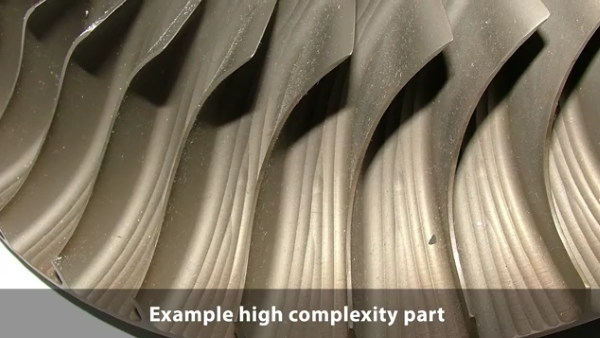
NanoSteel component manufactured through 3D metal printing
Subscribe to Our Email Newsletter
Stay up-to-date on all the latest news from the 3D printing industry and receive information and offers from third party vendors.
Print Services
Upload your 3D Models and get them printed quickly and efficiently.













You May Also Like
AI Design and Point-of-Care Integration Headline ADDITIV Medical 2026
Medical additive manufacturing is expanding rapidly inside major healthcare institutions. In 2026 alone, hospital systems including Indiana University Health and Sheffield Teaching Hospitals launched dedicated point-of-care 3D printing facilities to...
GKN Aerospace’s UAV Demonstrator with 3D Printed Engine Avoids ITAR Regulations
The US CIA director recently made an unannounced visit to Moscow that has naturally raised much speculation, while the EU and NATO have now officially accused Russia of being behind...
The Business Case for 3D Printed Stents
A new 3D printed stent developed at New York University (NYU) does not look like the devices doctors typically use today. Instead of a simple tube, the prototype resembles a...
3D Printing Financials: 3D Systems, Prodways, and Align Build on Positive Momentum
The latest earnings from 3D Systems (NYSE: DDD), Prodways (EPA: ALPWG), and Align Technology (Nasdaq: ALGN) show that the 3D printing market continues to move forward. Some businesses are growing...