Ukrainian Army Using 3D Printed Drones To Battle Pro-Russian Separatists As Cease-fire Nears


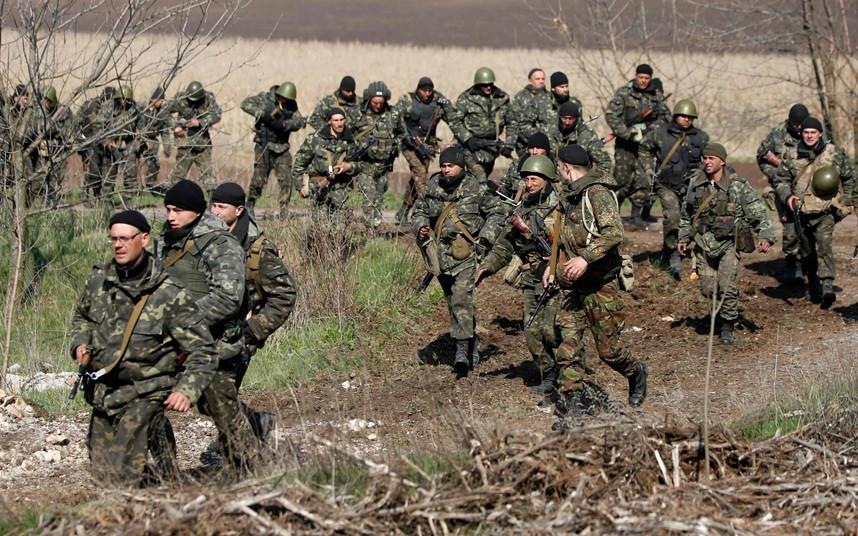
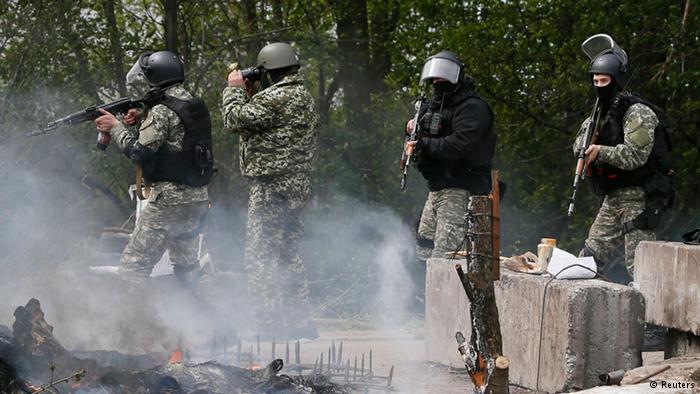 If you are at all following international news then you know that the situation along the Ukrainian/Russian border is extremely dangerous. The geopolitical implications of this war, if not settled, could potentially spill over into surrounding areas, ultimately leading to widespread chaos in the region. With this said, there is a glimmer of hope, as this week an international team reached a cease-fire agreement after marathon peace talks in Minsk. Although all the details of the cease-fire have yet to be completely ironed out, it will go into effect at midnight tonight. The bloody confrontation has been anything but peaceful thus far, so any sign of a cease-fire should be well received by civilians on both sides of the battle.
In the midst of all this, the Ukrainian Army is using 3D printing and drone technology in quite an interesting way, perhaps saving human lives on the battlefield. Volunteers are funding and 3D printing aerial drones in the Robotics Lab at the Step IT Academy in Kyiv. These drones have been put to use by the Ukrainian Army as a way to monitor the situation that’s been developing with the pro-Russian separatists in eastern Ukraine from a safe distance.

3D printed drone being used by Ukrainian Army – Image: Anastasia Vlasova
Dmytro Franchuk, Deputy Head of the Robotics Lab, is heading up this initiative, already having produced 30 3D printed drones, which are being used in battle. The lab, on average, has been using 20kg of thermoplastic per day within several 3D printers. The drones, which can capture images as far away as 2.5 kilometers, can stay in the air for up to 20 minutes at a time.
Each drone costs approximately $1,200 to 3D print (most of the expense is in the human capital, not the materials themselves), and another $3,000 in other sophisticated equipment is required. This, however, is compared to the typical $30,000 cost for similar drones which are not 3D printed.
Franchuk is a busy man apparently, as he is both fighting on the front lines as well as from the lab.
“As I was the only developer of drones in the lab, I also had to go to the war front to teach soldiers how to work with them. It took time I could use for production,” Franchuk says.
Approximately 90% of all the parts in each of the 30 drones are in fact 3D printed on any of the three machines that the lab has acquired. The 3D printers themselves cost just $1,600, and are currently used 24/7, producing these battle drones as well as other gadgets.
We will know soon if this cease-fire will hold up, or crumble like the last one. In the meantime Ukrainian volunteers will continue producing these 3D printed drones for their army in the event that such an agreement with Russia should deteriorate.
Let’s hear your thoughts on this incredible use of 3D printing in the Ukraine 3D Printed Drone forum thread on 3DPB.com.
[Source: Kyiv Post]
Subscribe to Our Email Newsletter
Stay up-to-date on all the latest news from the 3D printing industry and receive information and offers from third party vendors.
Print Services
Upload your 3D Models and get them printed quickly and efficiently.













You May Also Like
Printing Money Episode 42: Q2 2026 Public Markets 3D Printing Earnings Analysis with Troy Jensen, Cantor
Welcome to Printing Money Episode 42. Troy Jensen (Managing Director, Cantor) returns, joining Danny Piper (Managing Partner, NewCap) to review Q2 2026 publicly traded 3DP/AM company earnings reports. Troy’s quarterly...
3DPOD 314: Debinding, Sintering, and Metal Binder Jetting with Stefan Joens, Elnik Systems and DSH Technologies
Stefan Joens of Elnik Systems sells ovens. Their debind and sintering equipment powers a lot of high-volume binder jet and MIM production. We learn about Elnik and its origins. But...
The Frankenservice Part 1: Print the Rainbow
So far, most service bureaus and manufacturing companies stick to what they know. Not only for OCD reasons, but gleaming lines of identical LPBF machines are also arrayed on impossibly...
3DPOD 313: Patient-Specific 3D Printing with Ruben Wauthle, Amnovis
Ruben Wauthle studied at Leuven University at a very serendipitous time. Through working with pioneering additive professors and surgeons, he entered into a specialty that was emerging. He joined pioneering...