Comet Runner: Will 3D Printing Make Comet Hopping a Reality?


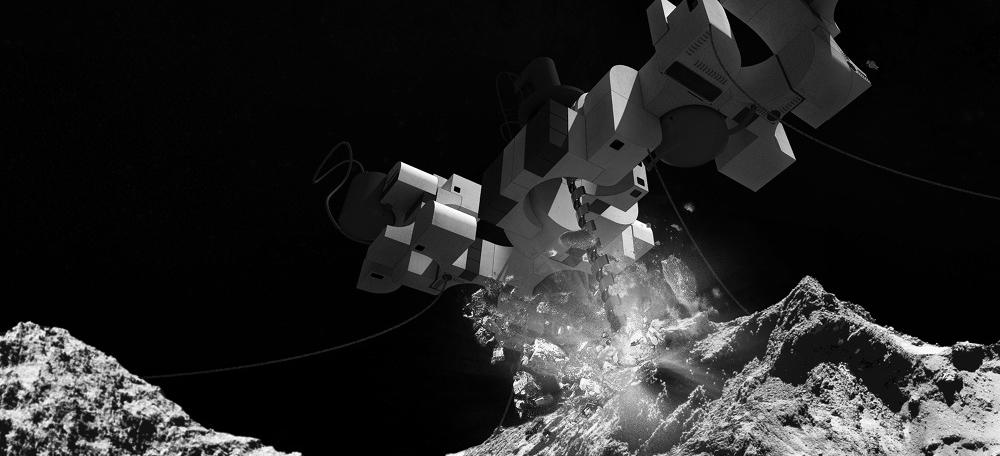
Projects like the 3D Printing in Zero-G Technology Demonstration from NASA on the International Space Station and a London architecture firm’s work with the European Space Agency to consider methods for constructing 3D printed homes on the moon have captured the imagination and foretold a future where additive manufacturing will leave Earth for points unknown.
And now another project has been put forward which might some day use regolith-like material on the surface of comets to 3D print structures off our planet.

Masayuki Sono
Masayuki Sono and Ostap Rudakevych are the founding partners of Clouds Architecture Office, and the pair are making waves for their work on projects like the September 11 Memorial in Staten Island, NY, to MIT’s Media Lab.
The pair say their architectural practice is dedicated to the idea that the “built environment should also achieve a dynamic harmony with its environment.”

Ostap Rudakevych
“Our goal is to create conditions that allow for a resonant experience by the synthesis of ideas through design,” says their website.
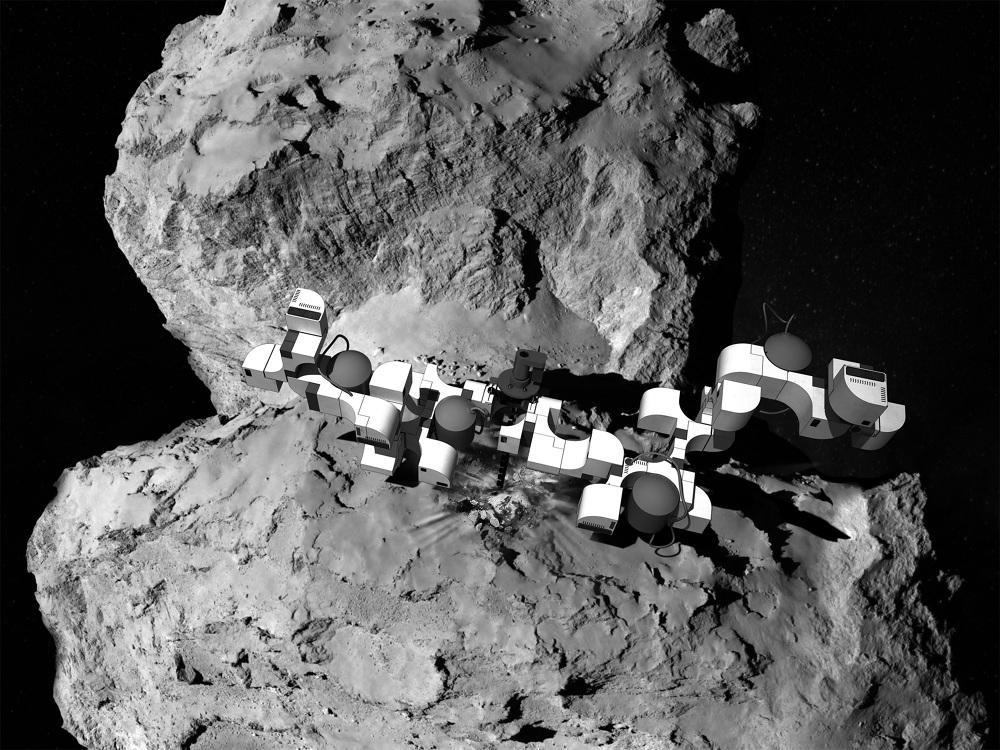
Now Sono and Rudakevych have proposed that a series of floating space stations could be placed in the orbits of exocomets outside our solar system – and they add that such stations could be built on their surface with materials found on the comets and then 3D printed.
“Comet running presents a provocative opportunity for expanding our reach in outer space by lowering the cost of long-distance space flight,” the architects told Dezeen. “The project envisions harnessing a comet as an interstellar vehicle. The target comet would be prescreened to ensure it contains volatile compounds necessary for sustaining the mission.”
The pair say the idea was inspired by the Rosetta mission, a European Space Agency project which sought to land a vehicle on the comet Churyumov-Gerasimenko.
“It is hypothesized that there are billions of roughly 20-kilometre-wide comets in the Oort cloud,” the pair say. “Many contain compounds such as water, methane, carbon monoxide and hydrogen cyanide which can be converted to things useful for a long distance space mission, such as fuel, oxygen, plastics, refrigerant and fertilizer.”
Their plan calls for a space station which includes a processing plant and laboratory, storage areas for materials extraction equipment and refined materials, and a even a greenhouse.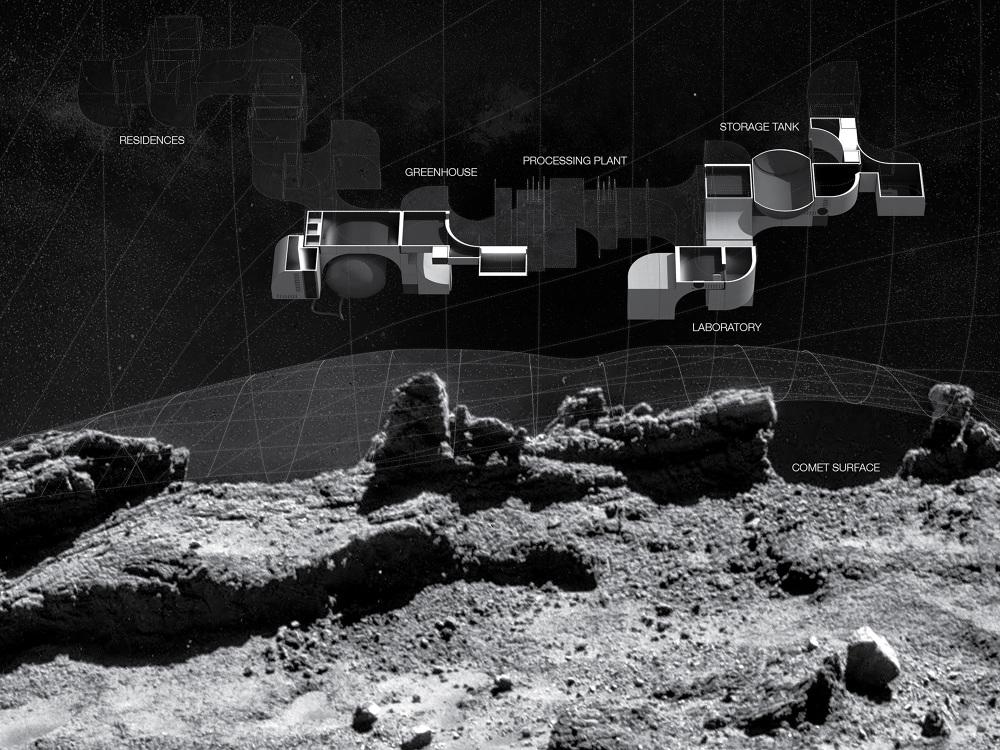
According to the architects, 3D printing could be used to create structures from dust found on the comets. Sono and Rudakevych say their Comet Runner concept includes the idea that astronauts would harvest surface dust as 3D printing media to create temporary surface dwellings.
What do you think of this idea to build structures on the surface of comets from Clouds Architecture Office? Do these kinds of ideas have a useful purposed? Let us know on the 3D Printed Future for Architecture on Comets forum thread on 3DPB.com.
Subscribe to Our Email Newsletter
Stay up-to-date on all the latest news from the 3D printing industry and receive information and offers from third party vendors.
Print Services
Upload your 3D Models and get them printed quickly and efficiently.












You May Also Like
Why Qualification Is Becoming the Next Frontier for AM in Energy
The energy industry doesn’t have much room for failure. Components used in power generation often operate under extreme temperatures and pressures, sometimes for decades at a time. That’s one reason...
Fathom CEO Rush LaSelle on Why Additive Manufacturing Is Growing Up
For years, the additive manufacturing (AM) industry promised to reinvent production. But as the technology matured, the real challenge turned out to be proving that 3D printed parts could be...
Rheinmetall Uses Ducting Made with Minifactory for Challenger 3 Tanks
Rheinmetall UK is using Minifactory Material Extusion as the primary production method for tank ducting on the Challenger 3 Main Battle Tank program. The Challenger 3 is the UK’s formidable...
Q5D and Molrix To Supply US Army With Harness Robots
Q5D Technologies and Molrix will offer their advanced harness production manufacturing units to the US Army. One production cell will be used for the SkyFoundry project, while two further systems...