ProtoCycler is 3D Printing with Recycled Coffee Cup Lids as They Blow Past Indiegogo Goal


 ProtoCycler is an innovative company with a fun, seriously useful product for 3D printing enthusiasts—and especially the ones who get both a kick out of and great satisfaction from recycling.
The ProtoCycler, a filament maker that fits right on your desktop, takes you full circle in the best way, as you 3D print, and then put the excess filament right back into it for material in making your next quality prints.
With no waste, and the offer of a much better looking bottom line, the ProtoCycler is a very attractive prospect indeed for 3D printing enthusiasts. And apparently, many others concur, as the ProtoCycler team has both launched and nearly completed an Indiegogo campaign, with their goal of $70K already well-surpassed.
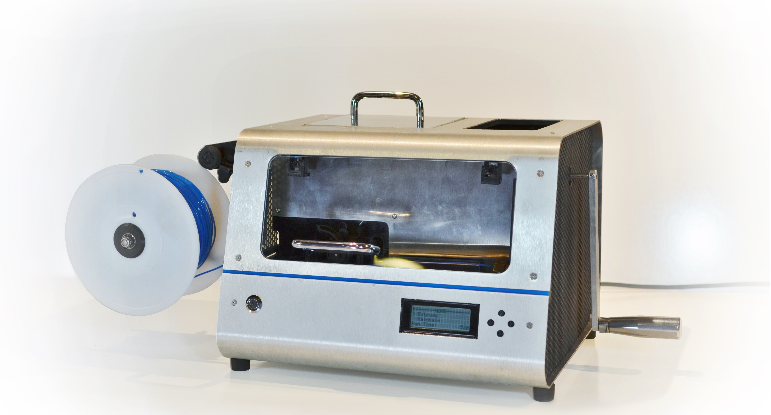 Before launching into production of the ProtoCycler filament maker and meeting demand for supporters who pledged in order to receive machines, the company has other cool news, or shall we say pretty hot news, as they’ve been tapping into the java market for their endeavor—and just completed an experiment 3D printing with a new material that you should love recycling: coffee cup lids.
Using their ProtoCycler grinder to chew up the polystyrene coffee lids, the company began experimenting first with one lid and then an entire stack. The ProtoCycler can grind them down into perfect pellet-sized material for being used in 3D printing. While the process of using coffee cup lids is being refined right now and sometimes they require more than one pass through the grinding mechanism, the lids are, uniquely and amazingly, a perfect source of filament.
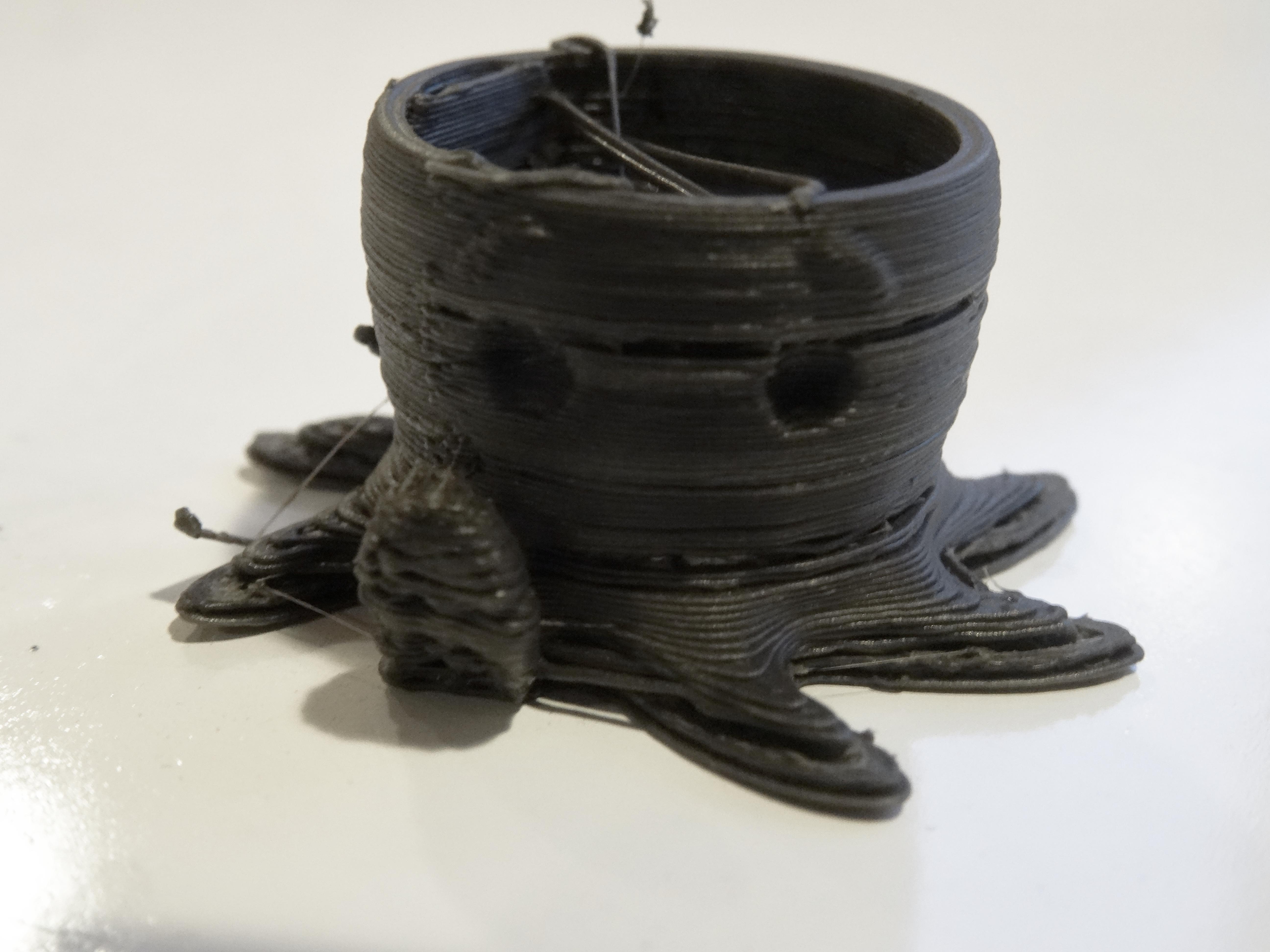 In their first experimentation with extruding the coffee cup lid filament, the team was successful after multiple adjustments in temperature and speed. There were a few admitted and obvious ‘hiccups’ in printing along the way, but considering they’ve only just begun working with the new filament source, the potential for recycling material like coffee cup lids opens the door to trying a multitude of other materials.
The true conclusion as well is that the ProtoCycler is capable of extraordinary versatility, not to mention offering the opportunity for you to keep recycling and saving money to buy other things, while continuing with your 3D printing habit. The ProtoCycler is an open-source design and still available at a discounted price on Indiegogo, so it’s definitely worth checking out if making your own filament and exploring all the different materials and colors available appeals to you. It’s certainly a better option than watching filament waste pile up in your creative workspace.
With extrusion rates of 10 feet per minute, this new technology uses materials that work with any 3D printer. It’s extremely user-friendly and there’s no learning curve involved in setting right out to make your own filament.
Once the Indiegogo campaign concludes, the ProtoCycler team will use the funding to complete their design overall, start manufacturing, and complete fulfillment. We look forward to hearing more about alternate materials possible for use within the ProtoCycler, as well as news on optimizing it further for the coffee cup lids. In the meantime—enjoy lots of coffee—and happy future filament making.
Have you tried anything like this? What are your ideas on using ground up coffee cup lids for filament? What other materials do you think would be suitable that have not yet been used? Tell us your thoughts in the ProtoCycler forum over at 3DPB.com.
The video below shows the grinding process with recycled lids.
Subscribe to Our Email Newsletter
Stay up-to-date on all the latest news from the 3D printing industry and receive information and offers from third party vendors.
Print Services
Upload your 3D Models and get them printed quickly and efficiently.












You May Also Like
PanOptimization Gets Attaboy from AFRL for PanX Software
Published in the International Journal of Advanced Manufacturing Technology, a paper titled “Part scale prediction of residual stress through thermomechanical modeling of additively manufactured Ti-6Al-4V” seems to point to the...
UCLA 3D Prints Zinc-Ion Battery With Seven Times More Energy
Just days after researchers at the California Institute of Technology unveiled a 3D printed design for lithium-ion batteries, another university team has announced a different battery breakthrough using additive manufacturing...
3D Printing News Briefs, July 1, 2026: Prosthetics, Drug Delivery, & More
We’re focused on healthcare and research in today’s 3D Printing News Briefs, including 3D printed prosthetics, patient-specific implants, drug delivery, and more. Read on for all the details! Students from...
New Study Shows Electronics Could Be Manufactured Directly in Space
A team of researchers from Auburn University and NASA Marshall Space Flight Center has successfully demonstrated a new additive manufacturing (AM) process that could allow astronauts to manufacture electronic components...