
CreoPop 3D Printing Pen Scores Round of Financing and is a Finalist in SXSW Awards

We’ve written about the Crepop printing pen before, and now the makers of the 3D printing pen with cool ink say they’ve completed a financing round led by 500 Startups!
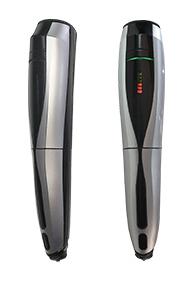
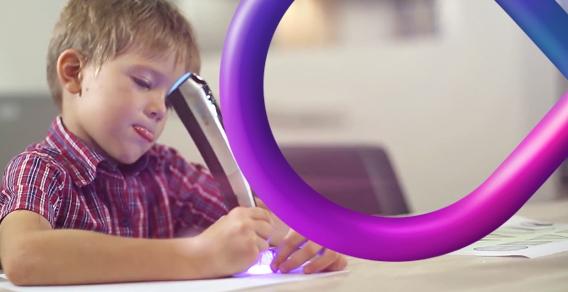 The pen takes a different approach than typical pens, and instead of melting plastic with a hot end extruder like FDM 3D printers, the CreoPop uses a versions of stereolithography (SLA) and a photosensitive resin. The resin is cured by a UV laser, and that makes it safe for children to use as no heated parts are necessary.
Another venture capital firm, Singapore-based Ruvento, also participated in the financing round along with a number of private co-investors as well. The company says the amount of the financing falls somewhere in the mid-six-digit range, and CreoPop co-founder Andreas Birnik says that “commitments” amount to more than $892,000 in total.
“With its innovative and affordable multi-material, multi-color 3D printing solutions, CreoPop is about to disrupt the 3D printing industry,” said Gene Berger, the Managing Partner at Ruvento. “We are impressed with what CreoPop has achieved with its 3D pen and we look forward to seeing a series of new products from the company.”
 That’s not all though. The company announced more good news as part of the financing story.
CreoPop was also selected as a finalist in the Innovative World Technologies Category during the 7th Annual SXSW Accelerator competition. Part of the SXSW Startup Village, the Innovative World Technologies category is a showcase of new technology innovations which go before a hand-picked panel of judges and a live audience for selection.
“It is a great honor for CreoPop to have been selected as a finalist for the SXSW Accelerator Awards,” says Birnik. “We join the ranks of some of the world’s most successful technology companies and we are also proud to place Singapore on the global technology start-up map.”
The Creopop process solidifies resin via LED diodes which surround the nozzle of the pen which uses a selection of inks in different colors, elastic inks, magnetic inks, glow-in-the-dark inks, temperature sensitive ink and even a “body paint” ink.
“Of the 40 successful exits we’ve had so far, one was the 3D printing company Makerbot, which was acquired by Stratasys for $400 million,” says Khailee Ng, Managing Partner of 500 Startups. “We strongly believe in the 3D printing sector. CreoPop specifically will not only bring this game changing technology to wider commercial applications, but also into households. I grew up using Lego blocks to make 3D objects. This generation will grow-up using CreoPop.”
A crowdfunding campaign on Indiegogo has already raised more than $185,690 on a campaign which sought just $40,000, so it seems the 3D printing pen was popular with individual investors as well. Would you like to buy a CreoPop 3D printing pen? What uses can you see for this innovative technology? Let us know in the CreoPop forum thread on 3DPB.com.
Subscribe to Our Email Newsletter
Stay up-to-date on all the latest news from the 3D printing industry and receive information and offers from third party vendors.
Print Services
Upload your 3D Models and get them printed quickly and efficiently.













You May Also Like
HG Laser & The Overlooked Sources of China’s Advanced Manufacturing Strength
Chinese state-owned enterprise (SOE) HGTech (Huagong Tech) just reported that it achieved record revenue in H1 2026, amounting to just over $1 billion. The company credited the results to success...
3D Printing Financials: $28M in China, U.S. Deals and a Metal AM Comeback
Money continues to go into additive manufacturing (AM). From a $30 million raise for a Chinese metal 3D printing company to new funding for naval AM and a European company...
AMAsia Pulse: AM Investment Picks Up Across Asia-Pacific
The first half of September brought fresh investment and expansion activity across Asia-Pacific’s additive manufacturing sector. China’s Xinjinghe secured funding for an aerospace AM hub, South Korea’s Lincsolution outlined plans...
3D Printing Market Hits $4.48B After Six Straight Quarters of Growth
The additive manufacturing market continued to grow in the second quarter of 2026, adding another quarter to what is becoming a much more consistent expansion for the industry. Worldwide revenue...























































